
- Places
 May 01, 2026 | Michail Takach
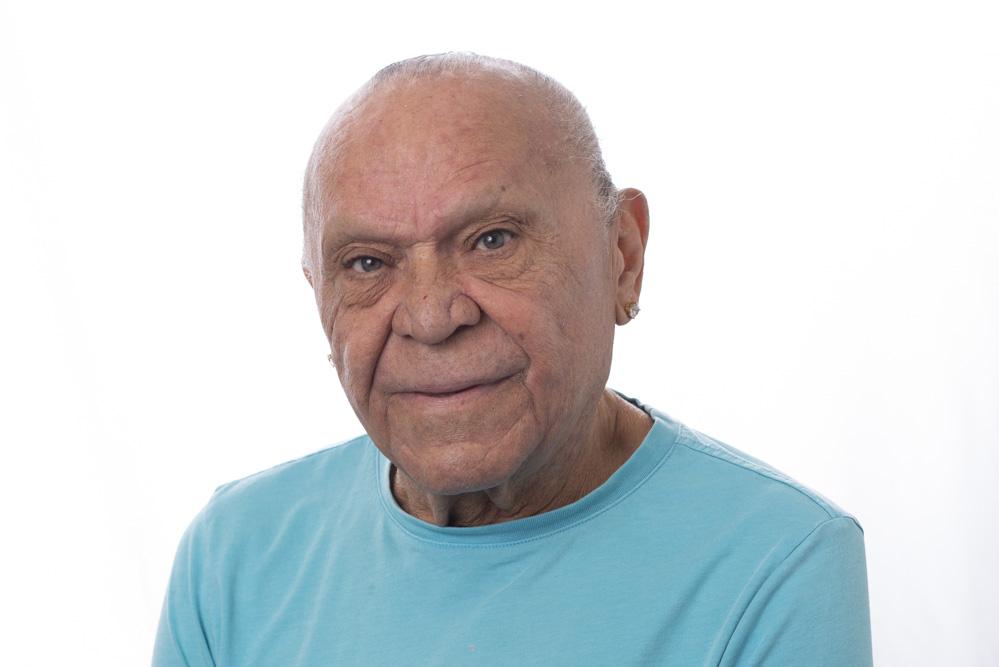
Casper Garcia: true freedom demands defiance
He came to Wisconsin as a first-generation American who'd never seen snow. Seven decades later, Casper is a cornerstone of local LGBTQ history.
Casper Garcia"If you think you've seen the worst of times, you haven't seen nothing yet."
Some elders stand as strong and constant pillars: not because they sought the spotlight, but because they stood their ground when the world demanded they disappear.
Casper Garcia is one of them.
At a time when being open about one's identity could cost a person their job, family, freedom, or even their life, Casper chose to live out loud.
His journey from a wide-eyed immigrant child playing in the midwestern snow to a fearless protector of his people is a masterclass in survival, dignity, and radical community care.
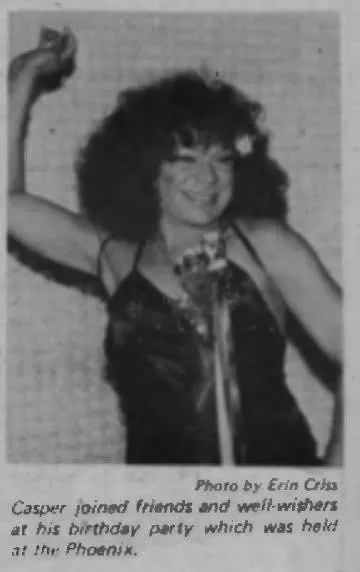 Casper, August 1980
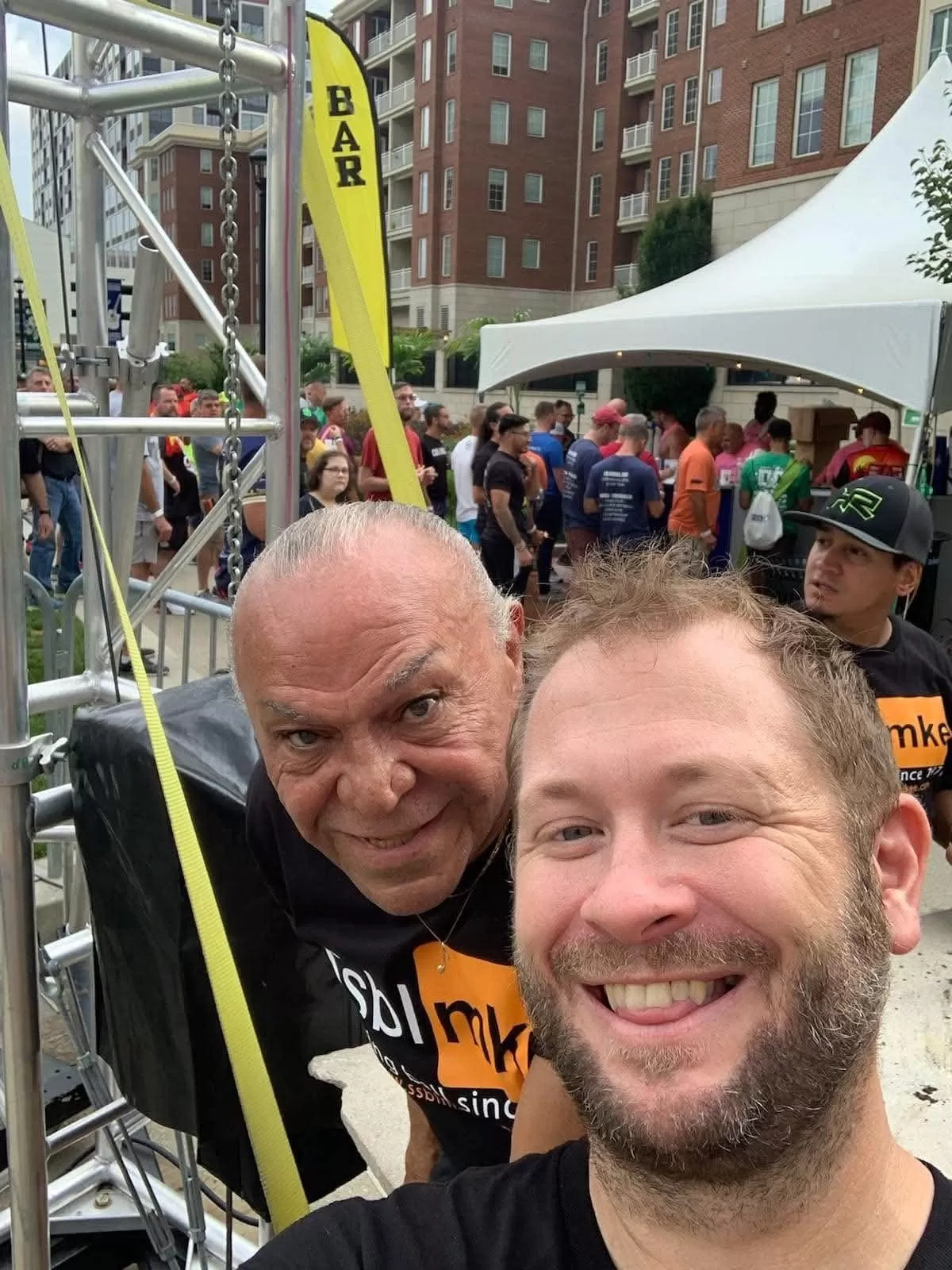 Casper and Adam Clasen at the Gay Softball World Series, 2021
Mapping the underground
During his lunch breaks at MATC, Casper began to explore downtown Milwaukee in search of himself. Knowing he was "different," he stepped into a nearby tavern one afternoon to have a beer between classes and discovered a room filled entirely with men. He began returning daily, supported by a $60-a-week stipend from the Job Corps, which required a three-year post-program commitment akin to military service.
Though intimidating at first, the Mint Bar (422 W. State St.) soon. became his home. He found a community of beautiful people, made new like-minded friends, and began spending his weekends at the bar. He got to know Angelo Aiello, the owner, who became a good friend.
"Believe it or not, I didn't even know it was a gay bar at first," said Casper. "I just knew it was a bar. I had no idea that gay bars existed anywhere! During the day, the Mint was well-dressed men in business suits. By night, it was people coming over from the Arena and Auditorium."
"One night, I walked into the men's room and this guy grabbed me. I was surprised, and he said, what's wrong, don't you like guys? Well, that's how I found out that I had been hanging out in a gay bar."
However, this was 1965. Navigating queer life still required an underground network. There was no internet, no social media, no apps. A young man's survival depended entirely on discretion, situational awareness, constant code-switching, and word-of-mouth advice. The very word "gay" was rarely spoken aloud; instead, society weaponized a cruel derogatory term that Garcia despises now as much as he did then.
"Angelo had a red hot Italian temper. The first sign of trouble, he'd be on it. He'd shoot someone right in the ass. I saw him pull a gun out from behind the bar. And yet, he was good people. Very protective. If you were hungry, he'd find a way to feed you. If you needed money, he'd give you money. He'd do anything for any one of us. His wife Bettie was the same way. They were very secretive. Angelo never mentioned his first wife nor his children, and they were never seen at the bar."
"As time went on, the Mint Bar changed a bit. It became senior citizens during the day and drag queens at night. Hustlers came in, looking to pick up old guys with money. You could pick up just about anything at the Mint Bar."
Casper remembers Rosie, the pint-sized "firecracker" of a bartender who worked at the Mint for decades.
"They had to make her a special stool to reach across the bar," said Casper. "And she was a little tramp! She'd lock up the bar and hook up with tricks outside in the back parking lot. She was a real character, and that bar was filled with 100 people just as wild as she was."
Despite the odds, Milwaukee housed roughly 30 underground gay and lesbian establishments, including some of his favorites: the Seaway Inn, Castaways, the Grand Prix, The Stud Club, the Ad Lib.
"Otto Schuller (who owned the Seaway) was such a slow talker that I thought he was always drunk," said Casper. "His employee, Al, was a Black man who modeled at Johnnie Walkers. The Seaway brought in a really sophisticated, really uppity crowd. The city tore down the Seaway for a development deal that never happened. It's really too bad because it was a beautiful little space, just cozy and warm and comfortable. Otto also ran the Hunter's Club bar on 7th and Wisconsin, which was always packed with hustlers, and he worked at Miss Katie's Diner."
"In the beginning, the Castaways was on 5th and McKinley, and it was all girls. I remember Lois Ratzow working there. It was right next to a Speed Queen BBQ. That was pretty much all that was left of the neighborhood, and then, they tore those down too. I met Chuck Cicirello at the new Castaways on 2nd Street, and he later hired me at the Factory."
"I was the first Miss Grand Prix!" Casper announced. "I was dressed as a Hawaiian chick with long black hair. That was the second gay bar I ever went to, and trust me when I say, I went there a lot. It was filled with young people, even though Water Street was very rough at the time. I remember the night Tiny Kallas got shot in the ass. He was sitting in the car outside, and as he came into the bar, someone went by in the car and shot him in the ass. You'd think a bee stung him because he barely felt it. Tiny was that fat! They couldn't remove the bullet because they couldn't find it. They had to wait until he lost weight."
"I met Josie Carter at the Grand Prix when I was 21. She was in a classification all by herself. When she walked into a room, you knew it was going to be a party. Someone said, you've got to meet this woman, she's got a big mouth just like you. Her laugh! You could hear it miles and miles away. We knew we liked each other from the day we met."
"We used to go down to the Stud Club, which was amazing, because they would take photos of everyone who was there and shellac them into the floors. Thousands and thousands and thousands of photos. Don't you wish they had saved some of those? Later, we would go out -- because every bar was her favorite bar -- but we'd always wind up at the Ball Game."
"Jose was my favorite. She was my heart. Everyone just loed her."
"When the Factory first opened, it was dead. It was competing with the Wreck Room which was only 50 feet away. They barely advertised so it was all word of mouth. Chuck Cicirello said, 'don't worry, don't worry, wait and see.' We were sure the bar would go out of business. One Saturday, 10, 15, 20, 25 people came in. By the end of the night it was 400 people. The main bar had six bartenders, the side bar had two. And we were running non-stop for hours. It was such a rush. People came out of the woodwork and danced all week long. By six months in, the Factory was the place to be."
Although he was excited to find so many spaces to explore, Casper was most surprised to find internalized homophobia.
One night, a gay bar refused to serve him because he was dressed in drag. Worse yet, they insulted him for his looks.
Casper did not take insults sitting down. He promptly punched the bartender squarely in the face, resulting in an arrest for disorderly conduct. The very next day, he walked back into the exact same bar dressed in men's clothing. When the same bartender politely asked, "Can we help you?" Casper proudly declined.
"No, you cannot. I'm the drag queen you got arrested yesterday. And guess what? You and your bar can kiss my ass."
And then he walked out on his own terms, never to return.
Over time, Casper noticed a rigid social divide in the underground scene: gay men stayed in men's bars, and lesbians frequented separate women's spaces, with tension brewing if the groups mixed.
He thought the division was foolish.
"We would be stronger if we worked together," he thought. "Who benefits from keeping us apart?"
Ever adaptable and eager to work, Garcia earned his bartender’s license alongside his culinary credentials. He walked into The Lost & Found, a new lesbian disco, and asked for a job. Owners Pete and Bev Nilsson reminded that the Lost & Found was a "girls' bar" and that he might not be comfortable here. Casper replied, "I don't care. I just want a job. Do you need a bartender or not?" They were impressed with Casper's work ethic and he was quickly hired.
With that, Casper became the first gay man to bartend at a Milwaukee lesbian bar -- decades before this was common.
"27th and Wisconsin was not like today. There were a lot of late night businesses over there, including Romines, Big Boy, Burger Chef, George Webbs... it's not recognizable anymore."
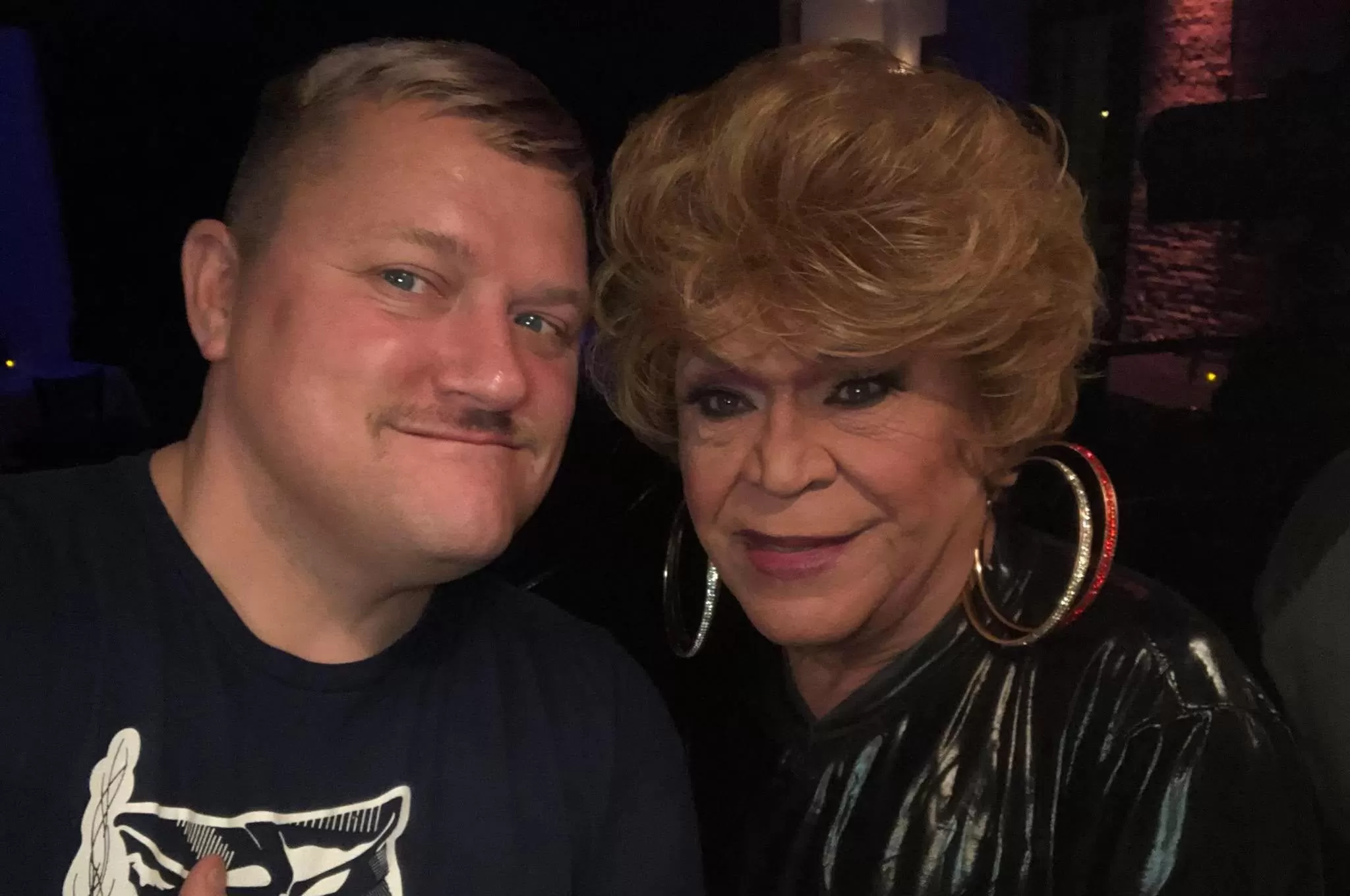 Casper and Michail Takach
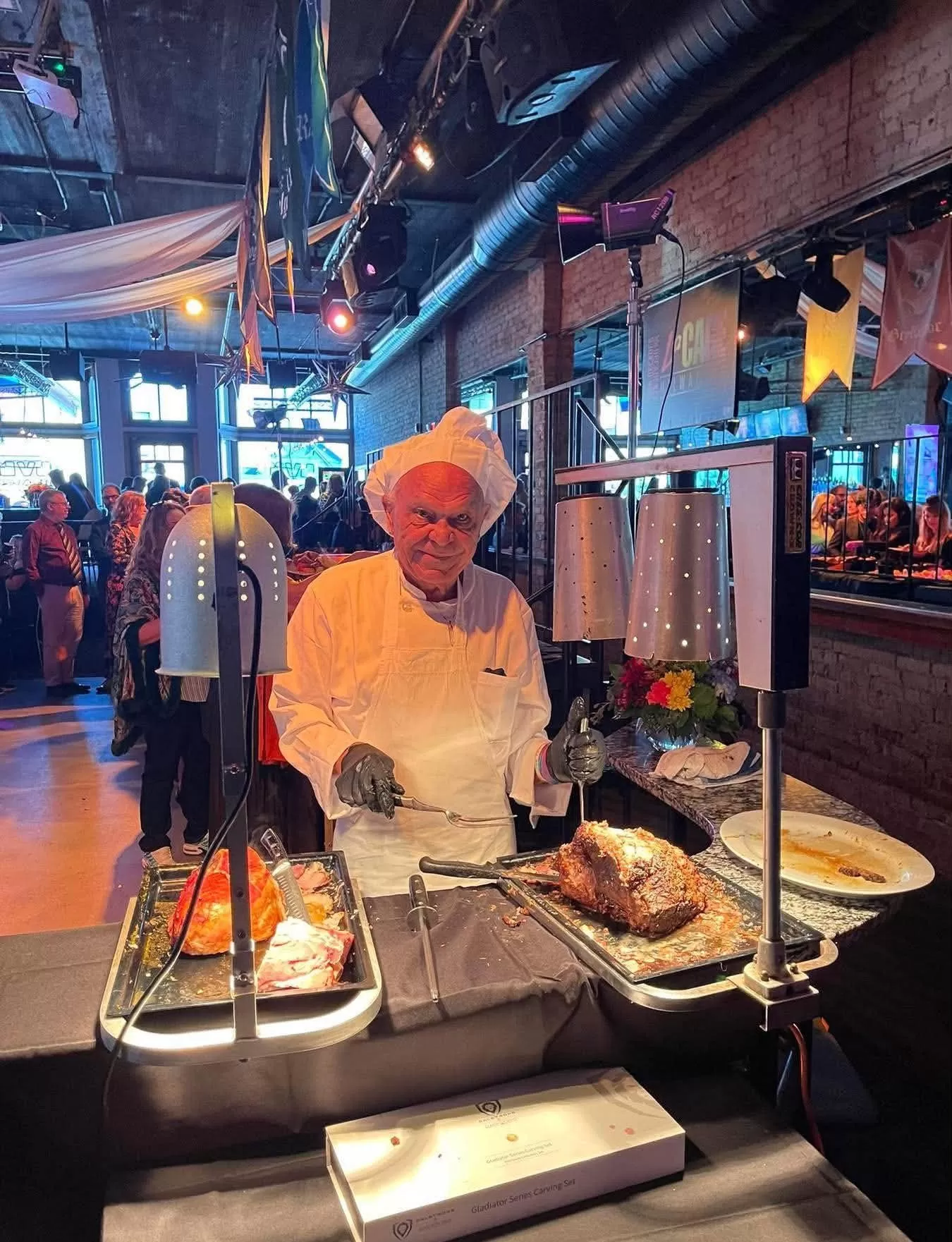 Chef Casper at La Cage
Preserving the past, protecting the future
Over his decades in Milwaukee, Casper became a beloved contemporary of the city's early queer trailblazers. He ran with legends like Chuck Cicirello of The Factory and Club 219, Sam Mazur of The Phoenix, Wayne Bernhagen of Wreck Room, Rick Kowal of The Ballgame, and John Clayton of C'est La Vie. Today, he still works in the bar scene, supporting culinary events at La Cage, Fluid and other local venues. He's also been an active member of SSBL for decades.
After graduating from MATC, he became a professional chef, host, and event planner, developing a legendary reputation for producing spectacular parties. One way or another, Casper kept finding himself in the heart of downtown -- at MATC, at the Mint Bar, and later, at the Wisconsin Center Convention District, where he worked for over a decade. Although the Mint Bar was acquired in 1986 for the Bradley Center, and later demolished, it still holds a special place in his heart.
"The Mint Bar was always fighting to earn respect, but the city really never respected it."
After the demolition, Bettie Aiello moved the Mint Bar II to 819 S. 2nd St., now Fluid, where Casper often works today. She was getting older, and the bar was getting to be too much, especially after she was diagnosed with lung cancer.
As an elder of the community, Garcia looks at the modern landscape with a mix of pride and profound concern. He fears that younger generations, born into an era of unprecedented freedom, mainstream acceptance, and digital convenience, are starting to take their hard-won civil rights entirely for granted.
"Today, the young people have no knowledge of what we as seniors went through," Garcia warns. "They just want to party, drink, and hook up. But they don't realize what happened in the past could very easily happen again in the future. Eldon Murray said, rights must be protected or they will be taken away. You can count on that."
His message to the younger generation is an urgent plea for historical literacy and political vigilance. Progress is a fragile thing, and the rights won through the blood, sweat, and defiance of elders can be stripped away if the community forgets its roots.
"Accept the knowledge that we offer," Garcia implores. "Listen, learn, and take action. If you think you've seen the worst of times, you haven't seen nothing yet."
Casper Garcia is a living reminder that freedom was not given to us. It was won by people who demanded and fought to be seen.

recent blog posts

September 11, 2026 | Amy Luettgen
September 04, 2026 | Amy Luettgen
August 31, 2026 | Noah Johnson
The concept for this web site was envisioned by Don Schwamb in 2003, and over the next 15 years, he was the sole researcher, programmer and primary contributor, bearing all costs for hosting the web site personally.
join our email list
Get WI LGBTQ History Project updates in your inbox.


