
- Places
 January 10, 2026 | Michail Takach
Kate Krause: moving Sheboygan forward, one day at a time
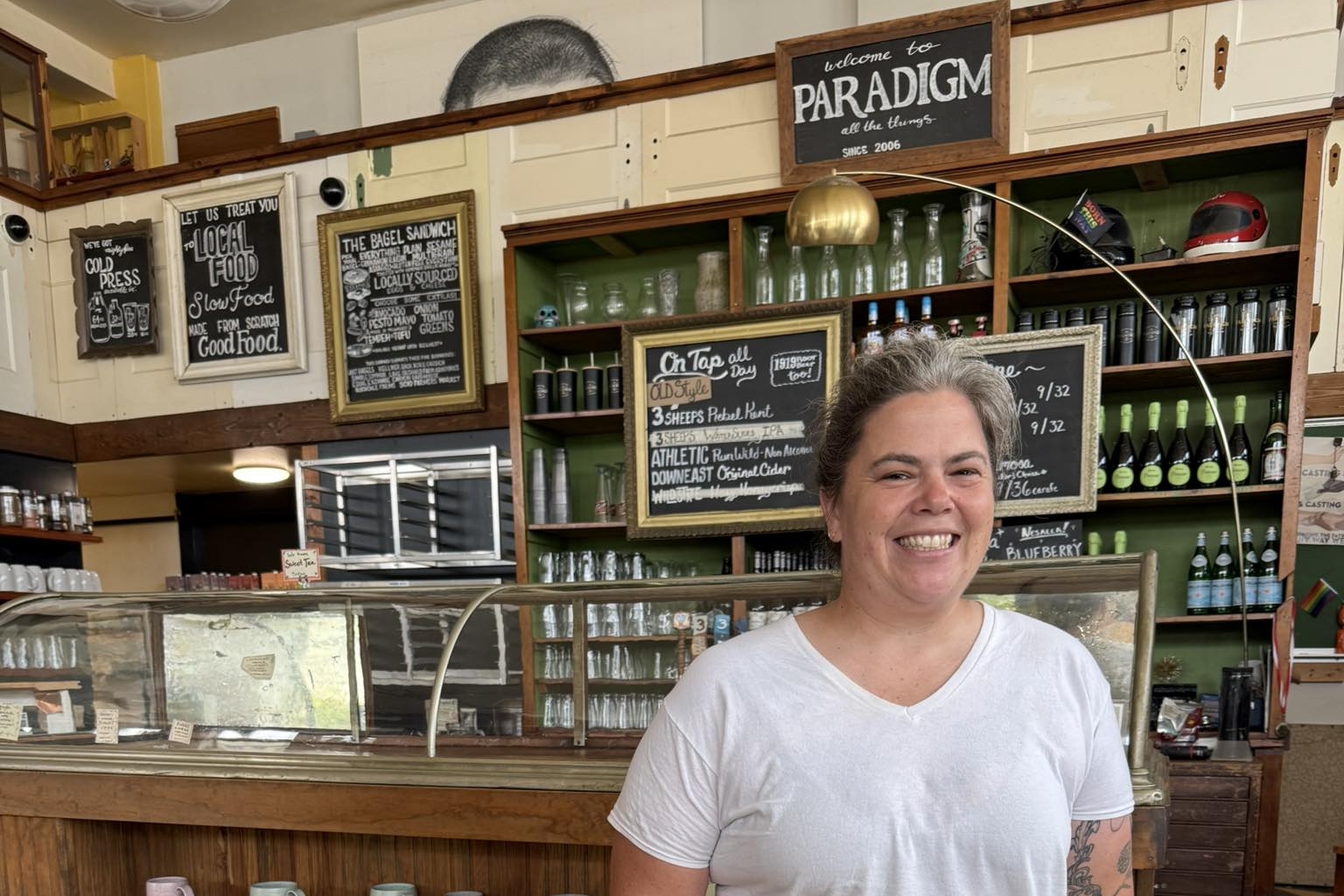
For over 20 years, Paradigm Coffee & Music has been a beacon of safety, acceptance and hope, proving that fostering authentic community is the strongest response to bigotry.
Kate Krause"Everything we do, we do to create community, connection, and understanding."
Kate Krause, owner-operator of Paradigm Coffee & Music, might have grown up in a Wisconsin farm family, but her childhood was anything but typical. Her mother was a Catholic school teacher at St. Cyril & Methodius Parish (2705 S. 14 th St.,) and her father was a funeral home director.
Oddly enough, he worked at the Ballhorn Funeral Temple (1201 N 8 th St.,) now the Ballhorn Chapels Funeral Center, which is directly across the street from Paradigm in Uptown Sheboygan.
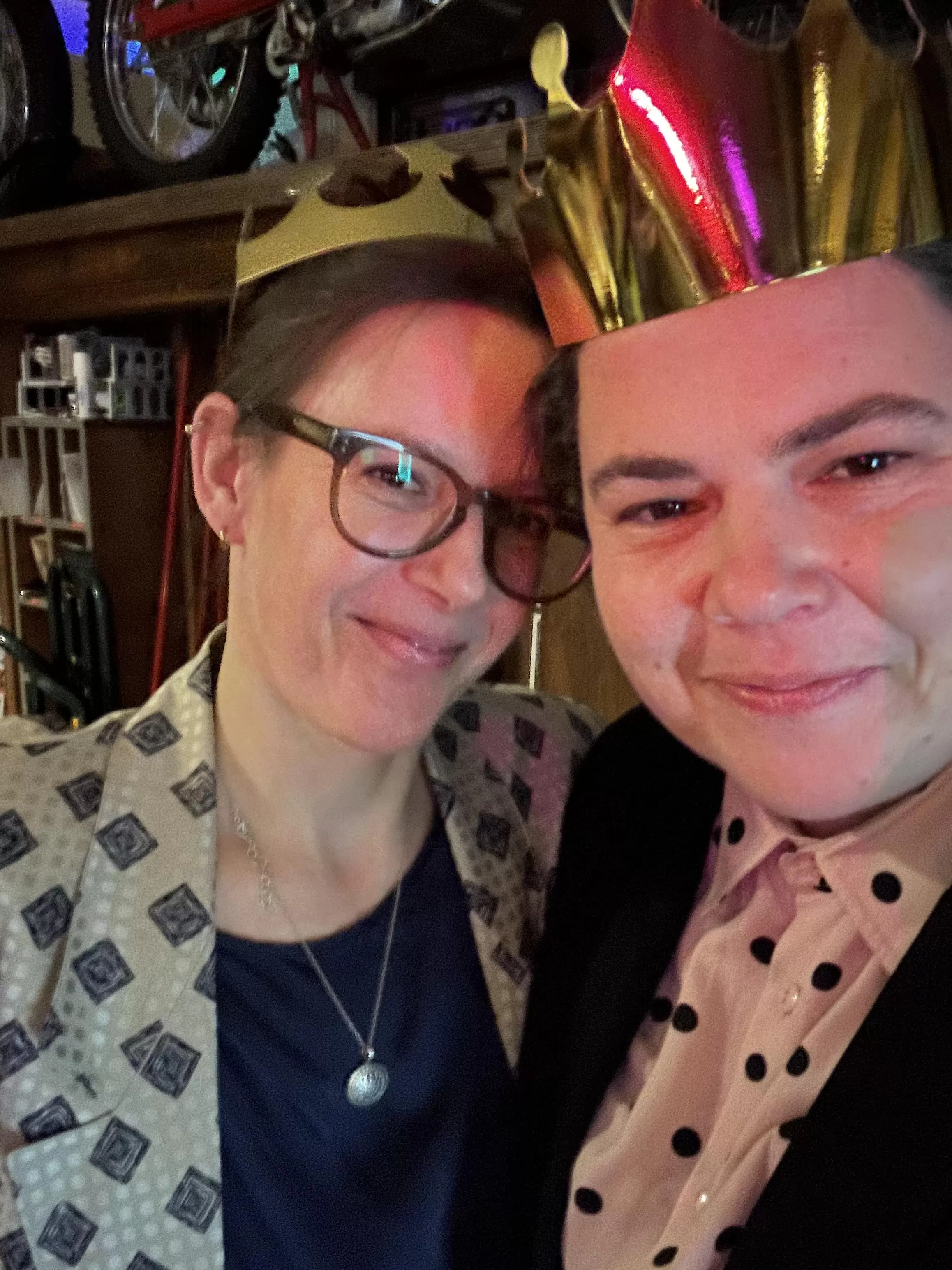
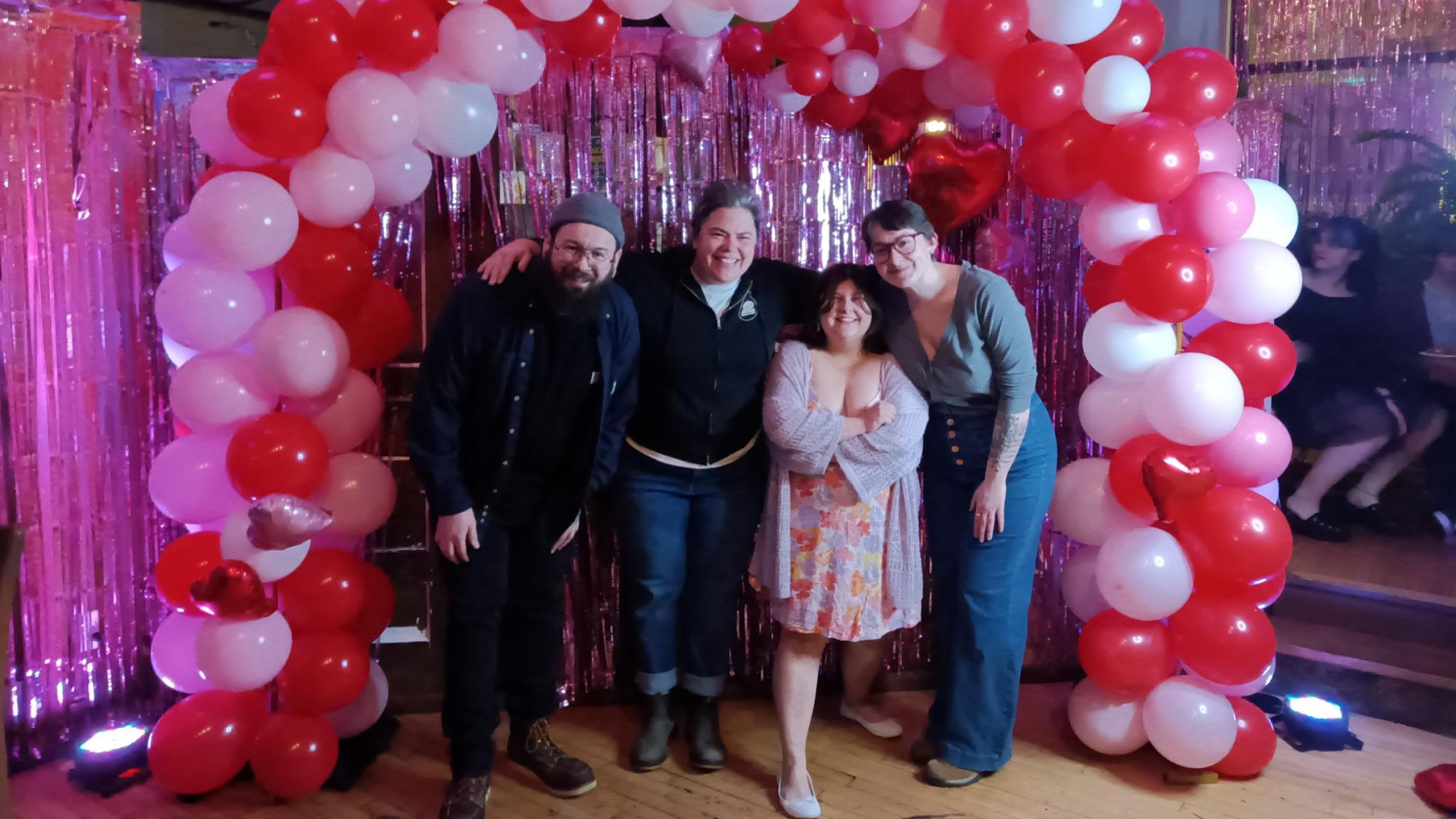
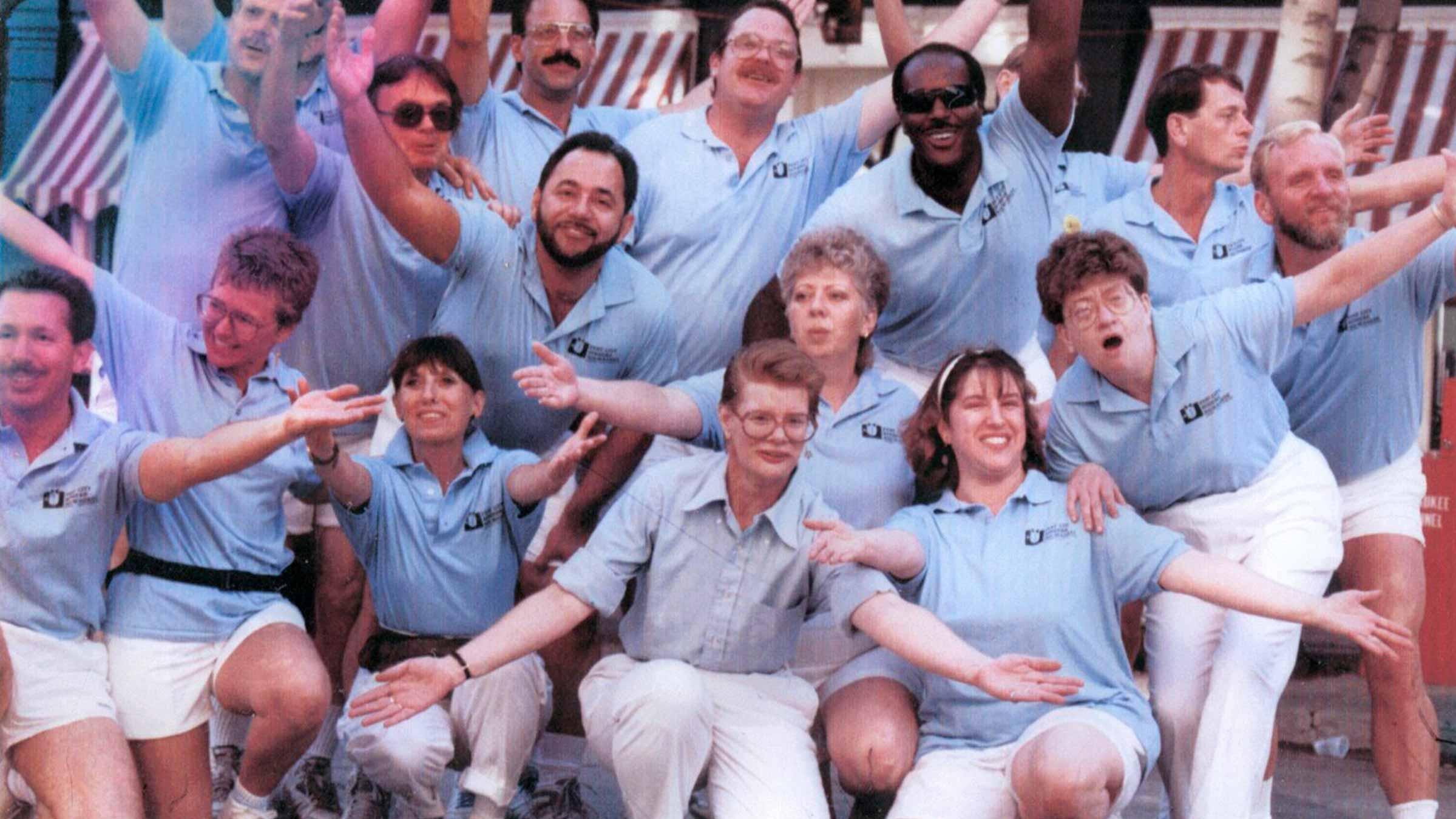
 Kate Krause and friends
After her father passed away, her mother waited until Kate finished high school to sell the funeral home and move back out to their farm north of Sheboygan. Kate lived there while enrolled at UW-Sheboygan, but she still didn’t feel quite herself.
“I didn’t see any representation of people like me growing up,” said Kate. “Not in the city, not in high school, nowhere. And I had these childhood crushes without even knowing they were crushes.”
“I thought my fourth grade CCD teacher was awesome. Did I want to be her? Did I want to hug her? I didn’t really know what these feelings meant. I remember really, really liking Juliana Margulies and Natalie Merchant. Those are my most admittable celebrity crushes.”
“So, imagine how big my eyes flung open when I got to college!”
Kate met a new group of friends that included “theater kids, alternative kids, gay kids, and a little bit of everything.” She was 18 years old when she met her first girlfriend, Hannah. And it didn’t take long to find the larger LGBTQ community.
“I was just this punk kid working at Wonderful World, a coffee shop owned by two lesbians,” she said. “They invited Hannah and I to a queer potluck in a church basement. We felt a little too young for it – I mean, we were the youngest people in the room by a generation – but it stuck in my head that this moment felt important. Very, very important.”
Kate began organizing in a casual, but very intentional way. She was instrumental in creating a Gay Straight Alliance at UW-Sheboygan in 2001. The GSA sponsored a series of inclusive events, including National Coming Out Day, Rocky Horror Picture Show, and dance parties.
“It wasn’t quite so political at the time,” said Kate. “It was more of a meet, greet, and hang out approach. I wanted to make Sheboygan somewhere that I wanted to live forever. And that’s what led us to open Paradigm in 2006.”
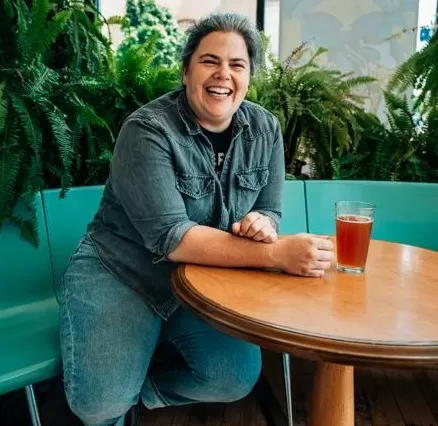
After the Pulse Nightclub shooting of 2016, Kate sensed a widespread craving for human connection.
“The Blue Lite bartenders were jumping every time someone opened the front door,” said Kate. “He didn’t know us very well, and we didn’t know him very well. Everyone was so isolated and seeking the comfort of community. We decided it was time to bring back the good-old Queer Potluck – and we’re still doing it today. On the first Monday of every other month, we bring anywhere from 30-70 people together and share a meal.”
“It helps people get to know each other. I have a fantastic network of human beings in my life, and even I can feel isolated at times. I can’t imagine how someone might feel who doesn’t have any network at all. That’s why we’re here.”
Paradigm decided to become more of a beacon of hope. In 2016, they installed the pride flag that still hangs on their doors. They welcome, and openly advertise, LGBTQ performers and events.
“I just found out this summer that another couple got similar hate mail before we did,” said Kate. “That moment emboldened us. Everything we do, we do to create community, connection, and understanding. We build stronger bonds, so no one feels isolated alone.”
“We don’t edit ourselves anymore,” said Kate.
Across the past two decades, Paradigm has more than doubled in size – from 1,800 square feet to 4,500 square feet – and it’s not done growing yet. Kate and her team are continuously reworking future plans.
“We’re always up to something,” she said. “We’re used to kicking things around to make cool things happen. We recently launched a cabaret series that hosted its finale at the Weil Center for the Performing Arts. Thanks to a private donor, we were able to host free outdoor shows in our parklet every Friday night in August. This summer, we built a movable stage on a hay wagon, which we can roll around town and do pop-up concerts. We can do a lot with a little, and we can make magic happen with even more.”
“We’ve hosted over 2,000 shows since we opened, and we are just getting started as a music venue,” she laughed. “I already have a savings account for the 20th Anniversary Celebration in 2026.”
“It’s funny: every 30-something-year-old dude has a story about being a rowdy teenager and getting kicked out of Paradigm,” said Kate. “We opened as a bunch of young people, and there were a lot of young people here, but our clientele has aged with us and now we’ve cast a much wider net.”
Paradigm is very committed to giving back to Sheboygan. They actively fundraise for the Pride Picnic, performing arts groups, women’s health services, and more. In 2025 alone Paradigm raised just over $50,000 for local organizations.
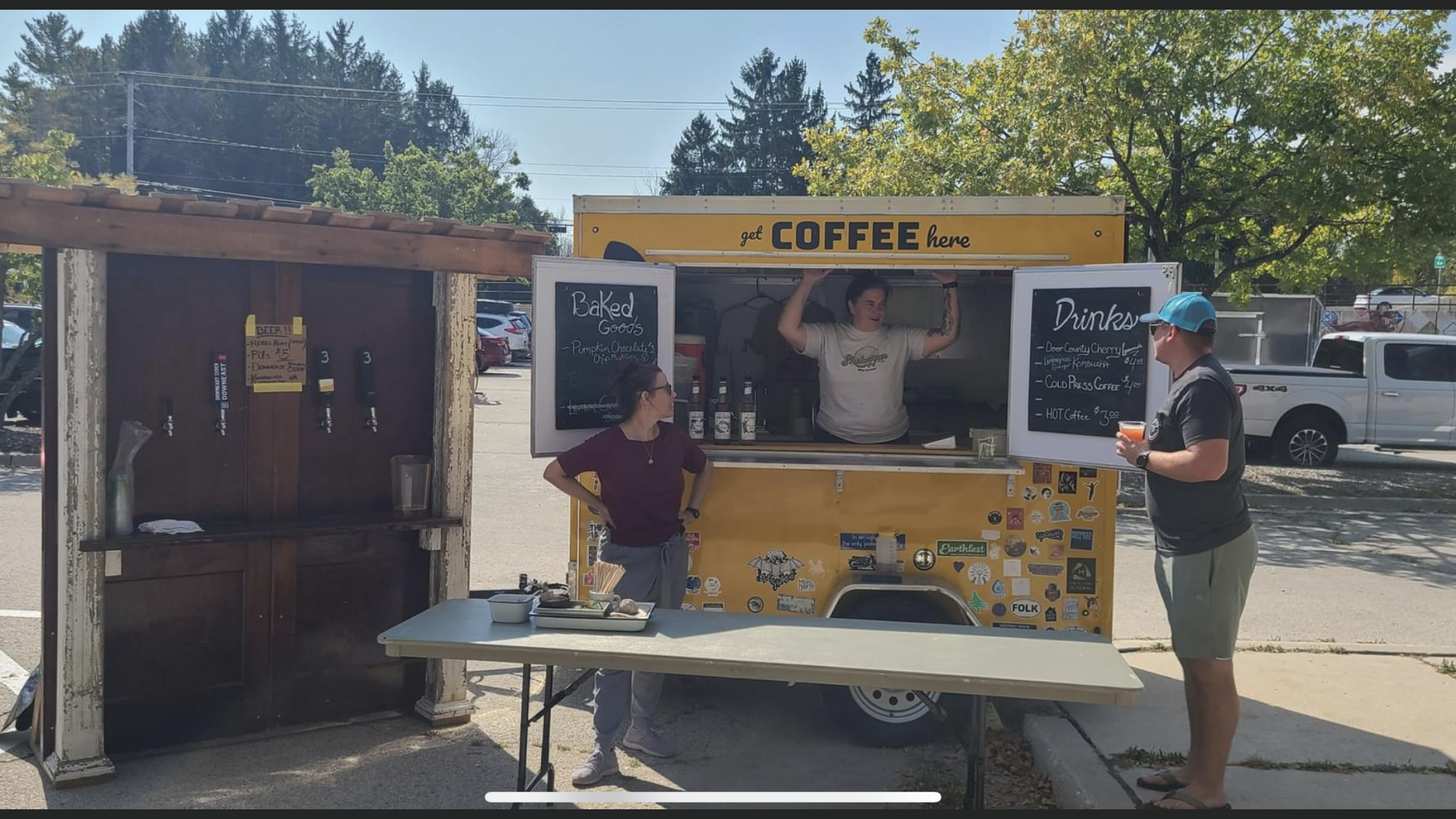
Kate is proud to serve locally grown herbs, fruits, vegetables, and honey – some of which are grown at her mother’s farm and a good friend’s farm. All baked goods, including their popular turnovers, pie pockets, and muffins, are made onsite by a team led by her partner, Rebecca. Kate often jokes that pumpkin muffins and bagel sandwiches pay the bills.
“Nineteen years later, we’re a totally different shop from where we first started,” said Kate. “We’re pretty much in denial that we’re successful.”
“What we used to make in a day is usually made in a few hours. We just had our best week ever. We keep having our best months ever. And guess what? We’re too busy to celebrate them as well as believe it… we’re just going to keep working for it.”
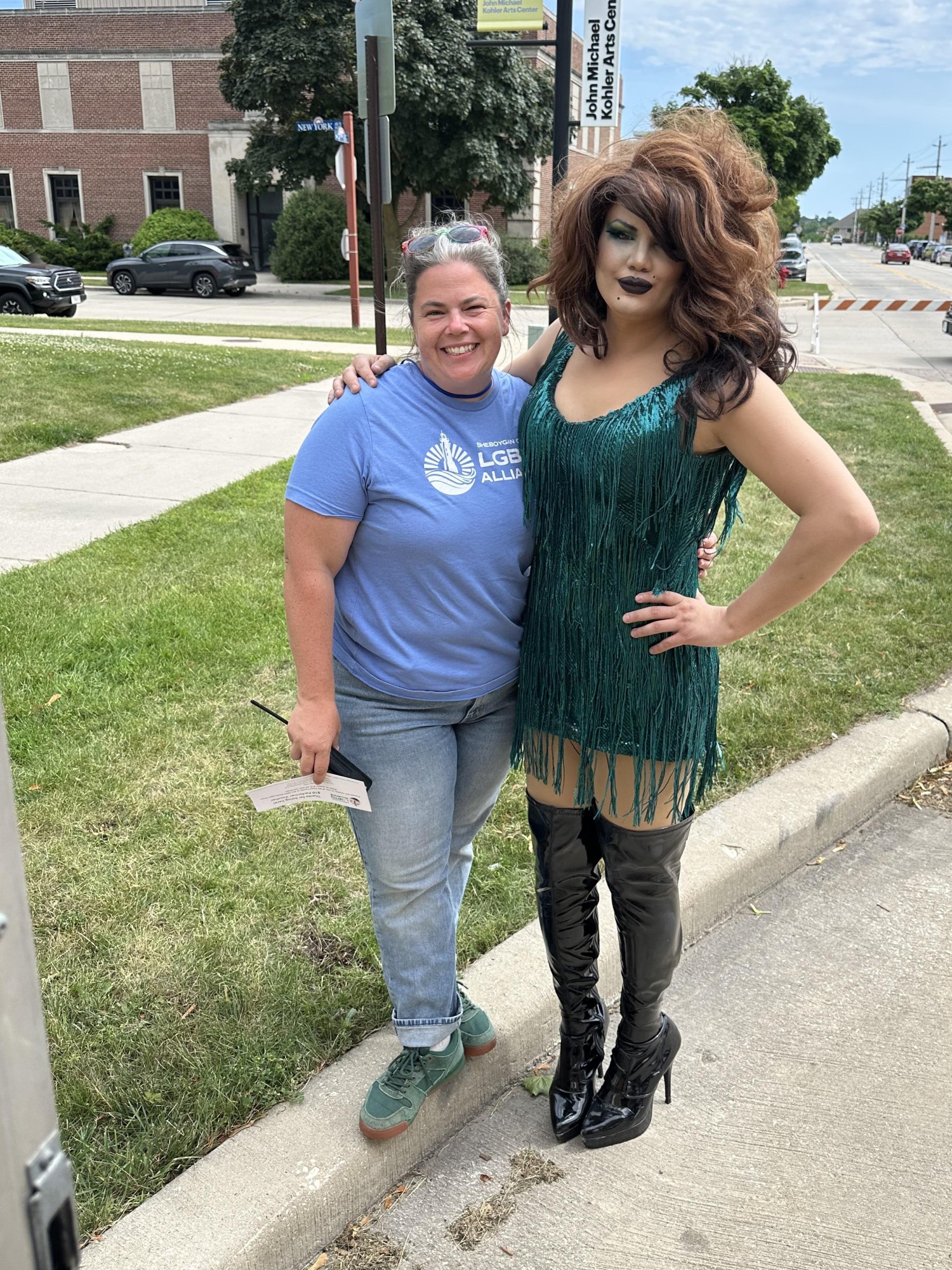
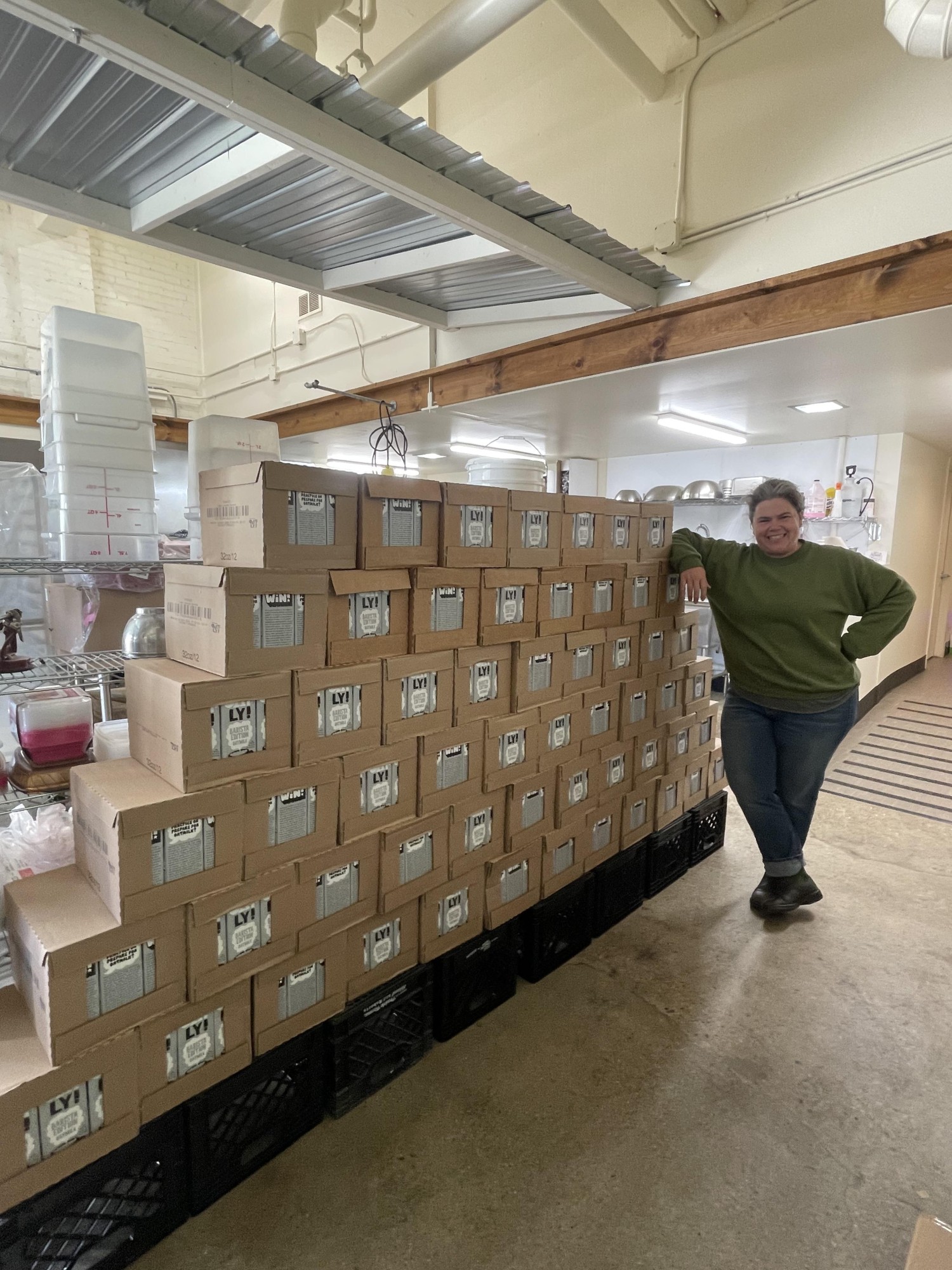 Kate Krause
Kate remembers co-hosting a queer happy hour at the Blue Lite on Tuesday nights, complete with drink specials and free fresh-baked cookies from Paradigm. This tradition, celebrated in a Wisconsin Public Radio interview, ended with the COVID shutdown. After the pandemic, many people sobered up, reduced their alcohol intake, and/or didn’t go out as much afterwards.
“When I opened, Dean Dayton was still running the Blue Lite, and I spent many, many fun nights there in my 20s and 30s,” said Kate. “When I turned 37, I threw an Aquarius birthday party at the Blue Lite with a DJ and a taco truck in the middle of an epic snowstorm. I slept until 6pm the next day. That will forever be my memory of the Blue Lite.”
Kate is proud to lead the change she always hoped to see in Sheboygan.
“Sheboygan is changing with us, because we’re not just existing – we’re thriving. We’re being supported. And that’s because people are voting with their dollars for change in their community. Many of our neighbors are former Paradigm customers and co-workers – Kay at Chicory Root, the guys at Ampersand, Amy at City Vintage – and we’re all still connected and connecting with each other. Our bond only gets stronger, and our network only grows larger.”
“I kid around that I no longer know every single gay person in Sheboygan, and that feels like progress.”
“My biggest advice to small business owners: be good at what you do, be good to your neighbors, live your best life, hope for the best, and never read the comments.”
She credits Horseradish Kitchen & Market, a unique food and music venue in Princeton, as a perfect example of a community-first business.
“It’s the best little restaurant in any town,” she said. “They’ve carved out a unique space for the community, and they are constantly looking out for their customers. They’ve really created a destination.”
As far as Sheboygan has come, Kate admits it still has a way to go.
“It’s hard to be seen and be authentic in your own community,” she admits. “I’m still not entirely comfortable being 100% out in small town Wisconsin. I’m a lot farther along than I used to be, but I have to trust my instincts. For a long time, I thought outing myself would be bad for business or just generally unsafe. I made sure the last thing people found out about me was my sexual identity. My thought process was that by the time they found that out, they might already think I was awesome and it would make them question their possible bias. But I don’t really have that privilege anymore. After all, I run the lesbian coffee shop.”
In 2016, Kate and her team were openly harassed by haters, who called them “sitting ducks” and the “next Orlando” in online threats. It got worse: people stood outside across from the coffeehouse with AK-47s trying to intimidate customers and staff. Sheboygan Police didn’t see a “direct threat,” so very little was done to protect the business. Instead of arguing with the haters online or in-person, customers were encouraged to leave positive reviews. One morning, Kate woke up to almost 300 astonishing five star reviews from all over the country.
“Maybe it’s our politics. Maybe it’s our identities. Or maybe it’s because I’m a woman who stands up for herself. But we’re still dealing with some of those haters.”
“Is there a classic Jaguar who drives by and gives me the finger weekly? Maybe. But he doesn’t represent all of Sheboygan…. He only represents that fearful, hateful bigotry that will always be out there.”
“It’s up to us to decide whether or not to give hate any power.”
Kate Krause was interviewed by the Our Voices - LGBTQ+ Stories of Northeastern Wisconsin project in 2022. Listen to her story at the University of Wisconsin - Green Bay website.
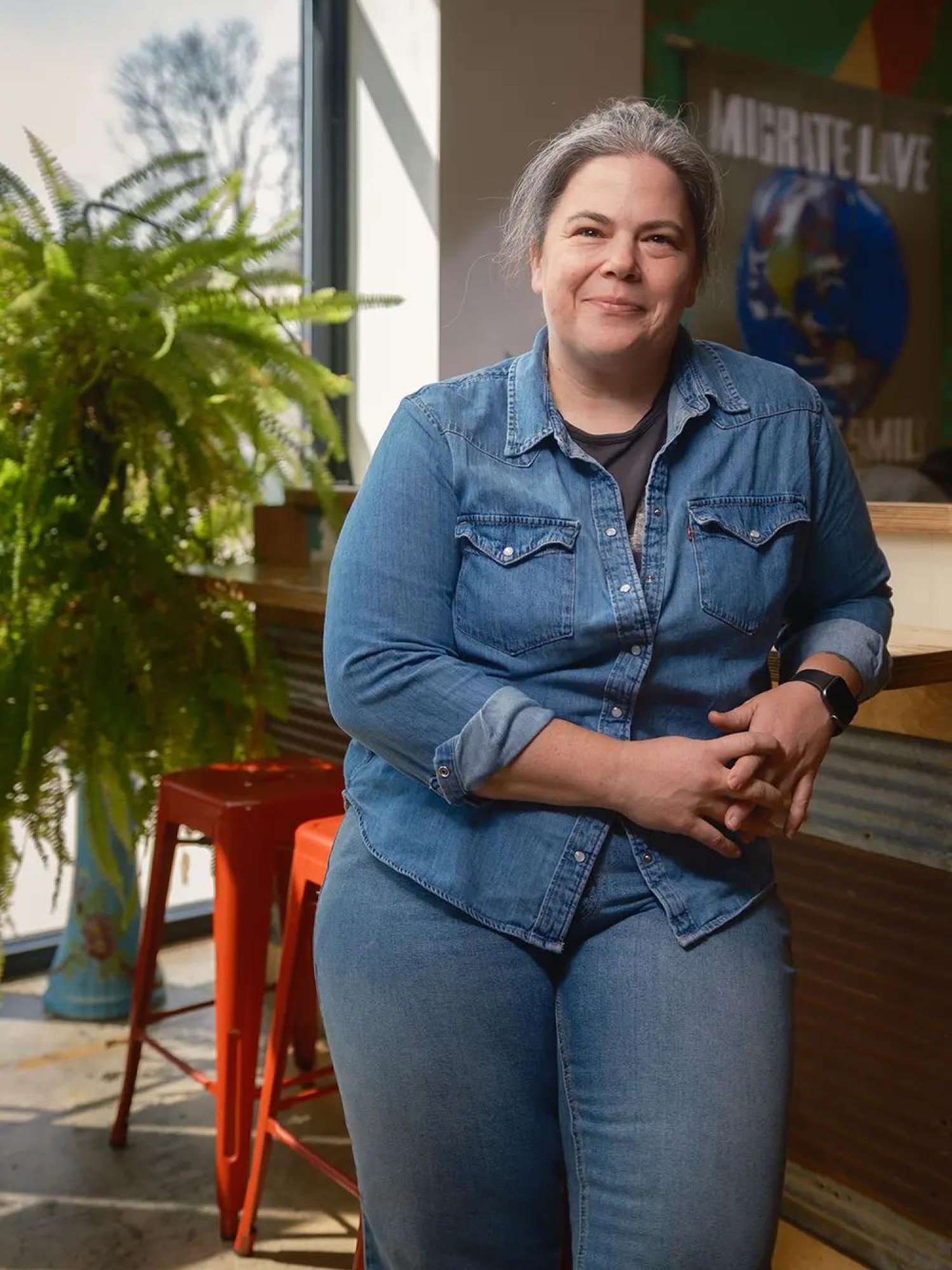 Kate Krause (by Ian DeGraff for Our Lives Magazine)
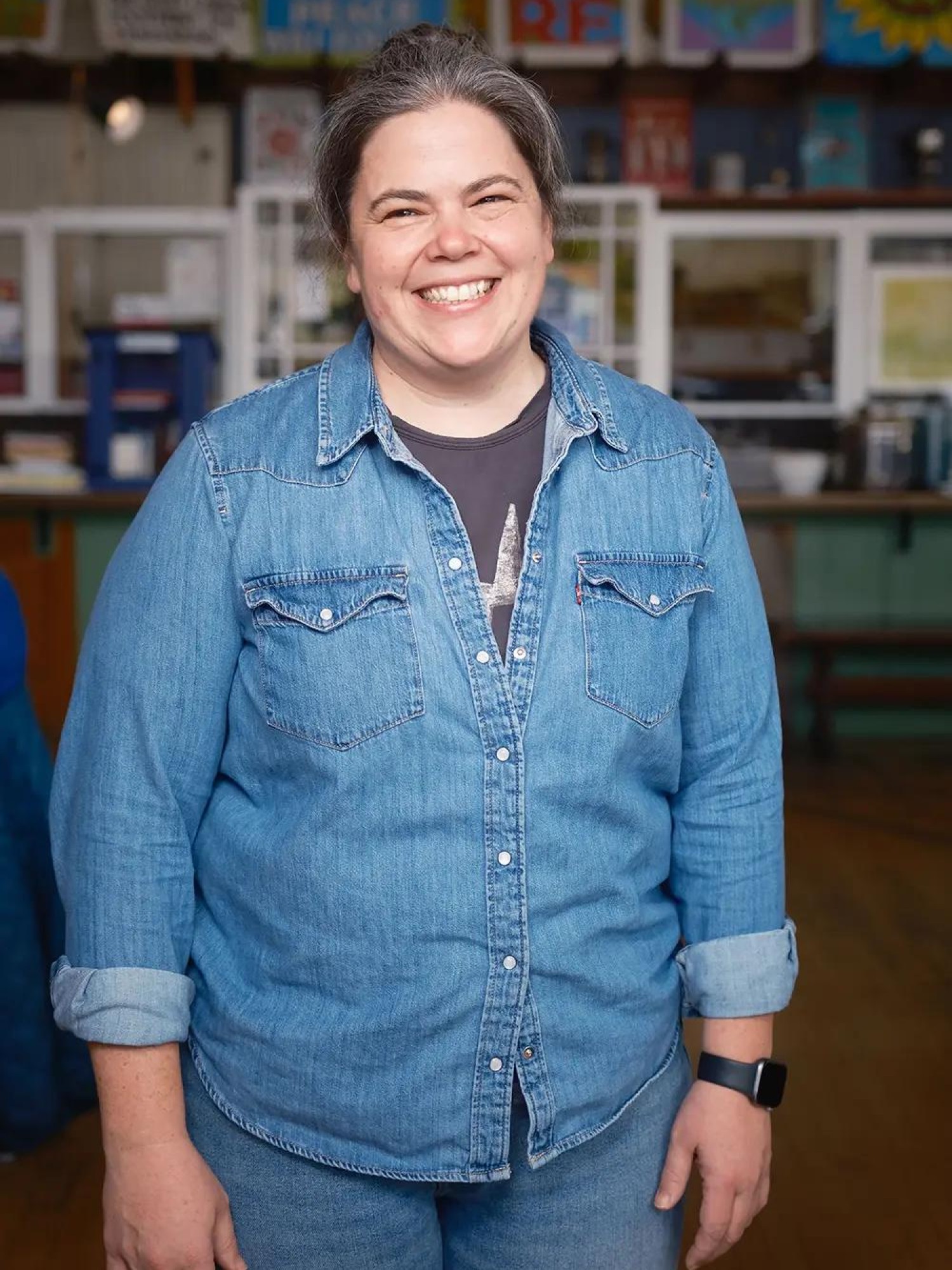 Kate Krause (by Ian DeGraff for Our Lives Magazine)
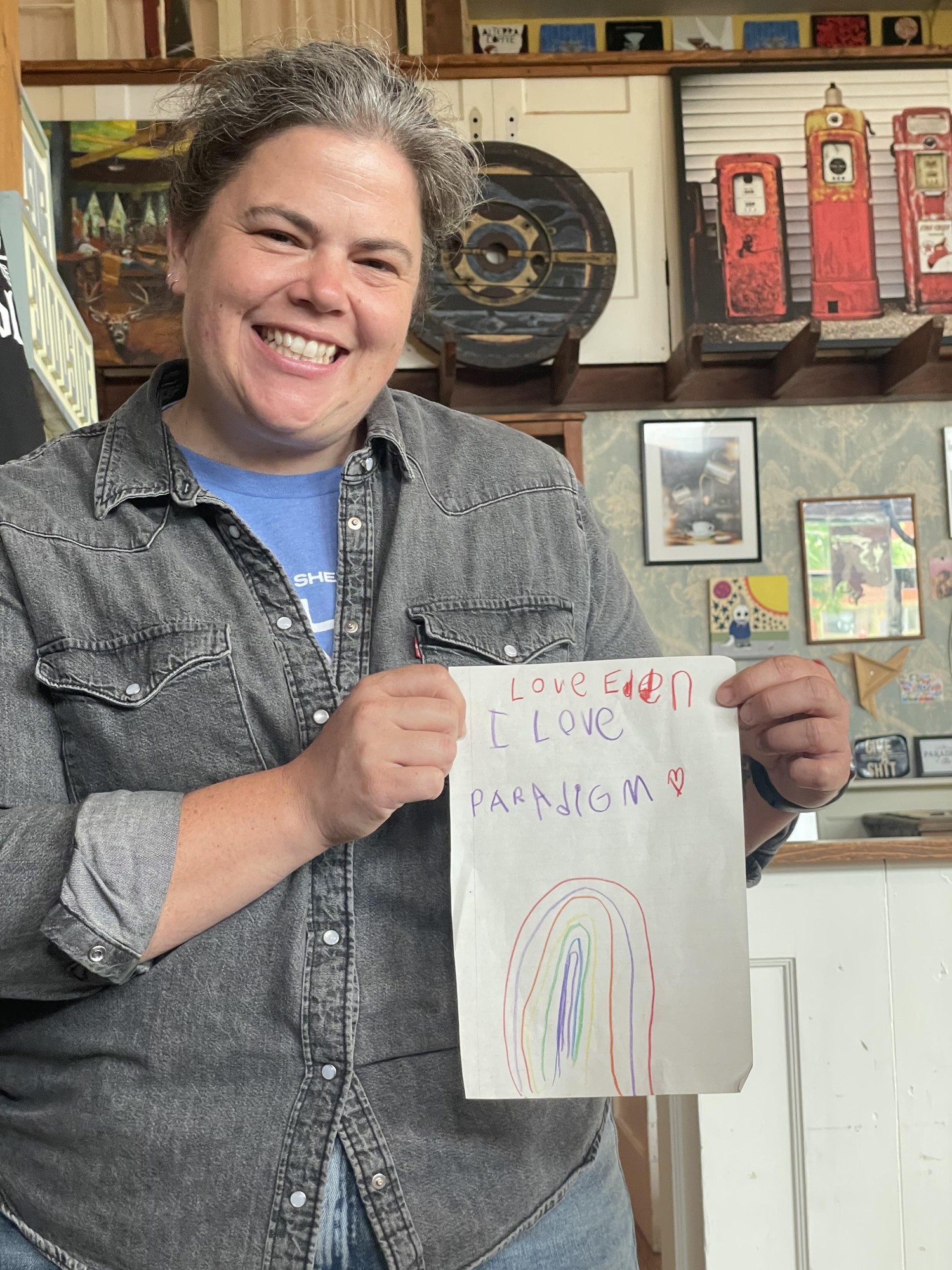 Kate Krause

recent blog posts

September 11, 2026 | Amy Luettgen
September 04, 2026 | Amy Luettgen
August 31, 2026 | Noah Johnson
The concept for this web site was envisioned by Don Schwamb in 2003, and over the next 15 years, he was the sole researcher, programmer and primary contributor, bearing all costs for hosting the web site personally.
join our email list
Get WI LGBTQ History Project updates in your inbox.


