
- Places
 August 31, 2026 | Noah Johnson
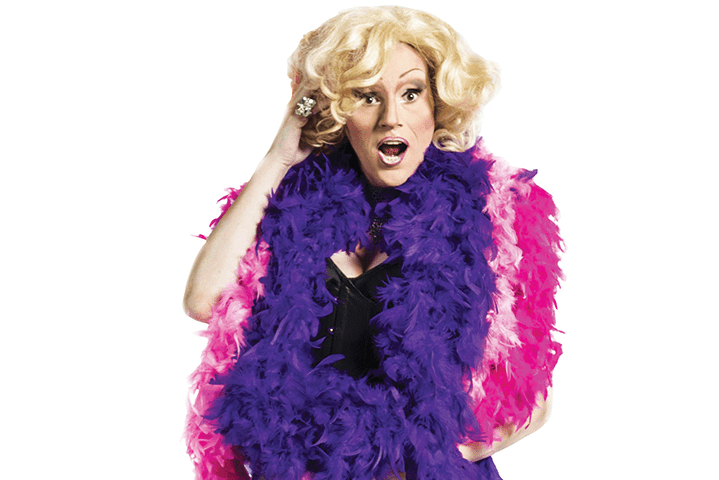
Miss Dee-Lovely: from making space to making history
As a celebrated entertainer, she continues to create connective and meaningful community spaces for Eau Claire.
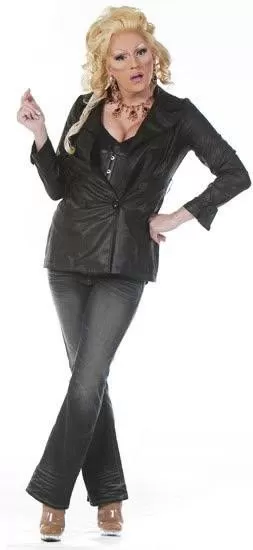
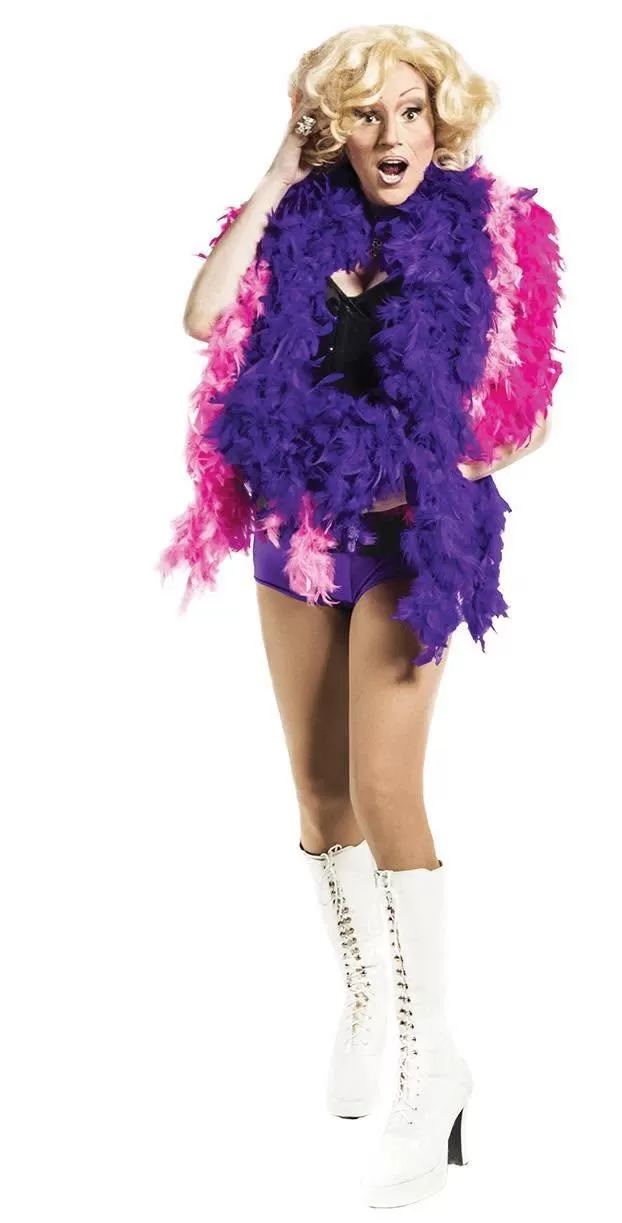
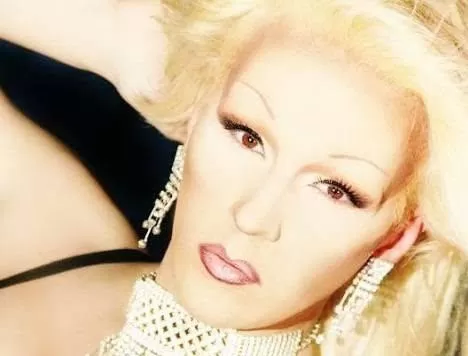
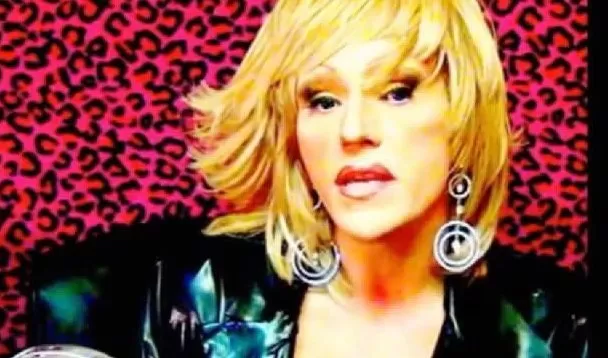
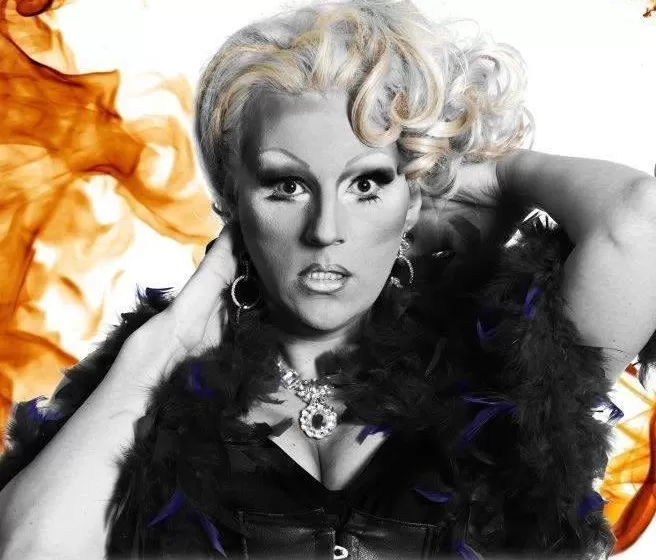
Miss Dee-Lovely (she/her, “Miss Dee”) is a longtime Eau Claire, Wisconsin drag performer, artist, writer, DJ, public speaker, and LGBTQ community activist whose career spans more than three decades.
Born in Chippewa Falls and raised in the Chippewa Valley, Miss Dee-Lovely became involved in the local LGBTQ community as a teenager and began performing in drag in 1998. Since then, she has become one of the region's most recognizable drag performers and an important participant in the history of LGBTQ activism, entertainment, and community-building in western Wisconsin.
Miss Dee-Lovely attended Chippewa Falls Senior High School, graduating in 1997, and since then has held a considerable number of roles and involved in projects around the west side of the state.
These roles include:
- The Chippewa Valley LGBTQ Community Center and the Northwest Wisconsin AIDS Project/AIDS Resource Center of Wisconsin.
- The Rainbow Club/Q2
- Founding member of LGBTQ youth group/later co-facilitator
- Co-creator Dragapalooza/Kitanahpalooza, 2000-2012
- Long-running drag event st UW-Stout (Menomonie, Wisconsin)
- Scholarship founder, The Fairy Godmother Scholarship (UW-Stout)
- Co-creator The Fire Ball, 2012
- Long-running drag event at UW-Eau Claire (Eau Claire, Wisconsin)
- Organized National Coming-Out Day candlelight vigil event for suicide awareness and prevention
In summer 2026, the History Project spoke with Miss Dee in Eau Claire, Wisconsin.
The day of the event, I ran across a casual acquaintance that I’d known for years at that point: a Madison queen named Desiree Matthews (whose name was coincidentally dropped on RuPaul’s Drag Race just last month when one of the contestants on All Stars11 told how she started out).
Though our friendship was - as I said - casual, Desiree said very little before telling me to wait where I was and walking to the backstage area set up within a tent in Brittingham Park. A few moments later, she came back and grabbed me by the arm. Pulling me into the tent, there were a bunch of other drag queens and their hangers-on milling about, but Desiree walked over to a group of them. As she turned back, I saw a tiny little woman in platform shoes and a red wig.
“Is this Miss Dee-Lovely?” I heard her say as she fluttered her enormous eyelashes at me.
I broke down crying as she rushed over to hug me.
The next summer, I was standing on a huge stage on the shores of Lake Superior. It was a beautiful day and hundreds of people were present to see my entire journey come full-circle as I lifted a microphone to my mouth and performed Q-Tip’s rap from “Groove is in the Heart” live alongside the woman I’d watched in endless loops on MTV from the time I was merely eleven years old. It was as though I’d jumped right through that TV screen and took my place among all those painfully fabulous people dancing through the psychedelic swirls.
This time, Lady Miss Kier had invited me and two of my friends to hang out with her and her two backup dancers in the trailer Twin Ports Pride had generously provided their headliner. Booze was flowing freely from 4:00pm and it didn’t stop all the way through to 1:00am when after having spent the entire evening with Lady Miss Kier. One of my prized possessions: The top torn off one of my cigarette packs upon which she had scrawled CALL ME FO’ BRUNCH! and wrote her cell phone number.
We sadly didn’t get the opportunity to meet her and her dancers for that brunch as one of my friends was on a tight schedule and had to be back for work, but I was perfectly happy.
How couldn’t I be? I had literally lived out my dream.
What resources, mentors, and connections did you have for support? How did you meet them?
When in my junior year of high school, my school counselor was aware that I’d started performing in drag at District 202, which was a Minneapolis LGBTQ youth drop-in and resource center for LGBTQ teens up to 21. She showed genuine concern as she wasn’t aware what the place was, but drag alone was enough of a reason for her to approach me, apparently. I’d come out at school that year and was very open about who I was. I often wore makeup to school and no longer cared for conformity at all.
Two years before I took the course, my high school introduced a video productions class. Each week, the students were tasked with producing an entertaining and informative show focused on what was happening at the school to be aired on Chippewa Falls Public Access Television. After the first year’s students created a themed sketch segment for each weekly episode (loosely inspired by Saturday Night Live), each year’s team took it upon themselves to create their own. The recurring sketch we came up with during my time in the class was particularly bizarre and actually featured me in “genderfuck” drag. The school board apparently either received complaints from locals or took it upon themselves to make it clear they didn’t think the sketch - and my presence in particular - represented the school in a positive light.
Shortly after this, I also joined the staff of The Commentator, which was a bi-weekly school newspaper. I’d submitted an editorial about my having come out and the reception I received and though the educator that oversaw the course applauded me in private, it was also deemed inappropriate. (As a side note: I reconnected with that particular educator a few years back and while I’d forgotten about the whole situation, she took it upon herself to apologize. She said she’d really advocated for its publication, to no avail and if I’d written the same article today, they’d put in on the front page). Sigh…Oh, the times they are a-changin.’
So, my guidance counselor (who’d never shown any particular interest in me prior to all of this) offered me a business card for a place called NOWAP, the Northwestern Wisconsin AIDS Project. It was a non-profit resource center for both those with HIV/AIDS and for HIV/AIDS awareness and prevention. She’d told me that there was discussion about forming an LGBTQ youth group called The Rainbow Club (years later renamed Q2) that started after a high-profile case that got a lot of publicity back in the mid-1990’s when a student named Jake Hein was expelled from the Eau Claire Christian High School (a very small entity at the time that no longer exists) after he came out in school. The student didn’t go quietly. He went to the media with it, and the student ended up meeting with Jamie Sorensen, the director of NOWAP at the time, with his story and asked if they’d consider starting an LGBTQ youth group independent of the school systems.
To condense three years into one paragraph, the group had been active for a couple of months when I first showed up after receiving the card from my counselor. Though in more recent years the group was becoming redundant as most of the local high schools had a gay/straight alliance in place (more on this later), it started out as a group of kids that really wanted to enact change in the community. My interest in video production led us to becoming a member of Eau Claire Public Access Television, for which we produced various content, and we held marches for diversity and visibility.
The group quickly developed sister groups in both LaCrosse and Wausau, but when NOWAP was absorbed into the AIDS Resource Center of Wisconsin, the larger parent organization felt they needed to run the group with very cautious oversight. This included parental authorization for anything the group did in public, which rather defeated the original point of the group being a drop-in center for kids who were either openly LGBTQ or closeted, but the ARCW was rightfully cautious as one parent filing a lawsuit or starting an investigation into whether they were “grooming” minors could have resulted in a lot of difficulty for the agency, and its primary focus didn’t originally involve minor support groups.
When John Klinger won a seat on the Chippewa Falls School Board, he was the youngest person ever elected to public office in the United States. He was also openly gay at a time far before it was socially acceptable. He was a longtime volunteer for many of the LGBTQ community’s causes, and particularly AIDS resources and prevention planning with NOWAP/ARCW and other state- and nationwide organizations. He was one of the founding members of the Chippewa Valley LGBTQ Community Center and Chippewa Valley Pride. He was a soft-spoken man who walked with a cane and almost always could be found at Heckel’s in Hallie having breakfast with John Wolfe, or “Wolfie” as he was lovingly known by everyone.
John Klinger’was found face-down in less than three feet of water upriver from Eau Claire on May 1, 2003. It is believed that he may have been murdered or was the victim of an unfortunate accident involving someone he had gone to the spot with, which was once considered a “cruisy” area where gay men would meet and hook up. His disability, and the fact he did not drive, were two major question marks.
Despite the fact that the Eau Claire Police have never solved the case, and the circumstances remain the subject of much speculation among those who knew him, his death remains perhaps the Chippewa Valley LGBTQ community’s greatest mystery.
What was your first gay bar and what do you remember about it?
My first experience at a gay bar was in February 1998. Through some of my friends that made up the Rainbow Club, I was told stories about the local drag queens at the time because it was my dream to join them since I was a teenager. I was only eighteen years olf when I was introduced to AnnaMosity, who was the most infamous of the area’s drag artists at the time. A showgirl-type drag queen famous for jaw-dropping costumes dripping with beads and sequins with giant feathered headdresses to match, I was in awe when I saw photos of her. In fact, I never went to my high school prom, but some of my friends had gone to have a late-night meal at Perkins here in Eau Claire. I was never really interested in going to prom, but I was devastated when they brought a photo they’d taken with AnnaMosity for me - she’d walked into the restaurant just as they were leaving and they asked her for a photo for a friend of theirs who wanted to be a drag queen. I kept the photo (and still have it after all these years), but that my friends met her before I had really upset me.
It was in the afternoon when Jake Hein (the young man who was expelled from the Eau Claire Christian High School that resulted in the creation of the Rainbow Club) and I went into Wolfie’s and eagerly awaited for AnnaMosity to join us. Jake had casually known her and set up the plans for us to meet with her and discuss whether I could perform in a show.
I wasn’t sure what to expect - whether she’d be in drag in the daytime or what; you think being a drag queen is far more glamorous and that she’d have a grand dressing room with hundreds of styled wigs and sequined costumes - but I wasn’t prepared for how she walked in that afternoon. We’d sat at a pair of stools near the front door with Wolfie stocking the bar (and he was never talkative). Shortly after, the door opens and a short, pudgy young man with a five-day beard and a shock of blonde hair with three inches of black roots walked in: It was AnnaMosity, and she’d just been released from jail for God-knows-what.
She lived up to her name. AnnaMosity wasn’t the warmest person I’d met, but she’d agreed to give me a spot in the show and even offered for us to drop by the halfway house she was living in across the street (yes, my expectations were shattered quickly and with every passing moment she was stomping on the shards that remained with her devil hooves). Jake later said she’d even do my makeup - which she did. She asked us to be there four hours early, which I agreed to. What I hadn’t expected is that we’d sit there for three hours doing absolutely nothing before she did a lightning-fast makeup job on me before spending far more time on herself, but I was impressed nonetheless. I did, however, watch everything she did and how she did it, on both myself and her. I’d do everything I could to learn fast enough that I wouldn’t need to rely on her for much more, because there was a running joke amongst all of the other drag queens that AnnaMosity would indeed help you, but she’d then send you a bill. Regardless, I was never less than fascinated by how she did so much with so little - and that’s honestly the truth with all drag. She could truly take horseshit and spin it into Egyptian cotton. And when she was done, she was jaw-droppingly stunning.
My next show at Wolfie’s was two weeks after that, and shortly thereafter, I was invited to perform at Scooter’s. A whole group of us were getting in each weekend for a stretch. I never drank, but it was simply wonderful to have a place to fo where I could be myself (and occasionally getting paid for it didn’t hurt either).
One by one, my friends started getting carded at Scooter’s. I was the last one to be busted because I was a drag queen and it may not have been easily apparent that I was so young. After that, there was something of an unspoken rule that I could perform in the monthly shows at Scooter’s and even stay the rest of the night after the show was over, but I quickly became known as Eau Claire’s most infamous underager because I would show up in full drag and spend the entire night at a picnic table they had outside the back door. And when I was there, it was just as much a party outside as it was inside.
And I went from being Eau Claire’s most infamous underager to being Eau Claire’s youngest drag grandmother too quickly. I may even be a great-grandmother by now. Gag.
What are you most proud of?
I came to Eau Claire from an even smaller town (Chippewa Falls), so it was always the bigger city to me as a kid and as a teenager. Growing up, I desperately wanted to be famous and as I entered my teens and became one of the earlier members of the Rainbow Club group, I also developed a passion for activism. Drag was popular here before I arrived on the scene in the late 1990’s, but what I’m personally very proud of was when Volume One Magazine recognized me as “the risk-taker, changing the face of the entire community one false eyelash at a time” in their 10th anniversary issue for which they named a small group of people that had strongly influenced Eau Claire over the first decade of the 2000’s. To see my name alongside names like Justin Vernon and S. Carey of Bon Iver - who were at the peak of their fame at the time, nominated for Grammy awards and producing music for some of the biggest pop stars in the world - or Zack Halmstad, who built his own software empire with JAMF, the company with the most significant factor in how much downtown has changed, is pretty humbling.
Another highlight was when Steve Betchkal, a longtime producer for WQOW TV-18, was composing “Unforgettable,” a series reminiscing about the highlights of his career as he reached a significant milestone with the network. He’d written a series of blogs detailing some of the most fascinating people and events he’d seen with his time at WQOW and he dedicated one of these to me. He’d done a feature on me some years back and found me mystifying. For someone with a career in journalism to speak so fondly of me was a great compliment.
I was offered the opportunity to star in the “Lost Souls Cabaret” at the Village of Terror that ran for more than a month at the Chippewa Valley Renaissance Fairegrounds, with a troupe of dancers that performed Michael Jackson’s “Thriller” before segueing into “The Time Warp” from The Rocky Horror Picture Show and unveiling me at the end to “Sweet Transvestite.”
I’m extraordinarily proud of my work in theatre: I’ve starred in hugely successful theatrical runs of both The Rocky Horror Show and Hedwig and the Angry Inch, the latter for which I received the creator’s own personal stamp of approval. I was even cast to play Titania, Queen of the Fairies in a Shakespeare in the Park production of A Midsummer Night’s Dream, which really blew my mind. The only part I ever actually turned down (believe it or not) was when I was offered to play Glinda in The Wizard of Oz. I turned it down because I knew that they’d be casting actual children as the Munchkins and I didn’t want to put myself or the production in the line of fire should my casting prove controversial. There are indeed some limits to what can be done.
I’ve had so many opportunities here in Eau Claire that I honestly would have never even thought possible when I first came here in the mid-90’s. I could have left the area like many people do and I likely could have made much more money with my talents, but I fell in love with Eau Claire and I think making such opportunities and winning such accolades in a small Wisconsin city is almost even more impressive than had I left and accomplished them elsewhere.
I mean, really - you know you’ve really become someone in a small city when you’re a crossword puzzle clue published in the papers.
I’m also exceptionally proud of the drag artists whom I had a hand in shaping their personas. I’ve a long list of drag daughters, To name a few: Samantha Stone, Kitanah Kim, Ophelia Junque, Felicia Ashton (who would become the first-ever Miss Gay Wisconsin from not only the Chippewa Valley, but from the entire western half of Wisconsin), Deb U. Taunt, Dominique DeGrant (who was one of the contestants on Season One of the YouTube drag competition Camp Wannakiki). I’m also very proud to have given King’s Corner, a Chippewa Valley Drag King Collective from the mid-late aughts, their first opportunity to perform as drag kings ina show, and became very successful, traveling all over Wisconsin and being featured performers at Madison Pride. I’ve always been very supportive of anyone that wants to take on the art form and I was the biggest proponent of the inclusion of drag kings.
What concerns you about the future of LGBTQ life in Wisconsin? What needs to change?
The concerns I have aren’t for Wisconsin specifically, per se. Watching what’s happened over the past decade has been difficult. That we’ve had a man almost singlehandedly bring about a renaissance of racism, homophobia, transphobia, and xenophobia in general is horrific, but that the man who somehow wielded enough influence to do such things was Donald Trump? Anybody would have laughed at the thought twenty years ago. It would be very naive to say that we didn’t know this much ugliness was simmering beneath the surface, but the extent to which we’ve allowed these thoughts - which we rightly buried a long time ago - to take such root once again is something that’s startling. And while most of us are merely waiting for Trump to slip up and for the next administration to just carry him out and wave a magic wand on the next Day One, that’s not going to happen. The amount with which this man has gotten away with is truly unprecedented and he does something infuriating every single day, to the point that we aren’t given enough time to truly absorb what he’s done and react accordingly before he’s moved on to the next outrage. That’s left us becoming complacent because by the time we do react to something or want to hold him accountable, it’s already old news.
The most difficult thing about politics now is knowing how little everyone else actually cares about each other. The amount of people we interact with everyday that will openly admit they voted for this man because they think “he’s funny” but didn’t consider how it might affect someone else’s lives even after they’ve been told as much is enough to make you lose whatever faith you actually had for humanity.
But by far the most upsetting part of all this national regression is how it’s affected the dynamics within the LGBTQ community. And the worst part? It’s history repeating.
Back when the gay liberation movement was really picking up steam and gaining a foothold in New York City, there was a lot of pushback against including the transgender community. To many, transgender is a category of people whose widespread acceptance is so far behind the LGB parts of the acronym that they feel it could actually hurt the movement politically. Sylvia Rivera, one of the most famous protesters at the Stonewall Uprising, sensed this early on in the movement and fought her way to a microphone at a 1973 Gay Pride rally in New York City.
If you’re unfamiliar with it, I beg you: drop everything NOW and go watch it: Sylvia Rivera, “Y’all Better Quiet Down” Original Authorized Video, 1973 Gay Pride Rally NYC
Sylvia Rivera was an absolute force of nature. With fellow Stonewall legend Marsha P. Johnson, she founded the Street Transvestite Action Revolutionaries, a group that helped homeless young LGBTQ people and this 1973 Gay Pride Rally is some of the best evidence of our community’s most shameful nature. At the beginning of the video, you’ll note there was actually a lot of argument off-stage as to whether they should allow Rivera onto the stage to address the crowd. When they finally relented, she suffered a wave of transphobic jeers from the crowd. Then she spoke about the inherent hypocrisy of their behavior towards her and the transgender community.
The reason this clip is so important and relevant now is because we’re seeing this kind of fracturing happening again in this country. There are a lot of people in the LGBTQ community that feel separating themselves from the T in their acronym would make it far more easier to attain their political goals, and that’s absolutely appalling when you consider how present we’ve been in the fight for their rights and celebrated their wins.
The last twenty years have had a whiplash effect on the transgender movement. Whereas they’ve become much more visible in pop culture and have much wider acceptance amongst youth, Donald Trump’s push to eradicate the movement entirely has been surprisingly effective. He’s made it infinitely more difficult for trans youth to address their gender dysphoria at an early age, threatening to withhold federal funds from hospitals that rely on them. So while we have transgender youth coming out younger than ever, they’re being denied the medical treatment the American Medical Association has long agreed upon as necessary and the President of the United States is villainizing them virtually everyday. That’s not necessarily a Wisconsin-specific issue, but it’s definitely the most concerning development that desperately needs addressing the moment Trump’s carried kicking and screaming from the White House like the petulant child he is.
What advice do you have for the next generation?
Advice, like youth, is wasted on the young.
But seriously, the greatest piece of advice I have for anyone is to live life to the fullest every single day. Enjoy your youth. And to anyone of any age: No matter how much your life sucks right now, whether you’re living somewhere you’d rather not be or if you’re focusing too much on the future to appreciate life right now, there will always - ALWAYS - be things that you’ll look back at years from now fondly. Don’t wallow too much in the negative that you take the positive for granted.
I’ve had so many friends die at such tragically young ages - My drag mother, Miss Stephanie Brooks, passed away after a shockingly short battle with cancer in 2005 at only 36 years old. My second drag daughter Kitanah Kim, who was one semester shy of graduating with a degree in psychology from UW-Stout and ran as the first-ever drag queen candidate for Homecoming Queen, died in a car crash at just twenty-nine years old, all I could think about was all the time she put into her studies and all the time so many people put into working a job they detest. And that’s not to say I think being responsible or working to better your education is necessarily bad - I merely want to impress upon others how short our time here really is. The years fly by one you enter adult life.
And most importantly, never leave a conversation without your last words being “I love you.”
Miss Dee is truly a queen of the Eau Claire Valley. Her contributions to the community, both inside and outside the LGBTQ and drag scene, have helped shape the culture and sense of belonging that make the Chippewa Valley unique. Through decades of performing, creating, mentoring, and advocating, she has left a lasting mark on generations of people and continues to be an important part of Eau Claire’s LGBTQ history.

recent blog posts
September 25, 2026 | Amy Luettgen
Val Benner: finding identity, community, purpose, and belonging
September 18, 2026 | Amy Luettgen
Dr. Amney Castaneda: creating the support she once needed herself

September 11, 2026 | Amy Luettgen
The concept for this web site was envisioned by Don Schwamb in 2003, and over the next 15 years, he was the sole researcher, programmer and primary contributor, bearing all costs for hosting the web site personally.
join our email list
Get WI LGBTQ History Project updates in your inbox.


