
- Places
 March 01, 2026 | Michail Takach
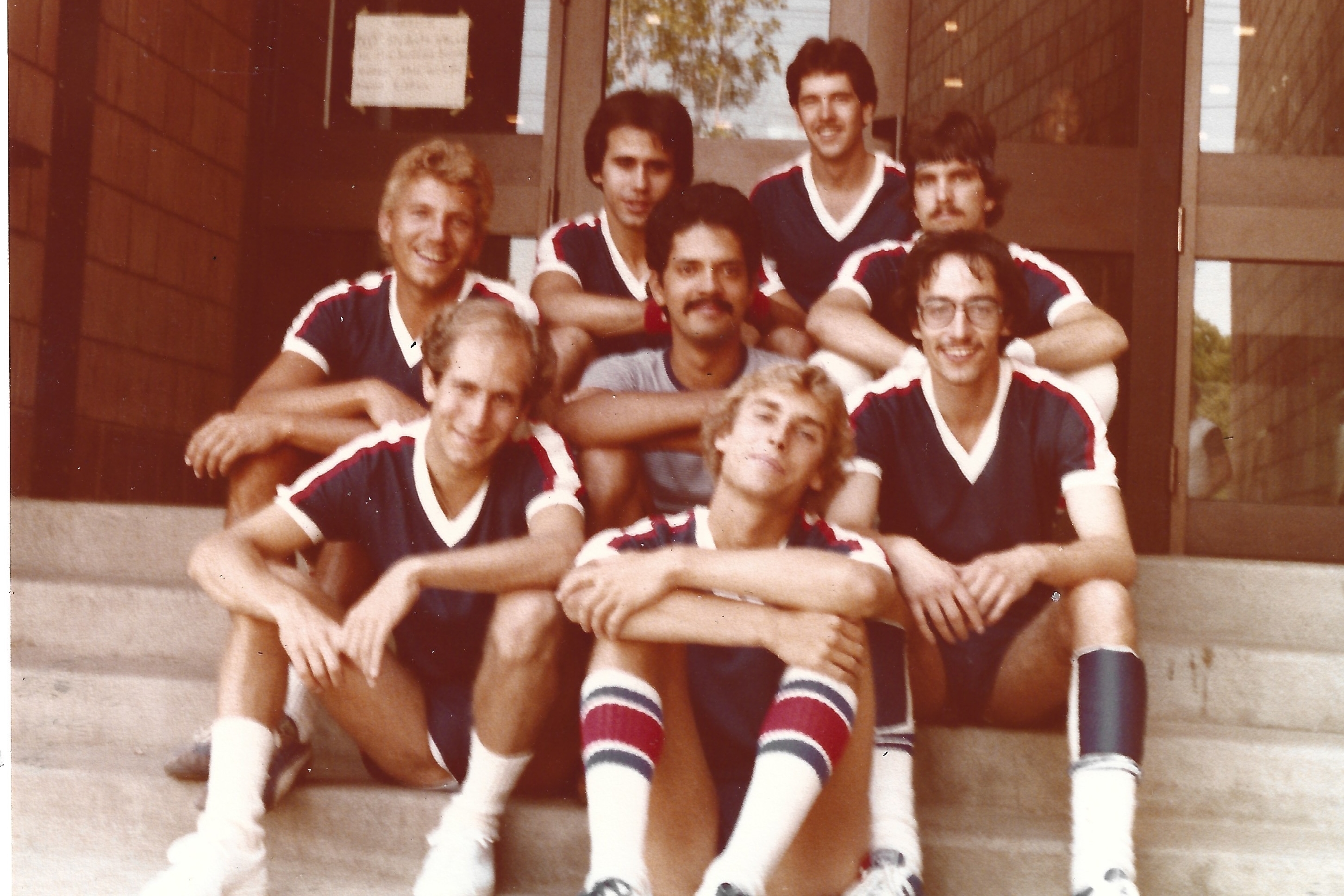
Randy Reddemann: building connections beyond the bars since 1976
Forty years after founding GAMMA as a recreation league, Randy returned to lead this important social connection for LGBTQ seniors.
"We wanted to create a space where people could play for fun – and not just be all about competing and winning.”
They say that if you can remember the ‘70s, you weren’t there – or at least, you weren’t having any fun. And if there’s one thing that GAMMA members were doing in the 1970s, it was having lots of fun.
That might just explain the many mysteries around this organization. Some sources (including GAMMA’s website) point to summer 1976 as the group’s start date. Others claim GAMMA started in fall 1977 or summer 1978. Even the meaning behind the word “GAMMA” is debated: some say it stands for Gay Athletic Milwaukee Men's Association, others say Gay Activities / Men's Mutual Alliance, and even more disagree – especially since GAMMA has never been exclusively limited to men.
Whether summer 2026 is the 50th anniversary of GAMMA -- or the 49th, or the 48th – the fact remains that the organization has outlasted almost every Wisconsin LGBTQ organization of the 1970s. Some of the credit belongs to its founders, Randy Reddemann and Jon Russo, for creating a strong and sustainable community before leaving Milwaukee in 1979.
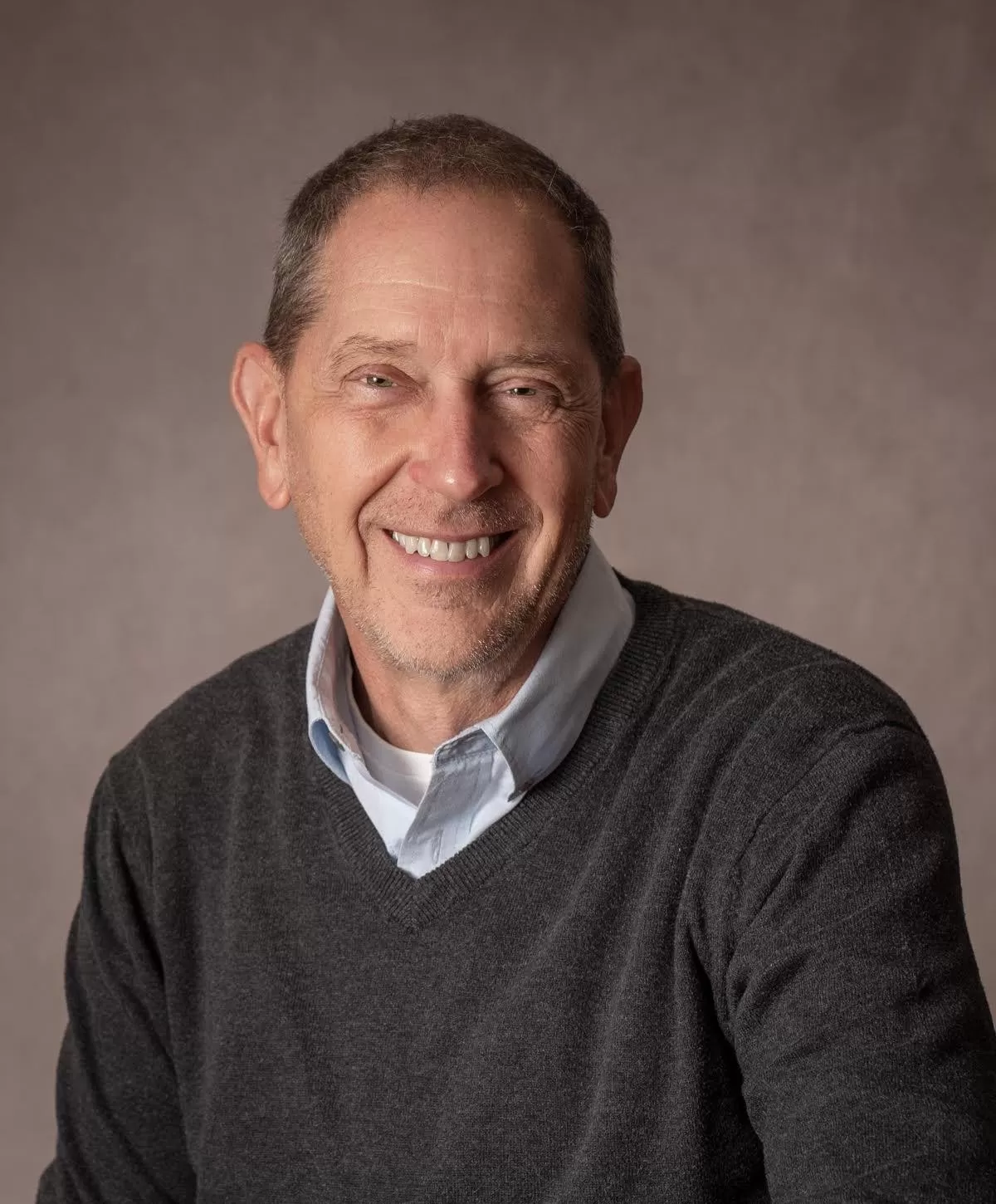
After 40 years outside Wisconsin, Randy returned to the Milwaukee area full-time in 2019. He shared his story – and the origins of GAMMA -- with the Wisconsin LGBTQ History Project.
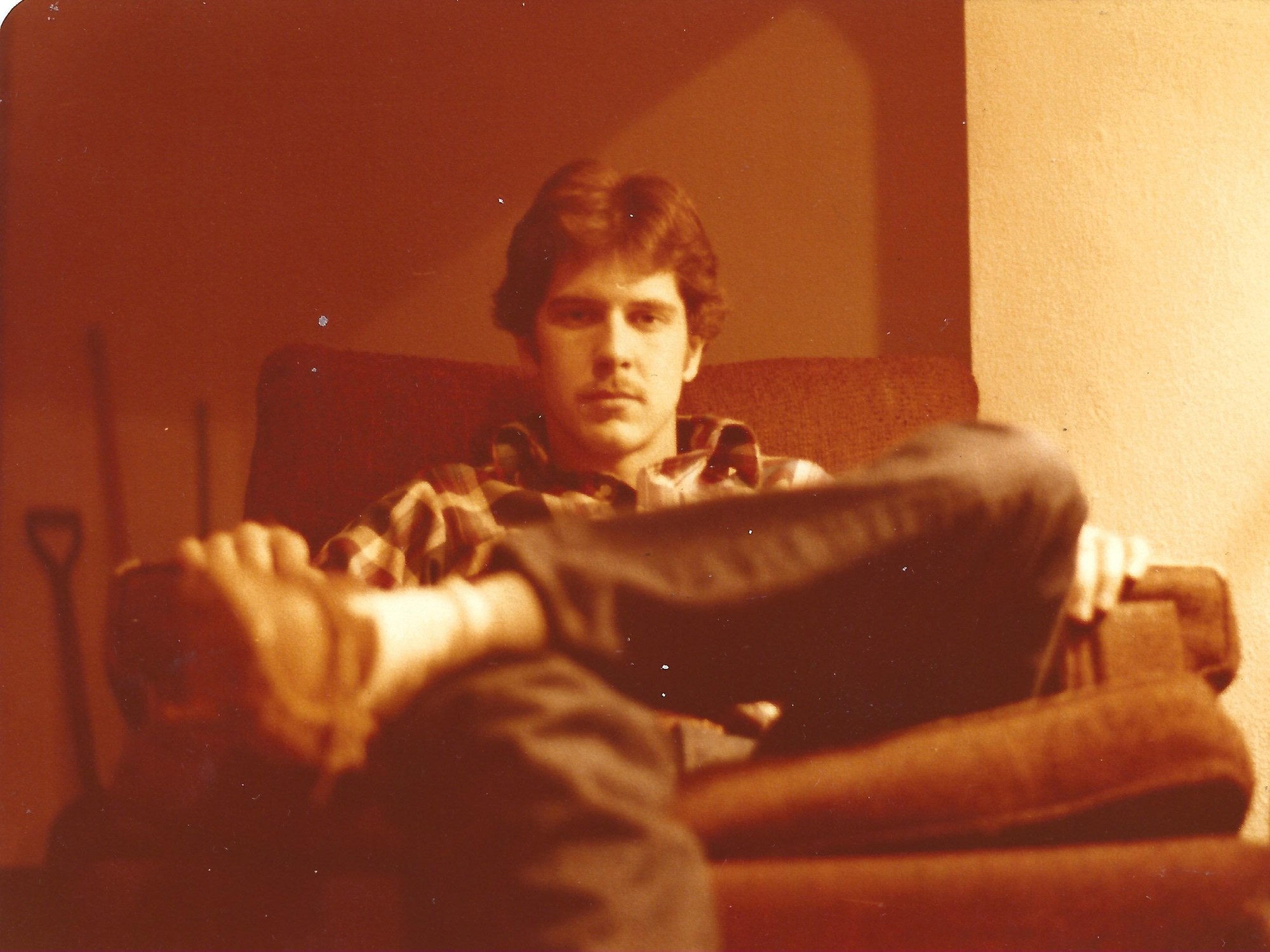 Randy Reddemann
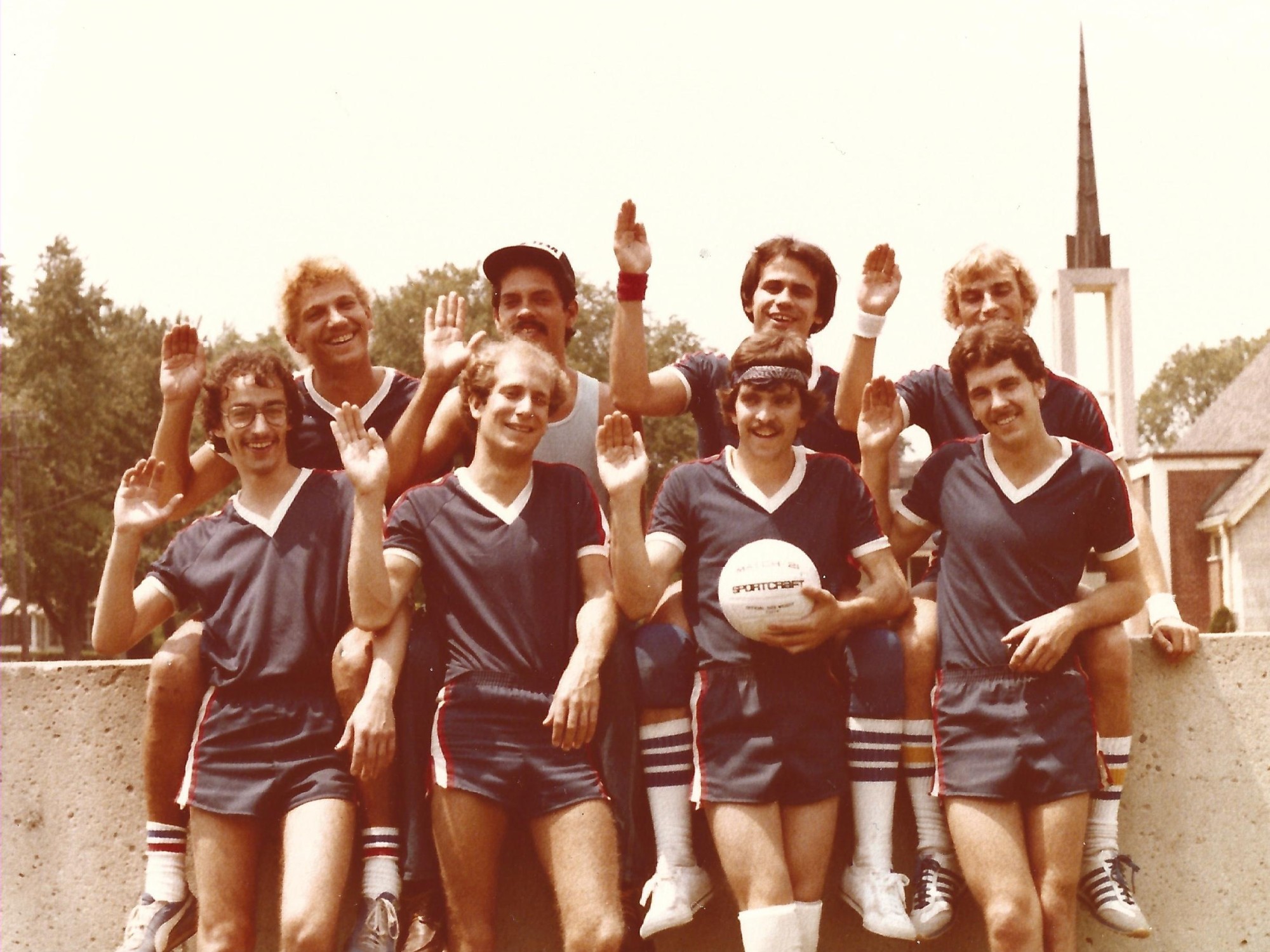
“We wanted to create a space where people could play for fun – and not just be all about competing and winning.”
Randy developed a passion for theater while he was still in high school. He wasn’t interested in the spotlight, however. He was fascinated with the engineering functions: lighting, set design, and stage production. Upon graduating in 1973, Randy moved to Milwaukee’s East Side to pursue a fine arts degree at UWM.
The transition was like stepping from black-and-white into Technicolor.
“Back then, you did a lot of switching back and forth,” said Randy. “You had to keep your guard up in most places, you could let your guard down in some places, but you could never be 100% out. There was no reasonable option to do that in the 1970s.”
Escaping the gay desert
Between high school and college, he discovered the River Queen – at least, between the hours of 9:00 PM and 11:00 PM.
“I was still living at home, and my parents wanted me home by midnight,” said Randy. “Since it took almost an hour to get out to New Berlin, I’d have to leave by 11 p.m.”
The bar was a revelation. You walked in through the front door to find a square bar packed with attractive people, and in the back, a tiny dance floor—maybe twenty square feet—where men danced with men.
"It was such a relief to know that other gay people existed," Randy recalls. “For a sheltered kid from the far-out suburbs, the River Queen was like a shot of adrenaline.”
UWM was Randy’s escape from the suffocating "gay desert" of New Berlin.
“It was all about exploring myself, exploring relationships, and deciding what worked for me,” said Randy. “Like so many men of my generation, I had never had these opportunities before.”
Randy started going to The Factory in fall 1973. The energy there was superior to anything the straight world had to offer. The music thumped harder, the lighting was better, and the drinks were dangerously strong. On that light-up dancefloor, anyone could be anything they wanted to be.
“That feeling didn’t exist anywhere else,” said Randy. “The only place you felt that was in the gay clubs.”
Gay life wasn’t without its perils. The “Fruit Loop” (River Queen, Factory, Wreck Room, and later, the M&M Club) were located in a very, very different Third Ward. By the 1970s, the neighborhood was so abandoned that the city almost declared it a combat zone, where “red light” businesses would be allowed to operate. Randy described the streets as “bombed-out industrial:” dark, silent, and eerie after nightfall. Clubs, like the Factory, were extremely profitable, but their owners provided no security outside those doors.
After parking a block away from The Factory one night, Randy was jumped by a group of men with knives. They stole his wallet, but left him unharmed. When he stumbled back to The Factory, begging them to call the police, they wouldn’t let him wait inside because he didn’t have any ID.
“Despite the dangers, The Factory was irresistible,” said Randy. “This Is It was in my rotation, especially on Sunday nights, and so was the Wreck Room. We’d go to Ten Hundred East for Packers games and GAMMA meetings because it was a quiet neighborhood bar. But The Factory was where all the action was. It became my go-to spot every Friday and Saturday.”
The Factory held an annual swimsuit contest every spring, with a grand prize of $100. In 1978, $100 was a fortune, enough to fuel weeks of nightlife. Randy and a friend, neither particularly eager to parade around in swimwear but both eager for the cash, hatched a plan. They would both enter, and if either won, they would split the pot.
The night of the contest, the crowd was roaring. Randy walked the stage, confident in his look. But his friend had an ace up his sleeve—or rather, in his trunks.
"He won – but only because he tucked a sock in his swimsuit," Randy laughed. The bulge won first place, Randy took first runner-up, and they split the prize as promised.
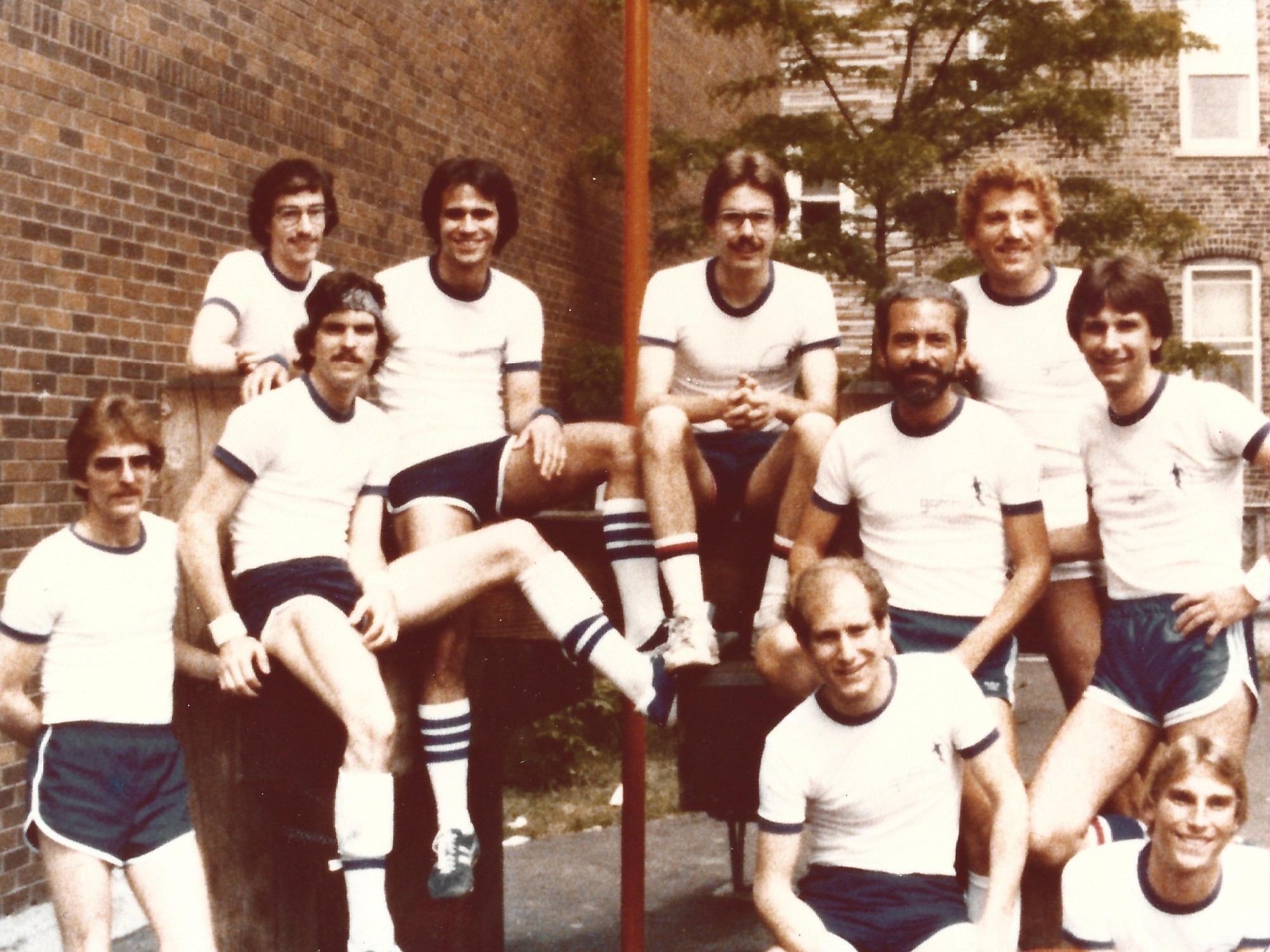
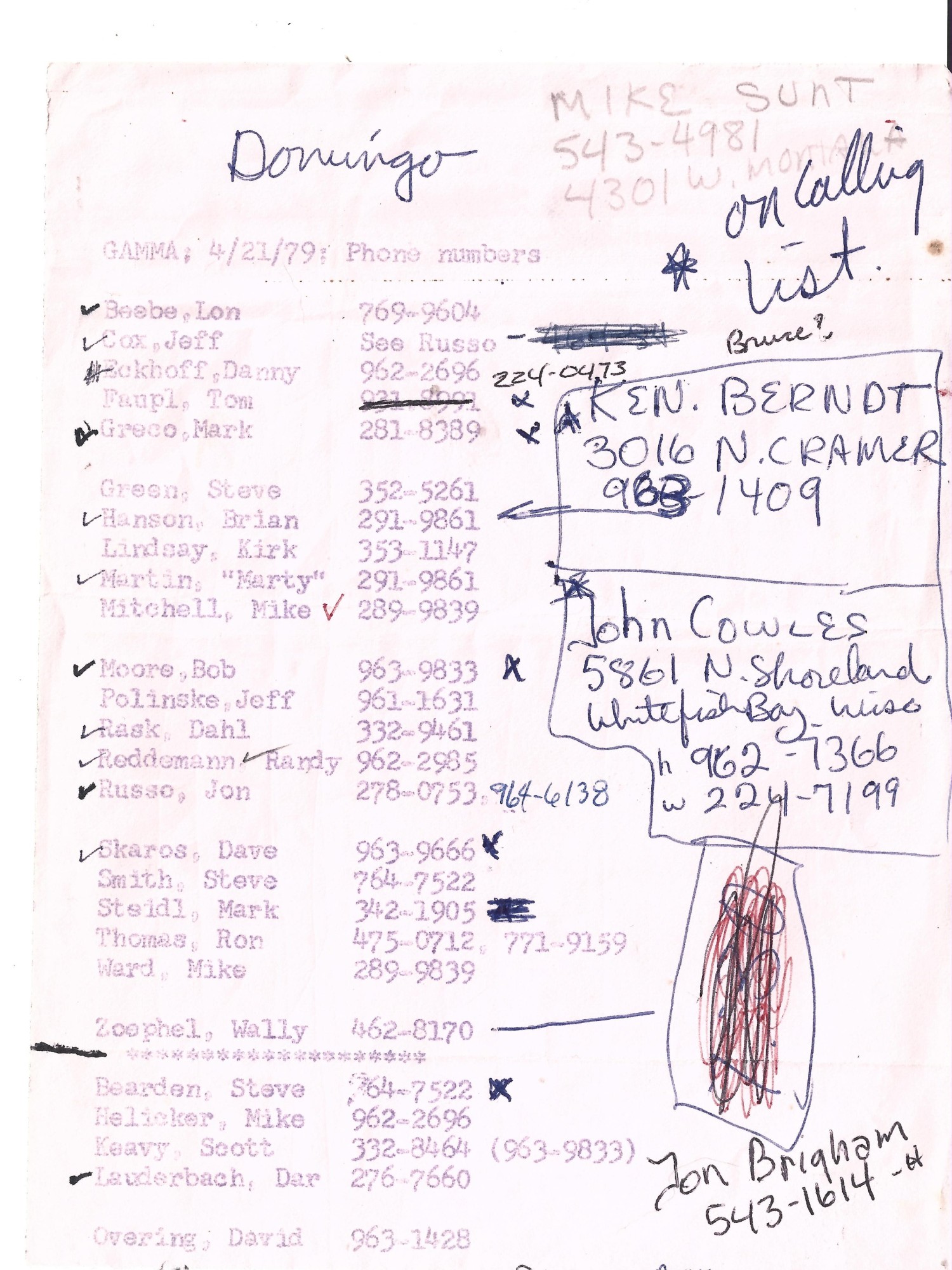 The 1978 GAMMA Roster
In the fall of 1976, amidst breakups and new beginnings, the idea of GAMMA was born.
“GAMMA just started happening, and over time, became a much bigger and more important happening,” said Randy. “It’s hard to remember exactly when and how it actually started.”
He and the other founding members (Jon Russo, Lonny Beebe, Jeff Cox, and Jon Cowles) began talking about creating an alternative to the bar scene. They wanted to meet new people, but not necessarily while sitting on a barstool.
“We were never opposed to the fine collection of Milwaukee gay bars, but we wanted something more active. We enjoyed the company of other players on the various sports leagues at the time (bowling league, softball league, etc.) and were seeking to create something similar, but with a focus on athletics and social events.”
For some gay men, taking part in high school athletics was traumatic. Being the last boy picked for a team (baseball, football, basketball, etc., etc.) in high school gym classes was a painful memory. But Randy believed that inexperience should not prevent anyone from enjoying casual sports and recreation.
“We encouraged anyone with an interest to play to join us. And helped all to improve their game with coaching and explanations of how the rules of the games worked and how they were played.”
GAMMA was a radical act of visibility. Sports was long considered a straight man’s world. For gay men to reclaim that space, to sweat and compete and laugh together in brotherhood, wasn’t just rewarding.
“This was therapeutic for a lot of people,” said Randy. “This was culturally transformative.”Potluck dinners and board game nights became the primary social events of the new organization. These allowed gay men with different talents to fully take part in the group.
“All were welcome,” said Randy. “It didn’t matter how well you could cover short stop, or how awesome your tuna casserole browned to a golden crisp, or how well you nailed Sheepshead.”
In fall 1977, GAMMA decided to start collecting dues to fund printing costs for the membership roster. Dues were set for $1/year, and $11 was deposited for the first year of collections. To respect privacy, the roster was created with only first name and last initial. Area codes weren’t needed, as the entire region still used 414.
Events were shared through a phone tree system to reach the full membership. A newsletter was still years away.
Once flag football season ended, GAMMA moved indoors with volleyball leagues, first played at the UWM gymnasium. Robert Moore, a UWM business school instructor, became a sponsor of GAMMA and served for years as its long-time guardian angel.
“Without his unrelenting drive, the incorporation of GAMMA would never have happened,” said Randy. By 1980, GAMMA had bylaws, a board of directors, devoted officers, and a future – thanks to the future-forward vision of Bob Moore.
Early volleyball leagues involved six teams in the fall and winter seasons. The best of the six was registered with NAGVA (North American Gay Volleyball Association) to play in regional and national competitions.
“We traveled to Chicago, Columbus and Denver in the first two years,” said Randy.
League play overlapped with monthly events, including roller skate nights, river cruises, camping trips, and other social activities. GAMMA formed a softball team that competed in SSBL’s earliest years.
“When Xanadu came out, everyone was roller skating, so of course, GAMMA hosted roller-skating parties,” said Randy. “We all learned how to reverse skate thanks to Xanadu!”
He laughs at a rumor he recently heard about GAMMA’s earliest years.
“Someone asked me, ‘didn’t you guys used to sleep with everyone who wanted to be a member? Isn’t that how you auditioned to become a GAMMA member?’ And I said, ‘where the hell did you get that from?”
History Project founder Don Schwamb was an active member for several decades. He met John Cowles, who introduced him to Bob Moore, and suddenly he was welcomed into a large group of friends. Starting in 1979, Don helped with membership, event planning, and the GAMMA newsletter for many years. He remembers many long-gone key members -- Arnie Malmon, Richard Wolter, and Rich Grunke among them -- who were essential to GAMMA's success.
"I remember inviting John Cowles, Bob Moore, and others to meet me at my office downtown," said Don. "My employer had brand-new word processing softwarre and we'd create the newsletter and store it on 8" floppy disks. I owned a home computer, so I maintained our membership mailing list, and printed all the labels every month."
Don was later GAMMA president in 1985 -- the same year he was also president of Cream City Foundation and the first vice-president of ARCW. While he stepped away from GAMMA leadership, he remained involved in GAMMA events for years to come.
"GAMMA was unlike the other gay groups of its time," said Don. "We weren't pushing any agenda, we didn't need to be preachy about politics. We were simply a place to relax, enjoy ourselves, and connect with people like ourselves. I am glad it still exists as an alternative outlet today."
A tale of two brothers
Randy had come out to his sister Jean early on, and eventually to his parents, writing them a letter because he "didn’t want to lie to them". But unknown to him, his younger brother Mark was navigating the same conclusions.
“It was almost like a sitcom episode,” said Randy. “It’s funny now, but I assure you it wasn’t funny at all when it happened.”
While living at home, Randy subscribed to California Scene, a gay magazine always mailed in a discrete brown paper wrapper. One weekend, while Mark was home on military leave, he marched into the bedroom and threw the magazine at Randy.
"What the fuck is this?" Mark demanded.
"What do you mean?" asked Randy, fearful of being outed, but also annoyed that his little brother was mouthing off at him.
"I think this is gay stuff," Mark said.
Randy was cornered. Now what? But then he realized that the wrapper wasn’t even open.
So how could Mark know what was inside?
“You know, you could have been sharing your subscription,” Mark laughed.
Randy remembers thinking, “what the hell?”
“That’s how my little brother – who shared a room with me, who slept in the bunk above me all those years – came out to me. I had no idea. We’d hung out in high school and even shared some friends. He always had a girlfriend, but it seems they had some kind of understanding, because he was also actively messing around with boys long before I was.”
Once the truth was on the table, all the barriers between the brothers disappeared. They forged an even stronger connection based in their new understanding of each other. For years, they wrote to each other twice a week, while Mark was stationed all over the world in the military.
“I had no clue he’d already come out to my parents,” said Randy. “When I wrote them a letter, telling them I didn’t want to lie to them anymore, little did I know they’d already gotten that same letter from my brother.”
It took their parents awhile to come to terms with having two gay sons, but eventually, they were supportive and accepting. After the initial coming out conversations, it was just part of life.
“One of their concerns were that they wouldn’t have grandchildren, especially once my sister decided she wasn’t having children,” said Randy. “We were a Catholic family, after all, and now three of their five children were going to be childless. Thankfully, our other brothers gave them grandchildren.”
Tragically, Mark died of AIDS in 1992.
“Mark and I were very different people,” said Randy, “but nobody knew me better than him.”
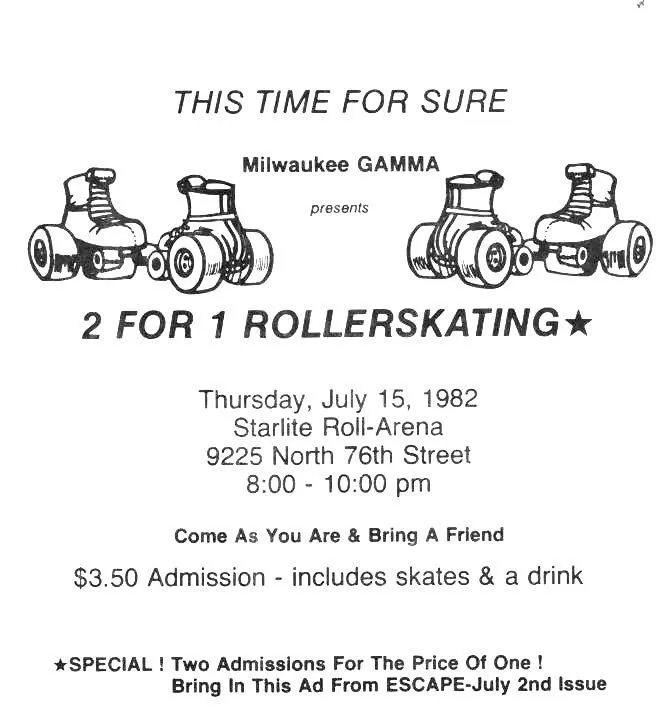
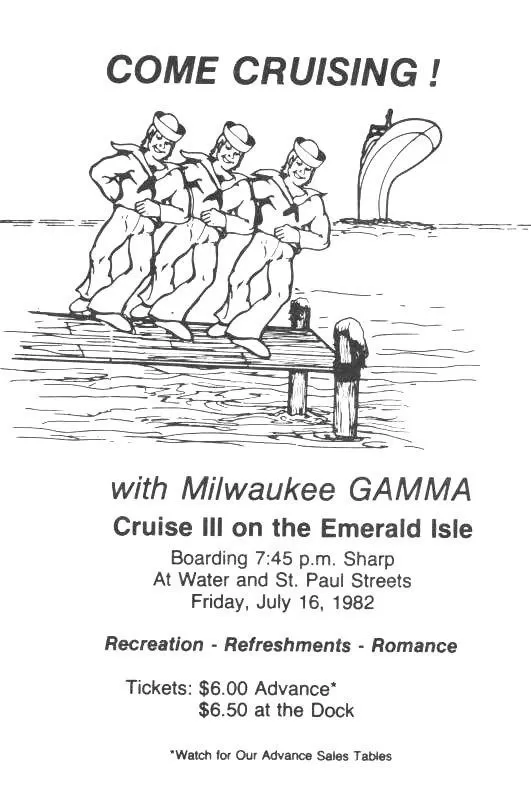
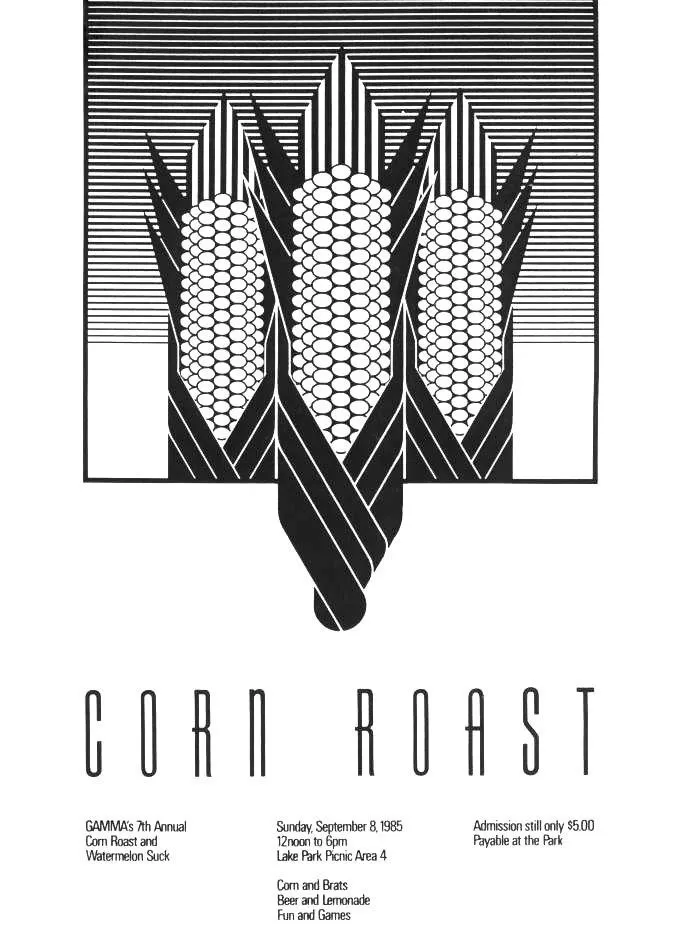
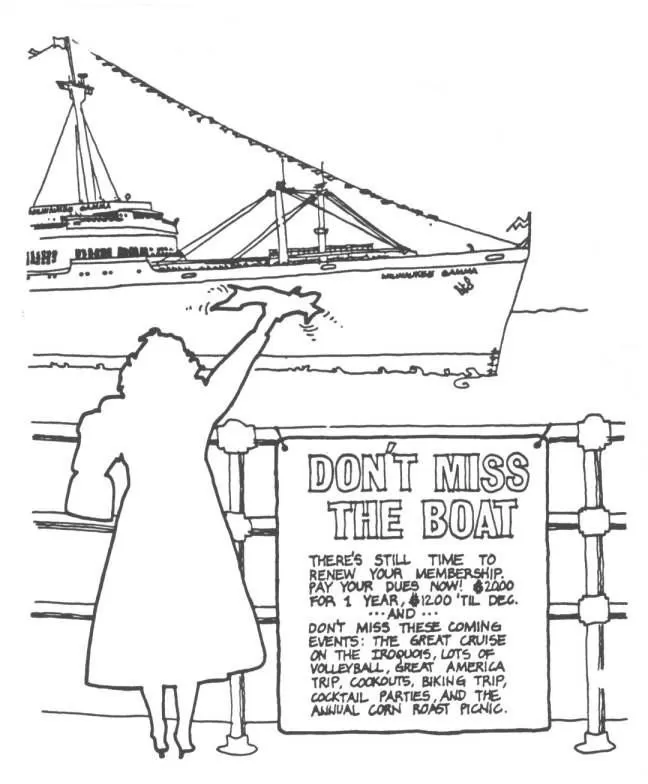
While the heart and soul of GAMMA remain, none of those first 11 members (except Randy) are still involved. Some members from the 80s and 90s have returned time and again, but those names from the first roster are just memories now.
“I was delighted to see GAMMA has survived all these years while I was living away in other states, said Randy. “What began with eleven men seeking connection beyond the bar scene has endured for nearly five decades as a lasting part of Milwaukee’s LGBTQ community life.”
Randy recognizes the challenges seniors face in a rapidly changing world. The cost of dining out can be a barrier to participation, so he’s reconsidering his fundraising options. He’s surprised that bars still exist at all, considering our culture has become so heavily app-first. He’s sad to see anchors like M&M and This Is It close, considering the decades of memories they created. He worries that the community, once united under one banner of “gay,” is now fraying at the seams and splintering into different silos. (“It’s the double-edged sword of LGBTQ progress,” he admits.) He’s concerned about the future of LGBTQ nonprofits in Wisconsin, and the fact that there is no one operating as the “gold standard” anymore.
And he wonders if GAMMA should be doing more to recruit more people, after all, the current membership won’t be around forever.
No matter what, he’s committed to being that connection.
“As long as there’s a need, GAMMA will be here to fulfill it,” he promises.
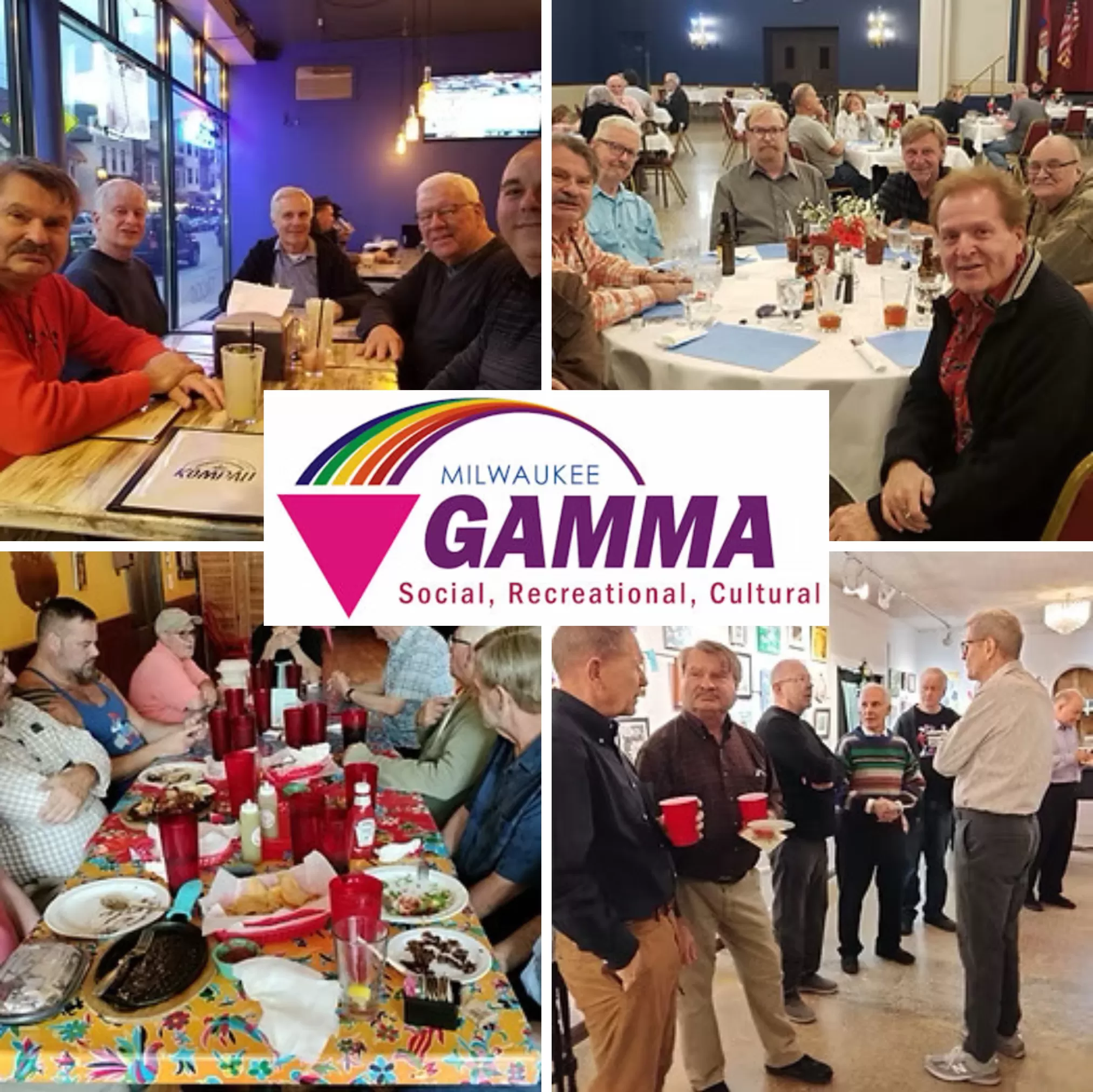
Get involved! Learn more about GAMMA at their website or email Randy Reddemann at infomilwaukeegamma@gmail.com

recent blog posts
September 25, 2026 | Amy Luettgen
Val Benner: finding identity, community, purpose, and belonging
September 18, 2026 | Amy Luettgen
Dr. Amney Castaneda: creating the support she once needed herself

September 11, 2026 | Amy Luettgen
The concept for this web site was envisioned by Don Schwamb in 2003, and over the next 15 years, he was the sole researcher, programmer and primary contributor, bearing all costs for hosting the web site personally.
join our email list
Get WI LGBTQ History Project updates in your inbox.


