
- Places
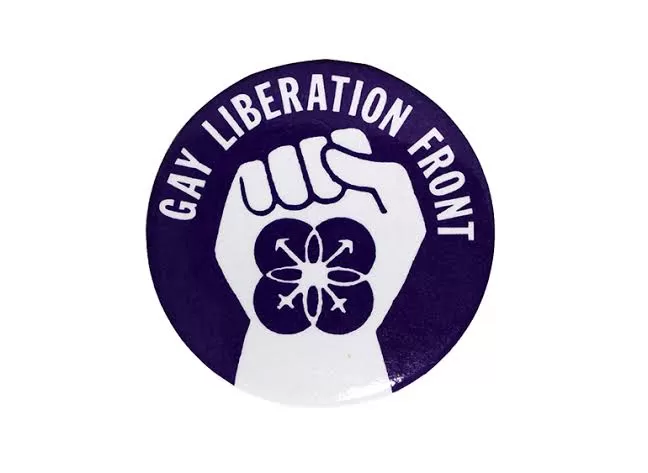
Gay Liberation Front (GLF)
Activism
Milwaukee, WI
State Region
Southeast
Founded / Started: 1970
Disbanded / Ended: 1971Communities Served
Gay
Logo:


INPUT ALWAYS WELCOME!
We are always looking for photos of the exterior and interiors of Bars and other Places, as well as information about ownership, activities and opening and closing background info about Places. We welcome your input and photos!
The Milwaukee chapter of Gay Liberation Front (GLF) existed for less than a year, but its radical politics connected Milwaukee to an international movement that challenged homophobic laws, social structures, and gender expectations.
GLF emerged from the Gay Liberation Organization (GLO), a University of Wisconsin–Milwaukee student organization that advocated for gay and lesbian rights. Tensions within GLO became increasingly apparent in 1970, as some members embraced a broader and more radical vision of social change.
In May 1970, several GLO members joined thousands of students, activists and others in protests against U.S. involvement in the Vietnam War. The demonstrations contributed to the shutdown of UWM and prompted Chancellor J. Martin Klotsche to declare a state of emergency. The experience highlighted growing differences within GLO. Some members believed gay liberation should be connected to broader struggles for social and political change, while others preferred to concentrate on issues directly affecting gay people.
By fall 1970, some of GLO’s more militant members spun off as Gay Liberation Front. GLF brought together men and women with backgrounds in the civil rights, antiwar and women’s movements. The group challenged conventional ideas about gender, sexuality and social relationships and viewed gay liberation as part of a much larger struggle for human liberation.
Its politics were influenced by contemporary feminist and Marxist thought. Rather than viewing the emerging “sexual revolution” as sufficient, GLF argued that sexuality remained constrained by social, economic and cultural forces. The group criticized the ways women and gay people were portrayed and treated as sexual objects and challenged the gender roles imposed by American society.
For GLF, true sexual liberation required more than changing discriminatory laws. The group envisioned a society in which people could live and love without the restrictive gender roles and expectations imposed upon them. Its vision was explicitly transformative: ending discrimination against homosexuals was important, but it was only one part of a broader effort to challenge oppression and expand human freedom.
That philosophy also ignited GLF’s demands for visibility. At a time when most gay men and lesbians were closeted, GLF saw coming out as both a personal and political act. Members participated openly in demonstrations and other political actions and objected when the mainstream media ignored or minimized their presence.
The group also embraced organizing, protest and community-building as tools for social change. In January 1971, GLF announced a week of events celebrating gay liberation. The program included parties, dances, cultural events and demonstrations, along with activities such as wig-care and makeup classes. Pride Week 1971 also involved the first Gay Pride March in Wisconsin history, held on January 2, 1971 in downtown Milwaukee.
GLF’s history reflects a larger transition taking place within the gay movement nationwide. By the early 1970s, the confrontational politics of gay liberation were increasingly giving way to a more moderate gay and lesbian rights movement. Rather than seeking a fundamental transformation of American society, many activists increasingly focused on legal equality, political representation and acceptance within the existing social order.
GLF was short-lived in Milwaukee, but its influence extended well beyond its brief existence. The gay liberation movement helped transform coming out from a private decision into a political act and gave new meaning to pride as a declaration of visibility, community and self-worth. For Milwaukee’s LGBTQ community, that radical vision became part of the foundation upon which later generations of activists would build.
Many members of Gay Liberation Front went on to join other activist groups, including Les Petites Bons Bons, Radical Queens, New Gay Underground, and Gay People's Union.
INPUT ALWAYS WELCOME!
We are always looking for photos of the exterior and interiors of Bars and other Places, as well as information about ownership, activities and opening and closing background info about Places. We welcome your input and photos!
join our email list
Get WI LGBTQ History Project updates in your inbox.


