
- Places

Human Rights League (HRL)
Activism
State Region
Southeast
Founded / Started: 1991
Disbanded / Ended: 1999Communities Served
Mixed
The Human Rights League for Lesbians, Gays, Bisexuals, and Transgendered advanced Milwaukee LGBT political advocacy, candidate engagement, public policy, voter activation, and community organizing from 1993 to 1999.

INPUT ALWAYS WELCOME!
We are always looking for photos of the exterior and interiors of Bars and other Places, as well as information about ownership, activities and opening and closing background info about Places. We welcome your input and photos!
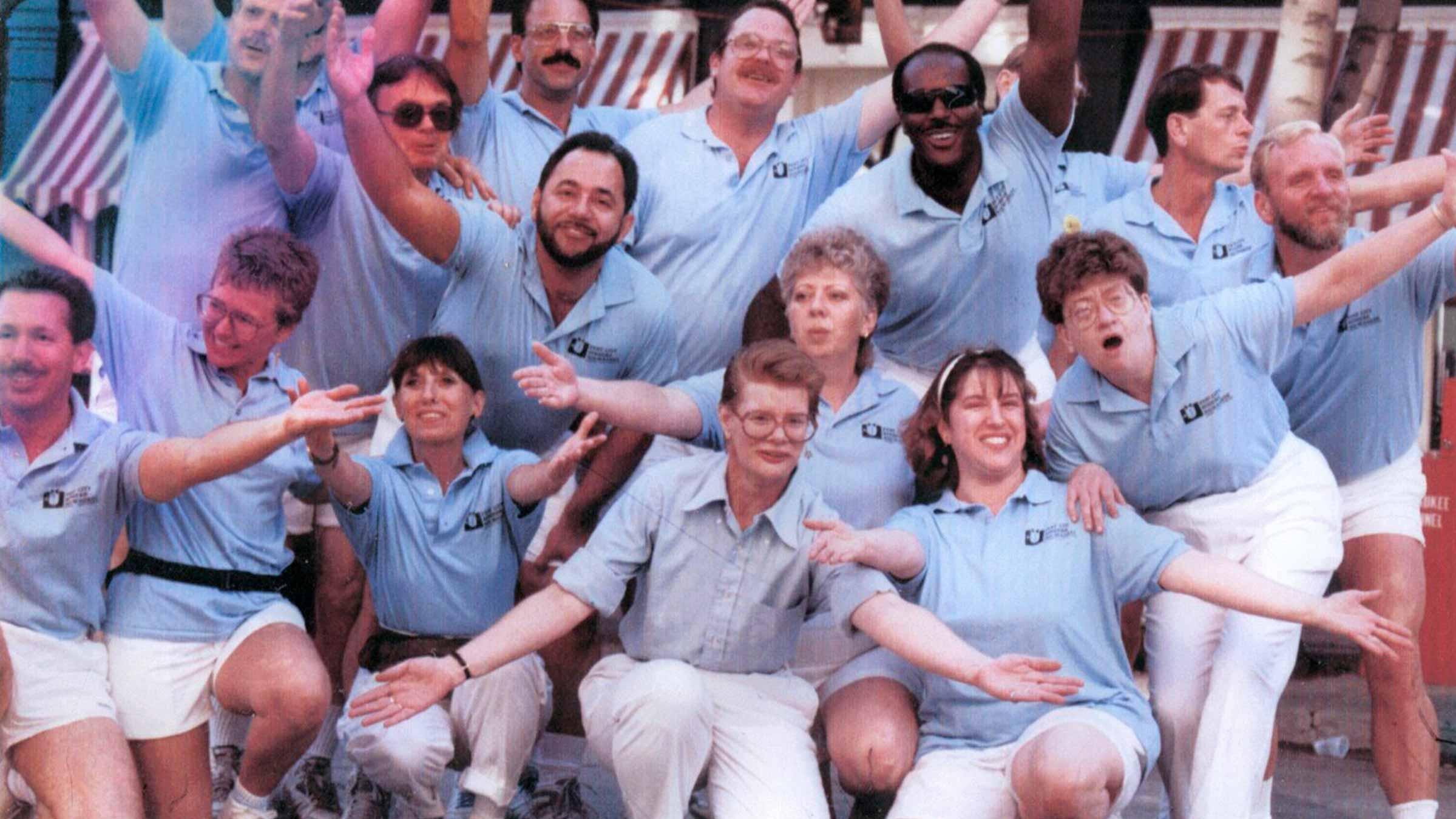
Formed in 1993, the Human Rights League (HRL) worked to “advance the political interests of lesbians, gay men, bisexuals, and transgendered in the metropolitan Milwaukee area by influencing local, state, and national politics, legislation, and public policy.”
HRL pursued that mission through four standing committees: Public Information, Membership and Fundraising, National Coming Out Day, and Legislative and Public Policy. The organization surveyed candidates about their positions on LGBT issues, recommended and endorsed candidates for local, state, and national office, distributed political information, and hosted an annual reception where members of the LGBT community could meet elected and appointed public officials.
In 1997, HRL established a political action committee (PAC) to raise and distribute funds in support of pro-LGBT candidates. The PAC was created after HRL and the Community Election Coalition attempted to organize a forum for candidates for Wisconsin's 8th Assembly District, but none of the candidates agreed to participate. The PAC survived HRL's dissolution in 1999 and continues today as the HRL-PAC.
HRL also worked directly on issues affecting the broader community. Its Police Sensitivity Training Committee developed cultural-sensitivity and diversity training for new Milwaukee Police Department recruits, working with the department's Community Oriented Policing Advisory Committee. The organization also advocated for public policy, monitored legislation and political issues, lobbied public officials, and worked with other LGBT organizations on community priorities.
One of HRL's most visible activities was its work around public recognition and community engagement. In 1994, HRL revived the annual Cream City Brick Awards, which had been presented by the Cream City Business Association from 1984 to 1988 and by the Lambda Rights Network from 1990 to 1992. HRL presented the awards at its annual meeting each February, recognizing individuals, businesses, and organizations for their contributions to the LGBT community.
Beginning in 1995, HRL also presented National Coming Out Day Awards during November's National Coming Out Day activities. The awards recognized individuals, organizations, and businesses that promoted a positive LGBT image through community participation. HRL's National Coming Out Day Committee coordinated these activities from 1994 until the organization dissolved in 1999.
Although bisexual people were included in HRL's mission statement from its founding in 1993, they were not reflected in the organization's name until 1998. That same year, transgender people were also explicitly included in both the organization's mission statement and name, reflecting the broader scope of the community HRL represented.
HRL collaborated extensively with other Milwaukee-area LGBT organizations. In 1996, it joined ACT UP Milwaukee, Action Wisconsin, the Lesbian Alliance of Metropolitan Milwaukee (LAMM), Log Cabin Republicans, People of All Colors Together, the Riverwest Rainbow Association, and the Sherman Park Rainbow Association to form the Community Election Coalition. The coalition gathered and distributed information about candidates and election issues.
In 1997, HRL also joined LAMM and the Riverwest Rainbow Association in the Domestic Partnership Task Force. The group sought to establish a domestic partnership registry in Milwaukee, secure domestic partnership benefits for city employees, and connect employees in the private sector who wanted to advocate for similar workplace benefits.
The University of Wisconsin–Milwaukee Archives owns the Human Rights League Collection, documenting the organization's political advocacy, community programs, publications, awards, and collaborations. The collection provides an important record of Milwaukee's LGBT political and civic organizing during the 1990s.
INPUT ALWAYS WELCOME!
We are always looking for photos of the exterior and interiors of Bars and other Places, as well as information about ownership, activities and opening and closing background info about Places. We welcome your input and photos!
join our email list
Get WI LGBTQ History Project updates in your inbox.


