
- Places
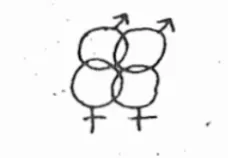
Madison Alliance for Homosexual Equality
Activism
Madison, WI
State Region
Central
Founded / Started: 1969
Disbanded / Ended: 1970Communities Served
Mixed
Founded in November 1969, Wisconsin’s first gay rights group sparked a statewide gay liberation movement through community building, activism, education, and public protests.

INPUT ALWAYS WELCOME!
We are always looking for photos of the exterior and interiors of Bars and other Places, as well as information about ownership, activities and opening and closing background info about Places. We welcome your input and photos!
Long before the Stonewall Uprising, the fires of gay liberation were already burning in Wisconsin.
On February 20, 1969, the Daily Cardinal reported "Homophile League Issues Demands," after a homosexual group presented nine demands to the university administration. These included 1) the establishment of a Homosexual Studies department, 2) the admission of 500 more homosexual students by September 1969, 3) culturally accurate teachings about Alexander the Great, Plato and Socrates by the History and Classics Departments, 4) non-negotiable organizational recognition and office space in the Memorial Union, 5) cruising spots (including the Library's Mens Room) being off-limits for police raids, 6) financial assistance for all homosexuals, 7) social activities for homosexuals, 8) coursework in gay literature, including culturally accurate teachings about Shakespeare, Lord Byron, and others, and 9) recognition of the French Department as an official branch of the League. They vowed the protection and advancement of queens and everyday fairies, while noting that lesbians were also welcome.
The league threatened retaliation if their demands were not met immediately, including painting lavender Scorpios on every campus building, and swishing down State Street in miniskirts and leather jackets.
It's unknown who was behind the Homophile League, as its manifesto was unsigned and its members were anonymous. Was this a serious attempt at organizing -- or just a disruptive prank?
In October 1969, posters appeared on bulletin boards in the UW-Madison Memorial Union announcing the formation of a gay rights group.
On November 5, 1969, a small group of people met at St. Francis House (1001 University Avenue) to talk about gay issues. Reverend Arthur S. Lloyd, an Episcopal chaplain, provided the meeting location.
"The first time I went there, I had to circle around the building three times before I could get up the nerve to go in," said Jim Yeadon. "I looked in the basement window, and I saw some people down there, and they didn't really look that scary to me. I figured it was okay to go in."
Jess Anderson, another attendee, remembers about a dozen people showing up. MAHE was almost exclusively male for its first year, with only a few women attending the meetings. The organization felt more like a men's group than a women's group. Pam Green, one of the early female members, remembered feeling "unique, and therefore valuable, rather than alone and unsupported." The early events were more social than actionable, as most members weren't ready to go public.
A few days later, "An Open Letter to Homosexuals" appeared in the Daily Cardinal, calling for awareness, organization, and action.
"The stright world wears our clothes, reads our books, uses our slang, sees our movies, and swoons over our idols. Yet most of the good people of America view us with disgust and even outright hatred. But it's really kind of fun to be a danger to society, isn't it? The thinking homosexual man now has the responsibility to respond to the call of the times. The times are here and now, and every last one of us -- even the screamingest queens in the bar -- has a duty to respond. Listen, Brother, you and I are an oppressed minority. We're security risks, insurance risks, undesirables, and general nuisances. We keep all the whimpers inside and live our lives in fear, because we haven't got the balls to act."
The open letter invited readers to join a new organization, The Halloween, that would be forming on campus. Did this organization become MAHE?
For the first few months, the group met every Wednesday night. They called themselves the Student Homophyle League, but changed their name to the Madison Alliance for Homosexual Equality in January 1970. They sought to build community, raise consciousness, provide support, and create social opportunities. After setting up a gay hotline, as well as a speakers bureau, MAHE's agenda became more political and educational.
MAHE coordinated a “day-long teach-in” in the University of Wisconsin-Madison Memorial Union in May 1970, just 7 months after the organization was founded and less than a year after Stonewall. The event featured sales of books and screening of films with gay and lesbian themes. They organized many Wisconsin “firsts,” such as the first appearances of openly gay people on Wisconsin TV (February 12, 1970) and radio (March 25, 1970,) the first gay dance (March 13, 1970 at the Memorial Union) and the first gay public protest (May 15, 1970, “Boys in the Band.”)
These firsts were not without controversy. The WHA-TV appearance, originally scheduled for 30 minutes, was cut to three minutes. Their radio appearance, originally scheduled for WKOW's popular Night-Line program on March 3, was cancelled at the last minute due to the "highly controversial nature" of MAHE. The show was rescheduled for March 25, but scheduled for midnight to "avoid the possibility of children" tuning in. Most moviegoers ignored their protest efforts at Boys in the Band, while others drove by in cars yelling homophobic insults. And people came out to the Coming Out Dance to gawk and stare at the gay couples, never having seen anything like this before.
Still, these public events were especially critical in raising the visibility and impact of the emerging gay liberation movement.
"The protest was the first time any of us said, 'I'm going to stand on a public street and it's going to be obvious that I'm a gay man," said Jess Anderson. The event created a sense of solidarity and purpose.
"The only place you could dance, that you could touch and hold someone else, was in a private home," said Michael Lutz. "MAHE said, this has got to stop."
In fall 1970, MAHE reorganized as the Madison chapter of Gay Liberation Front. They opened the first Gay Center in Wisconsin in 1973. Over the years, the group has evolved several times, eventually forming today's OUTReach LGBTQ Community Center in 1998.
The Madison LGBTQ+ Archive at the University of Wisconsin-Madison currently holds an extensive collection of MAHE materials.
INPUT ALWAYS WELCOME!
We are always looking for photos of the exterior and interiors of Bars and other Places, as well as information about ownership, activities and opening and closing background info about Places. We welcome your input and photos!
join our email list
Get WI LGBTQ History Project updates in your inbox.


