
- Places

Milwaukee Metropolitan Community Church
Faith
Founded / Started: 1971
Still ActiveCommunities Served
Mixed
Logo:

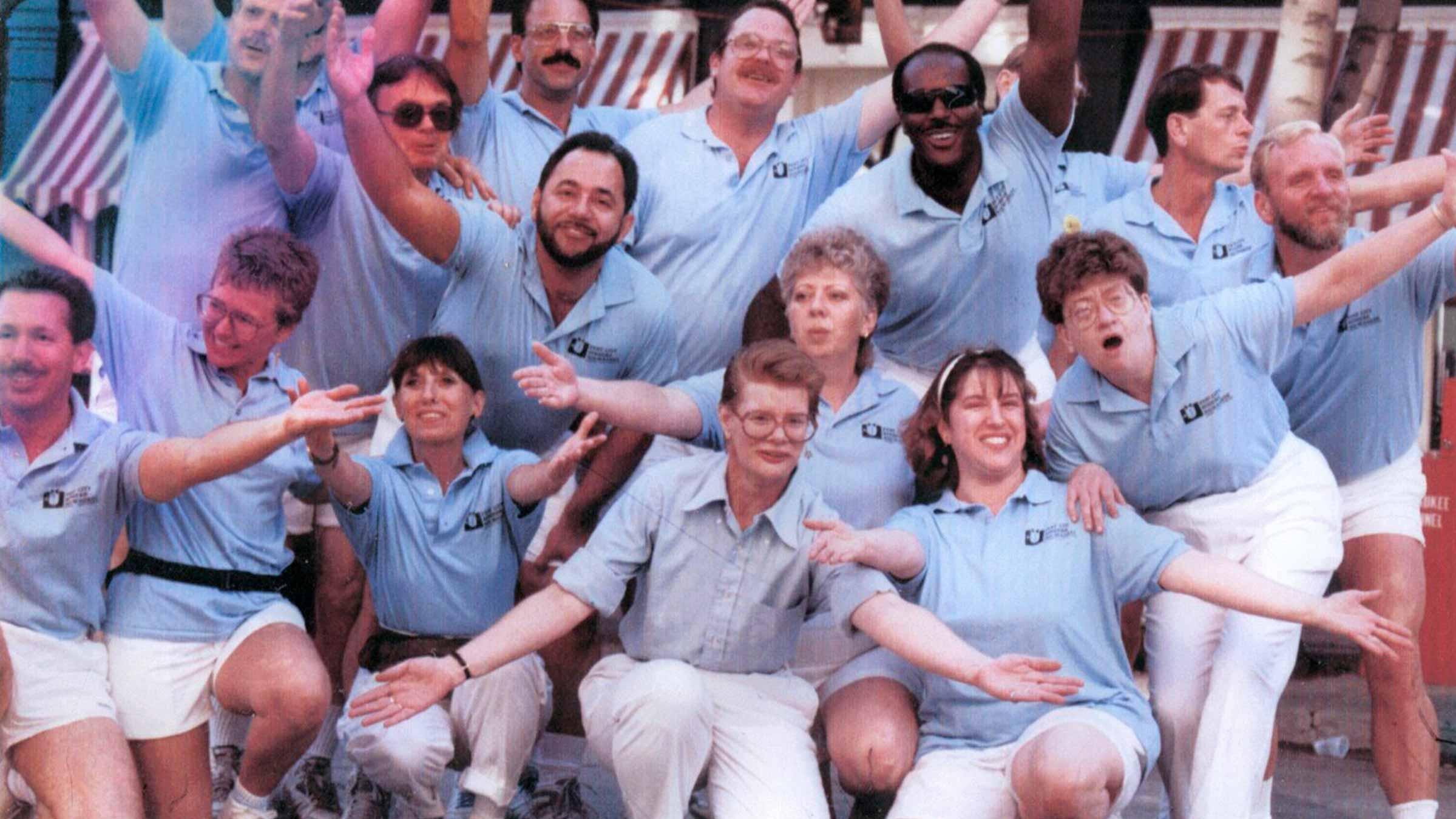
Milwaukee Metropolitan Community Church, founded in 1971, has played an enduring spiritual role in Milwaukee LGBTQ history, progressive social movements, and faith communities.

INPUT ALWAYS WELCOME!
We are always looking for photos of the exterior and interiors of Bars and other Places, as well as information about ownership, activities and opening and closing background info about Places. We welcome your input and photos!
For more than five decades, Milwaukee Metropolitan Community Church (MCC) has provided a Christian congregation with a particular connection to Milwaukee’s LGBTQ community. The congregation was founded in 1971 as Prince of Peace Metropolitan Community Church, three years after the founding of the Metropolitan Community Church denomination in Los Angeles.
Metropolitan Community Church was founded in 1968 by Reverend Troy Perry in response to the exclusion and discrimination LGBTQ people often experienced within traditional Christian churches. The denomination became part of an international movement of congregations serving LGBTQ people while welcoming people of all sexual orientations and gender identities.
Today, Metropolitan Community Churches describe themselves as inclusive, progressive Christian communities. Their worship combines elements from different Christian traditions and may include music, scripture, prayer, and Communion (Holy Eucharist). Although MCC was founded in response to the exclusion of LGBTQ people from other religious institutions, its congregations emphasize that their ministries are open to everyone.
Milwaukee's congregation has used several names during its history:
- 1971–1977: Prince of Peace Metropolitan Community Church
- 1977–1986: Metropolitan Community Church of Milwaukee
- 1986–1993: New Hope Metropolitan Community Church
- 1993–present: Milwaukee Metropolitan Community Church
On November 30, 1971, Milwaukee's Metropolitan Community Church congregation was established as Prince of Peace Metropolitan Community Church, under the leadership of Pastor Paul W. Sydman.
Early worship services were held at 2024 West Highland Avenue in Milwaukee. The congregation's first mailing address was 1114 North 21st Street, located nearby.
The congregation soon became affiliated with the growing international Metropolitan Community Church movement, which at the time was organized as the Universal Fellowship of Metropolitan Community Churches (UFMCC).
In February 1977, Reverend Valerie Bouchard became senior pastor, and the congregation adopted the official name Metropolitan Community Church of Milwaukee.
Services were initially held at 1107 North Jackson Street on Sunday afternoons. Later that year, the congregation moved its services to 2647 Stowell Avenue.
Bouchard served as senior pastor until 1981, when she resigned. Reverend Steve Stahl then became pastor.
By the summer of 1985, the congregation was experiencing declining membership and participation. By the fall, services were being held only when sufficient members were available. The congregation began an informal reorganization intended to rebuild the church and establish a more sustainable future. Stahl stepped down as senior pastor during this period.
The reorganization was completed in 1986, and the congregation adopted the name New Hope Metropolitan Community Church. On November 30, 1986, the church was officially chartered by the Universal Fellowship of Metropolitan Community Churches under the leadership of Reverend David Callentine.
New Hope held Sunday evening services in the chapel at Kenwood United Methodist Church.
At the same time, Callentine was also serving as pastor of Angels of Hope Metropolitan Community Church in Green Bay, which was also chartered by UFMCC in 1986. Callentine conducted Sunday services in Green Bay before traveling to Milwaukee to lead New Hope's evening service.
The congregation experienced a major loss on April 30, 1988, when Reverend David Callentine died at Columbia Hospital in Milwaukee from complications related to HIV/AIDS. He was 38 years old.
Following Callentine's death, New Hope continued holding Sunday services, changing the worship time to 6:30 p.m. Visiting clergy and lay leaders helped lead the congregation while it searched for a new pastor.
In 1989, New Hope appointed Reverend Christine Pasinski and Reverend Nancy Smiegowski as co-senior pastors. The congregation continued worshiping Sunday evenings at Kenwood United Methodist Church Chapel.
Both pastors resigned in January 1993. From January through April, the congregation continued its worship services under lay leadership while searching for a new senior pastor.
In April 1993, Reverend Lou Broyles became senior pastor. Under his leadership, the congregation once again changed its name, becoming Milwaukee Metropolitan Community Church.
Services moved to the Bach Room at the Astor Hotel in downtown Milwaukee, where worship was held Sunday mornings at 11:00 a.m.
Later in 1993, the congregation purchased its own building at 1239 West Mineral Street, becoming one of the earliest known LGBTQ organizations in Milwaukee—and among the earliest in Wisconsin—to own its own property. The building was formally dedicated in the spring.
The congregation briefly experimented with two Sunday services: a traditional service at 9:30 a.m. and a contemporary service at 11:00 a.m. After approximately a year, MCC returned to a single 11:00 a.m. service.
Reverend Lou Broyles died unexpectedly of a heart attack on May 26, 2005. Later that year, Reverend Christopher Fox served as interim senior pastor while the congregation conducted a search for a permanent leader.
In early 2006, Reverend Wendy Woodruff became senior pastor.
During Woodruff's tenure, Milwaukee Metropolitan Community Church reached an important financial milestone. In 2011, the congregation celebrated the burning of its mortgage, marking the retirement of the mortgage on the West Mineral Street building.
Woodruff resigned as senior pastor in January 2016 and preached her final service on Easter Sunday, March 27, 2016. Following Woodruff's departure, MCC and the Universal Fellowship of Metropolitan Community Churches began a new search for a senior pastor.
In April 2016, Reverend Tory V. Topjian, then an associate pastor at Founders Metropolitan Community Church in Los Angeles, was appointed to lead the Milwaukee congregation. He began serving as senior pastor on a provisional basis on June 1, 2016. Only days after beginning his ministry in Milwaukee, Topjian and the congregation faced the tragedy of the Pulse nightclub shooting in Orlando on June 12, 2016. Topjian became involved in Milwaukee-area vigils, counseling, and other community responses following the attack.
At a congregational meeting on January 29, 2017, Topjian was presented for confirmation as the congregation's settled senior pastor. Members voted 98 percent in favor of his appointment, making him the congregation's tenth settled senior pastor. He was formally installed on March 25, 2017 and served the church until April 2024.
Milwaukee Metropolitan Community Church celebrated its 50th anniversary in 2021. The congregation prides itself on being a vibrant, inclusive, and progressive community of faith for Milwaukee's future.
INPUT ALWAYS WELCOME!
We are always looking for photos of the exterior and interiors of Bars and other Places, as well as information about ownership, activities and opening and closing background info about Places. We welcome your input and photos!
join our email list
Get WI LGBTQ History Project updates in your inbox.


