
- Places

Wisconsin Womyn's Land Co-op
Activism
State Region
Southwest
Founded / Started: 1976
Still ActiveCommunities Served
Lesbian
Wisconsin Womyn’s Land Co-op, a collective of 30 lesbian feminists, created the Daughters of the Earth nature preserve community in Norwalk, Wisconsin in 1976.

INPUT ALWAYS WELCOME!
We are always looking for photos of the exterior and interiors of Bars and other Places, as well as information about ownership, activities and opening and closing background info about Places. We welcome your input and photos!
In fall 1976, approximately 40 women from Madison and Milwaukee began meeting to explore the possibility of collectively purchasing land for use by “womyn and children.”
At their first formal meeting, participants went around a circle sharing their visions and fantasies for what a women’s land community could become. Those conversations eventually led to the creation of the Wisconsin Womyn’s Land Cooperative (WWLC) and the purchase of approximately 80 acres of land about two hours northwest of Madison. The parcel, located in Norwalk, WI, is located between Tomah and Sparta. It was called "the prettiest land east of the Mississippi."
The property, known as Daughters of the Earth (DOE), was purchased for $37,500, including a farmhouse and barn. The cooperative made a $15,000 down payment and financed the remaining balance with a 20-year mortgage. Mortgage payments and the ongoing costs of maintaining the property were supported by members living on the land, along with additional donations.
The cooperative described its vision in a 1978 brochure:
“The purpose of the co-op is to hold land for future generations, to conserve and maintain her organic resources, and to guard against her exploitation and depletion.”
The brochure also described DOE as a place where women and children could develop alternative skills, share resources, and create living and retreat space outside traditional social structures. The cooperative viewed the land not simply as property, but as a resource to be preserved for future generations and a setting for building a women-centered community.
“The co-op is a vehicle through which we as womyn can share our skills, knowledge and resources with each other. It is a way to encourage and support us to free ourselves from a traditionally oppressive system and help bring about the rebirth of womyn’s culture.”
The Wisconsin Womyn’s Land Cooperative emerged from the feminist and lesbian-feminist movements of the 1970s. Membership was defined primarily around women’s identity and participation in a women-only community, while sexual orientation was also an important part of the community’s history. Although straight and bisexual women were among the participants, surviving descriptions indicate that the membership was predominantly lesbian.
Amazon and Leaping La Crosse News, Wisconsin's leading feminist magazines, provided ongoing coverage of the co-op. It became known as a place where women could live free of the hassle of men. While described as a primitive space, the complex had a sauna and dance floor. The hosts were described as wonderful women, not the stereotypical "dogmatic, sprout-eating, spiritually and politically correct, man-hating separatists." Daughters of the Earth was known as a "growing, evolving example of lesbian womyn engaging in a cooperative effort."
Members used the property for communal living, retreats, recreation, and the development of alternative skills and self-sufficient practices. The land itself was central to the cooperative’s philosophy: maintaining a protected, women-centered space while preserving much of the surrounding natural environment.
DOE is located at the end of a long driveway and surrounded by bluffs, woods, and ravines, providing a secluded setting. Much of the property remained in its natural state, with trees, plants, and wildlife throughout the land. A portion of the property was maintained as a clothing-optional campground, while the farmhouse served as the primary residential space for the caretakers.
The cooperative reached its peak with 250 members by 1980.
As of 2016, Jo Baumgartner and Kathie Hartley were still living on the property as caretakers, and maintaining a private Facebook group for member-only communications. The current tenants of the property are Kathie Hartley and Karen Snider.
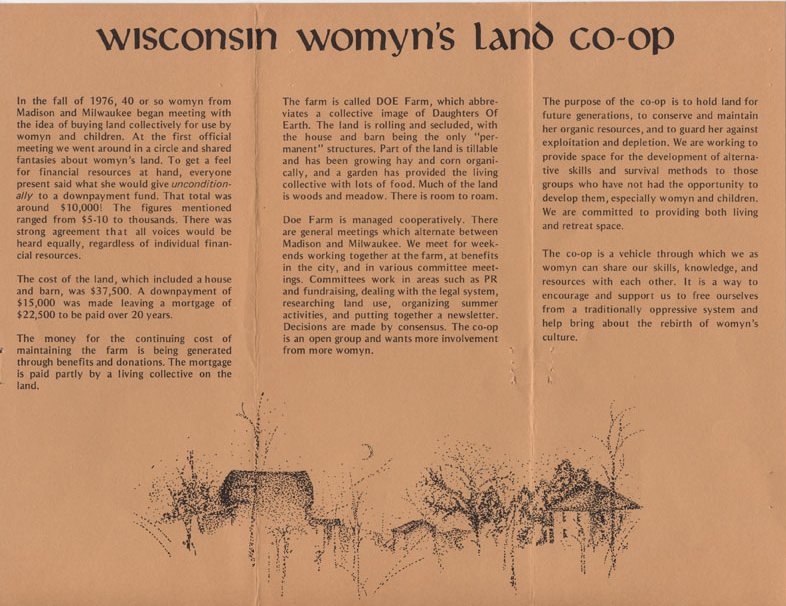
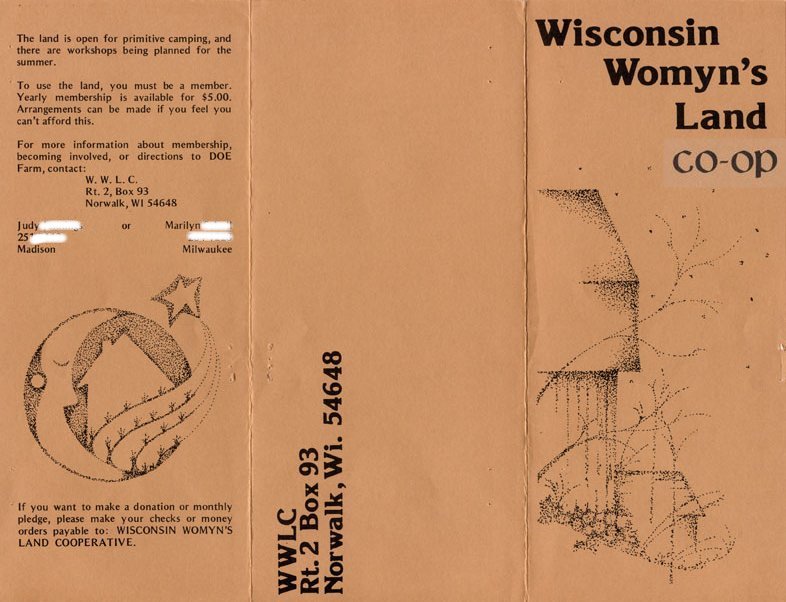
Brochure, circa 1978
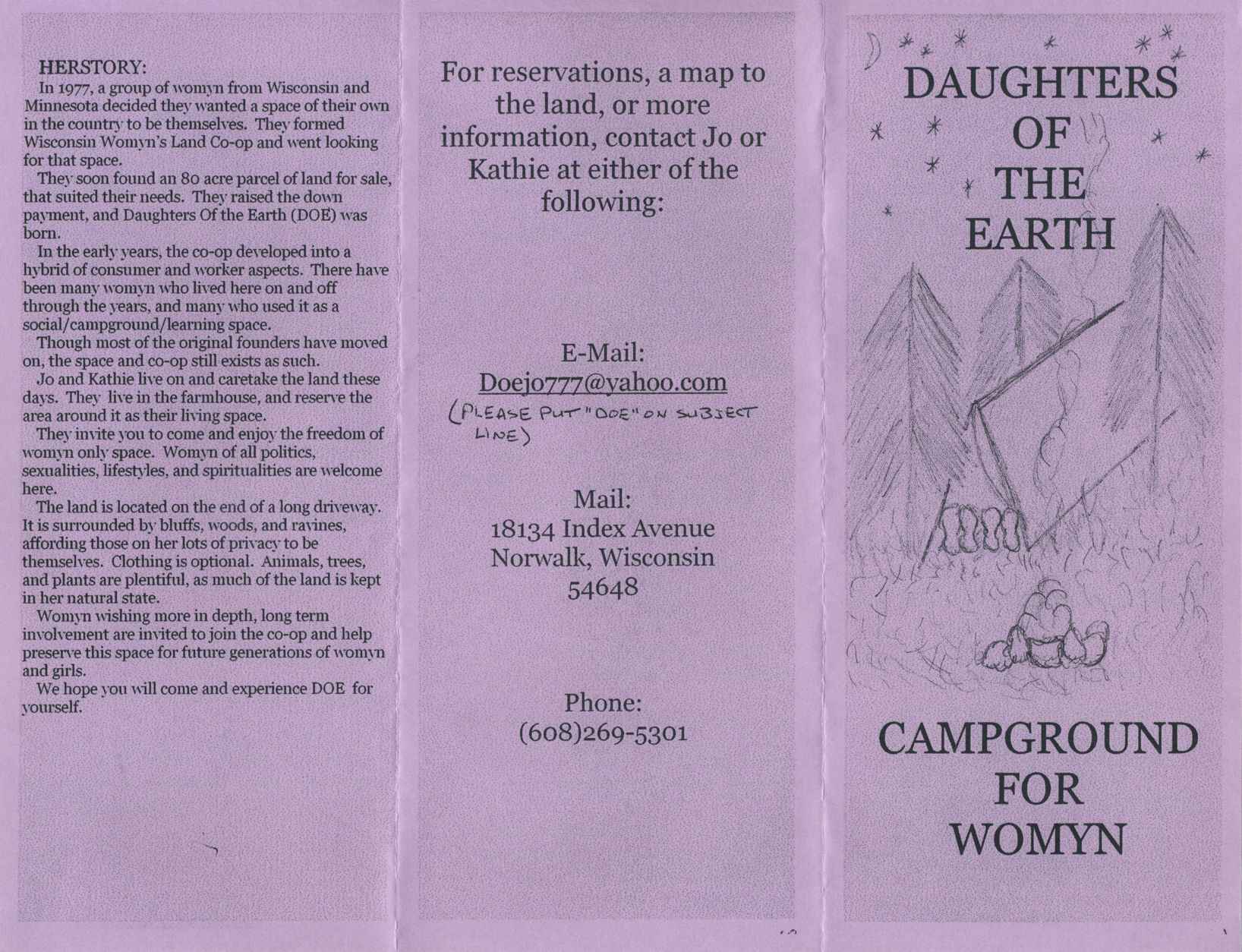
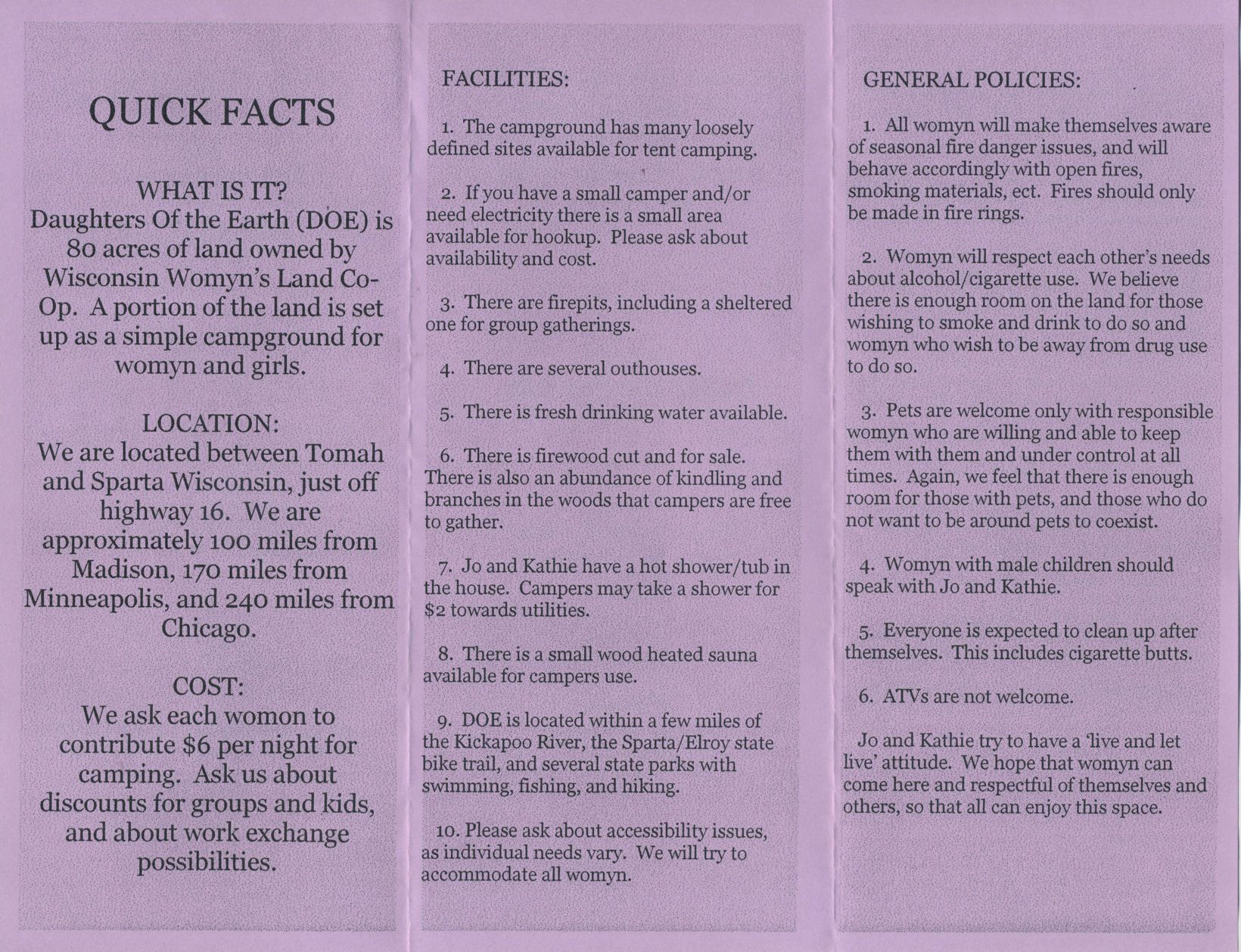
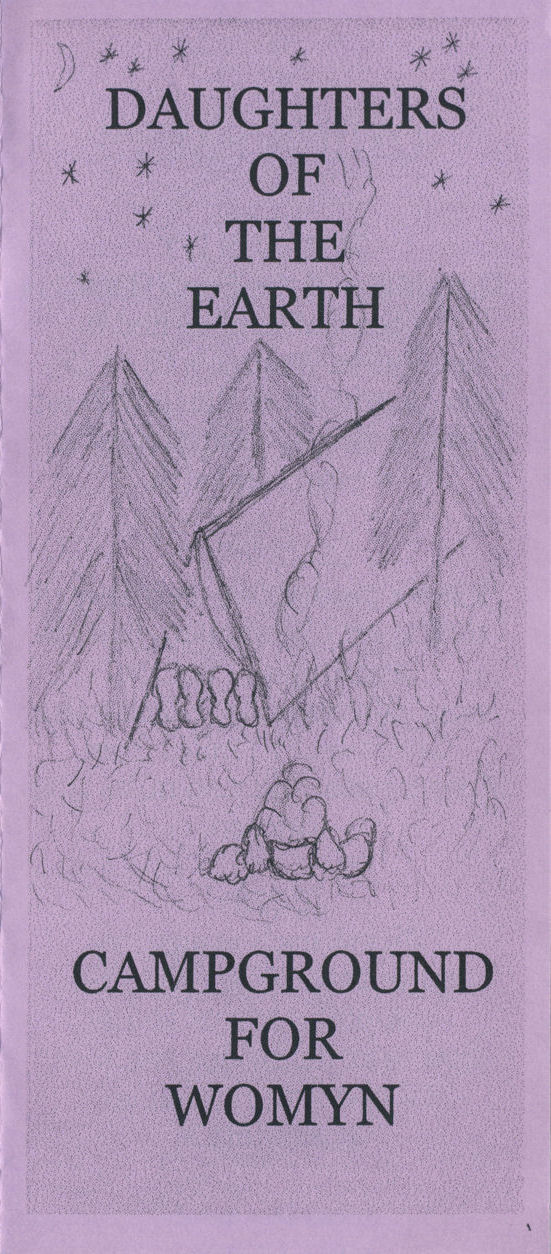
DOE Campground brochure, 2010-2011
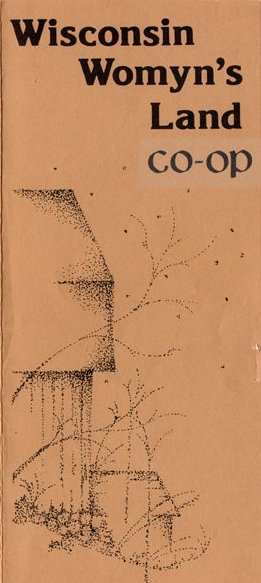
Brochure, circa 1978
INPUT ALWAYS WELCOME!
We are always looking for photos of the exterior and interiors of Bars and other Places, as well as information about ownership, activities and opening and closing background info about Places. We welcome your input and photos!
join our email list
Get WI LGBTQ History Project updates in your inbox.


