
- Places
 March 13, 2026 | Michail Takach
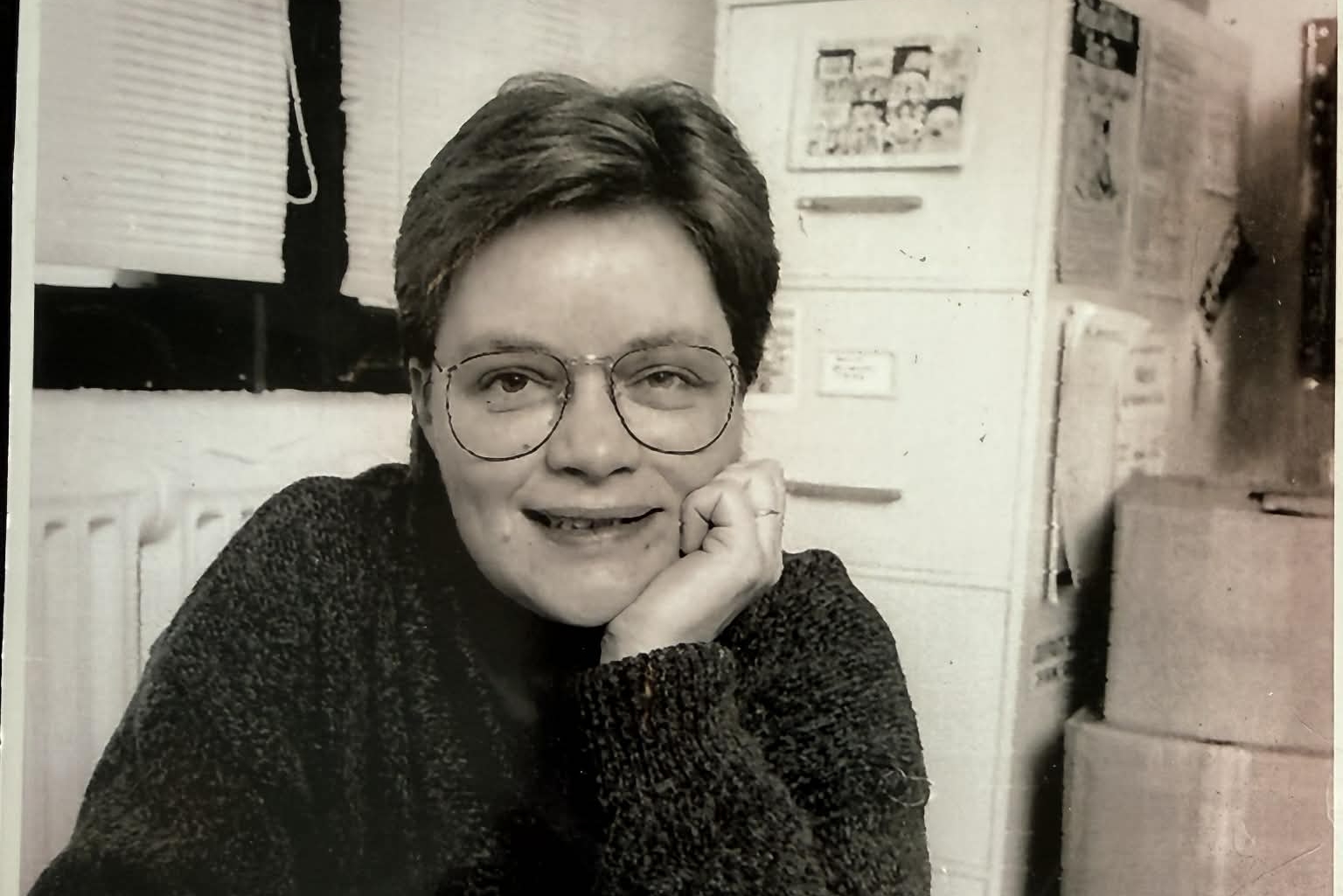
Kitty Barber: the lasting legacy of lesbian alliance
Over 55 years after coming out, Kitty is still on the frontlines of the fight for social justice.
Kitty Barber“When it becomes too much for one leader, they burn out, and the organization disappears."
Kitty Barber was born in northern Manitoba, in a small sub-Arctic town north of the 54th parallel. When she was 2 years old, she and her family moved to the United States and settled in northern Minnesota.
“It was obvious to everyone that I was a tomboy, even when I was four or five years old,” said Kitty. “My parents bought me little cowboy suits and toy guns. When I was 11, my father even bought me a BB gun.”
“It bothered my mother a lot, and she asked me once, ‘are you ever going to go out with boys?’” said Kitty. “I said no. I’m just not made that way.”
Kitty’s first girlfriend was kicked out of her own home for being a lesbian. For safety reasons, the Barbers let her move in with Kitty and the family. Kitty decided it was time to be honest with her brothers and sisters.
“It was 1970, I was 15 years old, and I was in tenth grade,” said Kitty. “And I’m coming out to my family.”
“All my siblings said was, ‘tell us something we don’t know.’”
“There was simply no question about it. There I was, a big old butch who knew exactly who she was.”
Unlike the other kids in her class, Kitty didn’t want to work in a local factory. She enrolled in the University of Wisconsin – Green Bay, where she “majored in field hockey, beer drinking, and hell raising, and did well in all of them.”
“There were no rules back then,” said Kitty. “I dropped out after a couple of years because I was having an affair with my coach. She was 10 years older than me, and she was reluctant to date a student. I dropped out, but she ditched me anyway.”
Kitty met some women who drove trucks for the food co-op network, and they encouraged her to come to Wisconsin.
“I drifted down to Milwaukee, where I was shown this woman’s apartment where there were lots of strays, runaways, and God knows who else down on Clarke Street in Riverwest,” said Kitty. “It was just a whole bunch of us living communally, eating raw food, driving little Volkswagens, and raising consciousness together.”
She hung out at the Non Sequitir (2718 N. Bremen St.,) a short-lived women's bar owned by Meredith Ackley that is now known as Foundation. Eventually, she moved upstairs -- into an apartment that is now an AirBNB.
"It was a great place to live," she remembered. "The bar was very serene. It never played loud music -- the customers were more likely to be having a Scrabble tournament than a dance party."
Kitty got involved in the Women’s Coalition, which was an umbrella organization that housed a bunch of feminist and women’s groups. It was located across from the University of Wisconsin-Milwaukee. While the coalition is long gone, the memories remain.
“I was just a kid, you know, 20, 21 years old,” said Kitty. “I made a lot of great contacts. It was a fantastic exposure to radical feminist circles. And that’s how I came to join the gay and lesbian movement, although I question there was a real movement at the time, at least not in the sense there is today.”
 Lesbian Alliance (1989 logo)
 Lesbian Alliance (2003 logo)
"The men’s bars were a complete mystery to me. Some of these places were just not safe. You couldn’t find them. They were physically hidden away. They didn’t want the outside world to know where or what they were. You had to know somebody in the life to guide you.”“To me, it always seemed like gay men’s culture nurtured secrecy, anonymity, and even dishonesty. And there was this strange sort of in-breeding. There was this little bar magazine, and it felt like everyone’s goal was to be pictured in the magazine or mentioned in the gossip column. That was their only aspiration.”
“Misogyny resides in the patriarchy everywhere, and gay men were no exception,” said Kitty. “’You can have your culture but leave ours alone’ was the message we heard.”
She remembered hanging out at the Sugar Shack (“a real dive at the time”)
“I found a whole new culture in the lesbian bars,” said Kitty. “There were women who just played softball, dated each other, drank a lot of beer, and got into a lot of fights – and that’s it. That was all they really cared about. It was not a culture that I found welcoming. They were nothing like the radical feminists I’d come to know.”
“Eventually, we formed some new organizations together that were mixed. It was much healthier for the overall community, healthier for gay men and lesbians alike… but a lot of that was forged in crisis mode.”
Kitty was an activist long before there were other local LGBTQ activists to serve as role models. She looked to people like Vel Phillips, an African American leader and educator, and Gail Davey, who was extremely experienced in nonprofit lobbying. She remembers getting Lesbian Alliance online early, thanks to Lou Ellen Louge, a computer programmer who was Gail’s partner at the time.
When the organization launched, Kitty was working two full-time jobs while enrolled in classes full-time as well. From the time she got to Milwaukee, she took any job she could get to support her volunteer work.
“I worked in a commercial laundry for two days, a real actual sweatshop,” she laughed. “I was hired onto a union construction crew that paid three times what anyone else was making. I got hired onto the railroad for six months or so. That ended when the railroad fired all of us affirmative action folks (six black men and two lesbians.) I was the last one standing because I was good at the job!”
“Sometimes I didn’t have a job at all. I’d get laid off, or I’d be on unemployment for a while, and that would be the dream, because I could now do my real work full-time. Those were the best times.”
However, the real work was heavy, crushing, and never-ending.
One of the Lesbian Alliance’s first battles fought a familiar adversary. In 1989, Milwaukee hosted a convention of the most radical right-wing Christians ever assembled in one place.
“There were only two or three gay men protesting it,” said Kitty. “It was ineffective. It got very little attention, and the little attention it did get was negative. All the media focused on the protestors having AIDS and being angry about AIDS. They completely missed the message.”
“We decided that we were going to host a protest that would get real attention,” said Kitty. “My friend Mary, who was a graphic artist, printed up flyers that said, ‘here’s everything Jesus had to say about homosexuality.’ They were blank on the inside. We handed these out to everyone attending this convention. We called reporters and told them about the campaign, and that’s how we made the newspapers.”
“It was very important to do this and set a good example on how to protest. We decided we were going to a feminist lesbian organization that was going to be vocal in local politics, media, and civil rights. Miriam Ben-Shalom’s case was one of the first we really tackled.”“There were other organizations that functioned more on the street,” said Kitty. “We wanted Lesbian Alliance to meet with politicians, and the mayor, and other organizations, and take the fight off the street and into civic offices.”
Through the years, Kitty has seen progress – both performative and real.
“I was not a huge proponent of marriage equality, and I’m still not, because I don’t believe the state should be involved in relationships in any way, and I don’t want a contract that someone is going to enforce,” she said. “However, it changed the way most Americans look at gay people. It’s sort of normalized our lives. And it’s changed how younger people look at us. The younger the better, because they grew up with a decent headspace. I was astonished how fast it happened when it did.”
“Suddenly, everyone was so relaxed. Suddenly, people were flying rainbow flags who were not gay. Suddenly, there were more straight people at pride events than gay people. And suddenly, it felt like the steam had gone right out of the room. So, we’ve made a lot of headway in that respect, but as far as real civil rights, we have a long way to go.”
“Many of our national organizations are focused more on fundraising than changemaking,” said Kitty. “They’ve gone too far mainstream, leaving no one on the radical front.”
“When it becomes too much for one leader, they burn out, and the organization disappears,” said Kitty. “it’s over.”
“Money has never been my focus, I never cared about money at all,” said Kitty. “People accuse me of being careless with money, because once I accumulate some, I tend to give it away. I’m totally comfortable, I live in a nice house, my partner is very generous, and it’s all good one way or another.”
Kitty remembers the summer of 1991 clear as day. Although media coverage of pride events was rare, she scored an opportunity with the Milwaukee Journal that allowed her to promote PrideFest (only in its 4th consecutive year, and still at Juneau Park) as something positive for the city.
"We're trying to show we're an extremely diverse community," Kitty wrote in the June 16, 1991 Milwaukee Journal. "We're not any one type. We're all kinds of people."
Kitty shared a message of safety, peace, and belonging. "There's nothing to be afraid of! Bring your family!"
"And what happens almost exactly a month later? Jeffrey Dahmer. And he's gay. The press went berserk with stories of the 'Gay Cannibal.' It was a complete nightmare."
Kitty called a press conference right away, seeking public relations support from the National Gay & Lesbian Task Force.
"The homophobia was just astonishing," she said. "There were so many meetings, so many vigils. There was a Mayoral Commission established to navigate this crisis. It got worse when it was revealed that the police released Konerak Sinthasomphone into Dahmer's clutches. I went to every single one of their hearings. It didn't matter. They were exonerated in the end. They were such pigs."
Later, Kitty enrolled in law school at the University of Wisconsin – Madison. Overstressed by her new workload and the incredible burden of nonprofit leadership, Kitty soon found herself coping with mental health issues.
She decided it was time to make a major change.
Kitty moved to the East Coast to be with her partner, Tina, and has now been there for over 30 years. After meeting first online in an email group, then at an onsite event, the couple fell in love, bought a big house, and settled down.
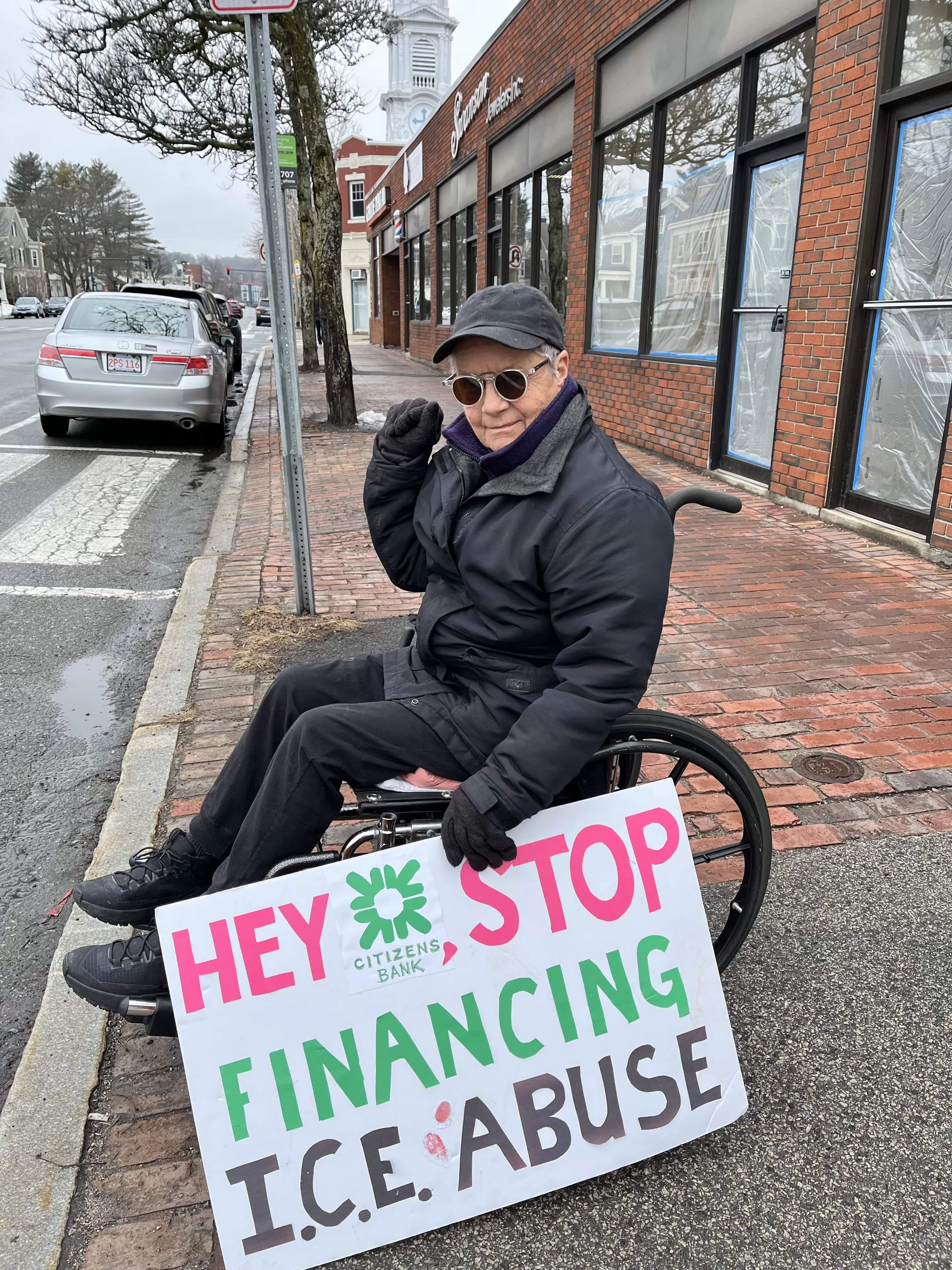
Today, Kitty is still on the frontlines: advocating for social change, protesting oppression, and fighting back against a world that she doesn’t always recognize anymore. She’s older now – “a little old lady butch,” as she calls herself – but she hasn’t lost her appetite for justice.
“We fought really, really hard,” said Kitty. “I think about the Pride Parade. It wasn’t originally a pride parade, it was a march, and we marched seriously and solemnly. And then, things got more festive: we had drag queens on big floats, we had nudity or semi-nudity, and we had this sexualized vibe.”
“It was just so incongruent. It felt so self-destructive. We had no business marching in the same procession at all. We had so little in common, and we worried it would turn people off so instantly, that it would drive us all backwards.”
“And somehow, it just stayed that way. There are some people who see pride as a protest, but mostly it’s a celebration sponsored by corporations who are not our friends. You’ll see this right-wing bunch of creeps on stage, and you’re just mind boggled. What are we doing? What’s going on here? Who are we anymore? Because I don’t recognize us.”
Kitty hasn’t attended a pride event in 20 years.
“Until another crisis comes up, and everyone gets re-politicized, I just don’t have anything in common with that mindset.”
What advice does Kitty have for tomorrow’s leaders?
“Expand your networks,” said Kitty, “because there’s never been a more critical time to be in touch with each other and know that we’re not alone. It’s good to be together in person, to look each other in the eye, and say I am on your side. We need bodies out there right now. And read Timothy Snyder ‘On Tyranny,’ one of the most excellent little guides to resisting tyranny. He agrees human to human contact makes a difference. The more isolated and alone we feel, the more isolated and alone we will become, and the more easily defeated we will be.”
“The lesbian community in this country and around the world has been hit much harder than anyone's letting on, I think. And I've had a lot of people agree with me on that. It’s personal.”
Lesbian Alliance of Metro Milwaukee celebrated its 35th anniversary in 2024. While it’s been quiet in recent years, it’s still operational to this day. In fact, the organization has been partnering with the Curve Foundation to elevate Lesbian Visibility Week activities for the past several years. In April 2023, Milwaukee kicked off LVW for the entire nation with the first official events of the year.
In closing, Kitty thanks her circle of support for keeping her fire burning.
“A handful of really, really good people have stuck with me all the way,” said Kitty. “And that’s why I’m still here… and still fighting.”

recent blog posts

September 18, 2026 | Amy Luettgen
Dr. Amney Castaneda: creating the support she once needed herself

September 11, 2026 | Amy Luettgen
September 04, 2026 | Amy Luettgen
The concept for this web site was envisioned by Don Schwamb in 2003, and over the next 15 years, he was the sole researcher, programmer and primary contributor, bearing all costs for hosting the web site personally.
join our email list
Get WI LGBTQ History Project updates in your inbox.


