
- Places

Milwaukee Gay/Lesbian Cable Network
Education
Milwaukee, WI
State Region
Southeast
Founded / Started: 1987
Disbanded / Ended: 1994Communities Served
Mixed
Explore the Milwaukee Gay/Lesbian Cable Network, its pioneering Tri-Cable Tonight program, LGBTQ storytelling, community activism, and lasting legacy.

INPUT ALWAYS WELCOME!
We are always looking for photos of the exterior and interiors of Bars and other Places, as well as information about ownership, activities and opening and closing background info about Places. We welcome your input and photos!
In the late 1980s, a small group of dedicated Milwaukee activists, producers, and volunteers began using the city’s newly available public-access cable facilities to create regular television programming about gay and lesbian life and issues. The Milwaukee Gay/Lesbian Cable Network (MGLCN) was established to produce that programming, with Mark Behar and Bryce Clark serving as co-executive producers.
The group initially produced several special programs between late 1986 and mid-1987. One of its earliest productions featured scenes from the Clavis Theatre’s production of Larry Kramer’s The Normal Heart, which aired December 22, 1986. Other early programs included the Cream City Business Association’s 1987 awards program, an appearance by Minnesota legislator Karen Clark discussing Wisconsin’s gay rights law, and a program featuring U.S. Surgeon General C. Everett Koop discussing AIDS.
In May 1987, the Milwaukee Gay/Lesbian Cable Network approached the Cream City Foundation (CCF) for $400 to help produce the first episode of a proposed regular series. CCF instead provided a $3,000 grant to fund the first six episodes and committed to helping secure additional funding. The Cable Network agreed to operate as a subcommittee of CCF's Development and Public Relations Committee; it became a full CCF committee in March 1988.
The first episode of Tri-Cable Tonight aired October 27, 1987. At the time, Milwaukee was reportedly one of only a small number of U.S. cities with regular gay and lesbian television programming.
Tri-Cable Tonight was a monthly, magazine-style program covering Milwaukee’s gay and lesbian community. The approximately 30-minute shows typically included six or seven segments, combining studio-produced news, interviews, discussions, and commentary with reports recorded at community events and locations. Some programs also included call-in segments.
The original hosts were Juana Sabatino and Rick Poplawski. Michael Lisowski later replaced Poplawski as co-anchor. Other regular contributors included political commentator Ralph Navarro, attorney Stephen Byers, writer and activist Jamakaya, and historian Dr. Terry Boughner.
One of the program’s signature features was “GayStory,” a recurring segment narrated by Boughner that explored the history of gay and lesbian people and communities. The program also covered a wide range of local organizations and events, including GAMMA’s softball, bowling, and volleyball activities; the Holiday Invitational Tournament; Black and White Men Together; the Brady East STD (BESTD) Clinic; the Milwaukee AIDS Project; the Lesbian Alliance of Metro Milwaukee; PrideFest; Hag Rag; and InStep.
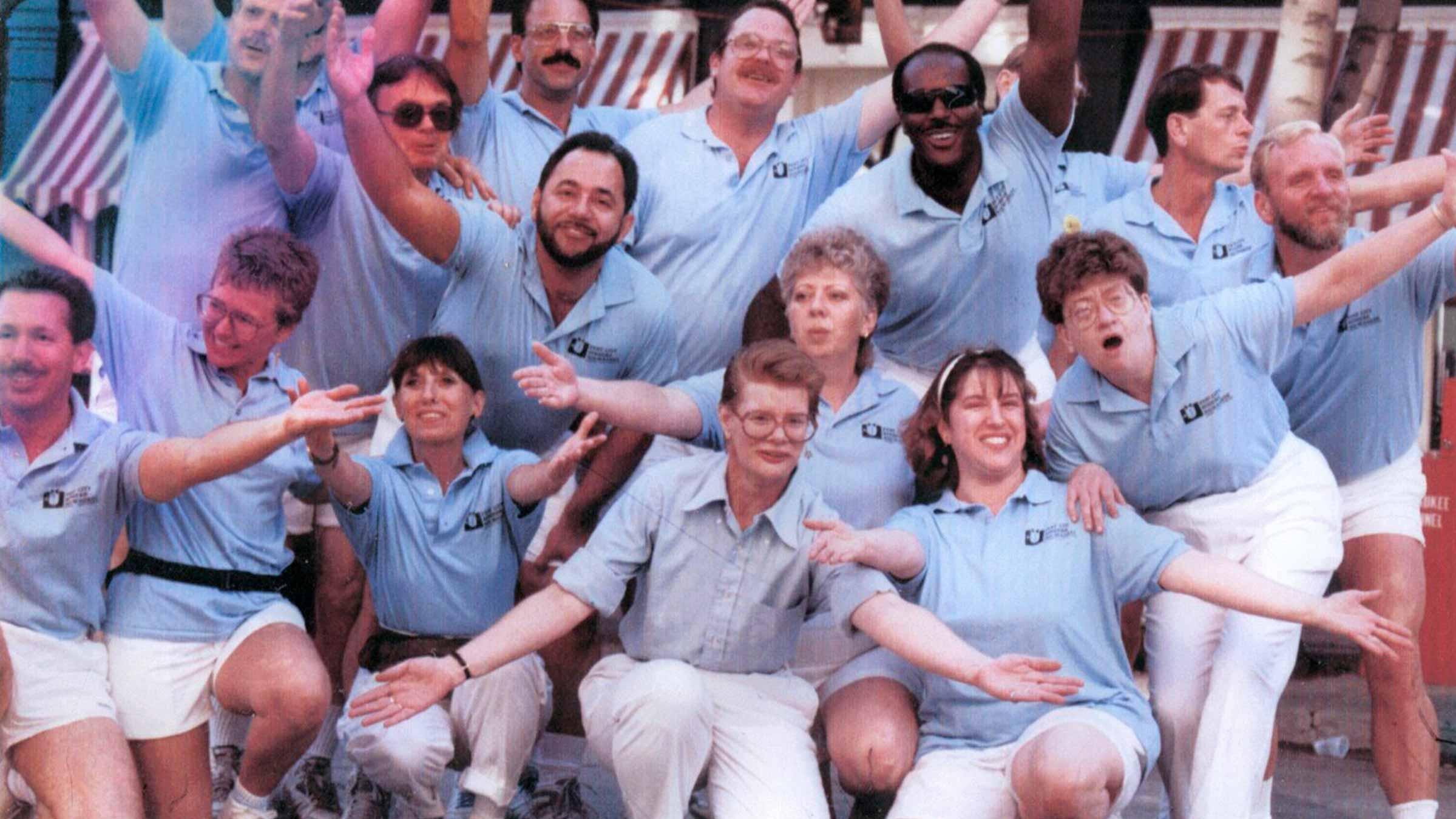
According to co-founder Mark Behar, the production team eventually included approximately 50 volunteers representing a wide range of Milwaukee’s LGBTQ community. More than 100 guests appeared on the program between November 1987 and April 1992, including community leaders, activists, authors, entertainers, public officials, and politicians.
Producing the programs was a substantial technical undertaking. Before digital video, smartphones, laptops, and lightweight LED lighting, the crew relied on analog cameras, 3/4-inch videotape recorders, studio cameras, teleprompters, audio equipment, lighting, and editing decks. Remote shoots could require several heavy cases of equipment, while editing involved transferring footage between specialized videotape machines to create a final master.
Tri-Cable Tonight quickly attracted attention beyond Milwaukee. The program received the Cream City Business Association’s Outstanding Community Achievement Award, and its producers were invited to submit programs for national gay and lesbian media competitions.
The program also received recognition from the Milwaukee Access Telecommunications Authority (MATA). At the first-anniversary awards program, Tri-Cable Tonight received first place for Overall Best Regular Series as well as an award for Best Achievement in Minority Programming.
In 1989, Tri-Cable Tonight became the first Milwaukee public-access television program to win first place in the national Hometown USA Video Festival. According to Behar, it was also the first LGBTQ production company to receive the honor. The program received additional local recognition through MATA’s Philo Awards.
The program’s first anniversary also revealed an audience beyond Milwaukee’s LGBTQ community. During an anniversary special, numerous heterosexual viewers called the program seeking information about gay and lesbian friends and relatives. The calls demonstrated that the program was serving not only as a source of news and community information, but also as an educational resource for people seeking to better understand LGBTQ family members and friends.
Tri-Cable Tonight concluded in December 1989 after a two-year run.
After nearly a year without regular programming, the Milwaukee Gay/Lesbian Cable Network returned in 1990 with two new programs.
The New Tri-Cable (NTC) took a simpler approach than its predecessor. Rather than relying on field productions and extensive pre-production editing, the program centered on moderated panel discussions addressing specific issues and, at times, featuring participants with opposing viewpoints. The production team aimed to record two programs during each studio session, with a new episode airing approximately every two weeks. The series ultimately ran from November 1990 through March or April 1992 and produced 28 episodes.
The second program, "Yellow on Thursday," was a comedy series that began in June 1990. It featured short pieces, sketches, and parodies and aired irregularly through October 1991, producing five half-hour episodes.
The name Yellow on Thursday referenced a local tradition described by Behar in which closeted LGBTQ people in Milwaukee reportedly wore yellow clothing on Thursdays during the 1950s and 1960s as a way of discreetly identifying themselves to others. Behar noted that other cities reportedly used different colors.
The Milwaukee Gay/Lesbian Cable Network demonstrated how public-access television could become a tool for community building, political engagement, education, entertainment, and historical preservation. At a time when LGBTQ representation in mainstream television was limited, MGLCN created a platform where Milwaukee’s LGBTQ community could tell its own stories and address issues affecting its members.
The network's programming documented organizations, events, personalities, political debates, health concerns, and everyday community life during a pivotal period that included the AIDS epidemic and the continued growth of Milwaukee's LGBTQ movement.
After Tri-Cable Tonight ended, Michael Lisowski continued producing LGBTQ television through a live, hour-long program called Queer Television (Q-TV), featuring guests and call-in discussions. According to Behar, Q-TV continued through 2018.
The University of Wisconsin–Milwaukee Archives is home to the Milwaukee Gay/Lesbian Cable Network Collection, including Tri-Cable Tonight, The New Tri-Cable, Yellow on Thursday, and other programming produced by the network.
Production team members included:
Mark Behar, Bryce Clark, Allan Kurth, Andy Nelson, Art Marburg, Aryln Kampen, Bob Fish, Chris DeLaRosa, Cliff Taylor, Clyde McNeal, D.A. Leonard, Dale Seguin, David Schlesinger, Don Schwamb, Eileen McNell, Garth Wangermann, Gayle Foster, Graham Haines, Jeorge Cabal, Jim Mauer, Jimmy Ciganek, Joseph Rogan, Juana Sabatino, Karen Sherer, Kevin Tyre, Kevin Weber, KK Reyes, Kristie Coryell, Lon Cardenas, Michael Lisowski, Michael McFadden, Michelle Leonard, Mike Reynalds, Mike Westerhausen, Nancy Neutz, Ralph Navarro, Rick Poplawski, Robert Bryson, Robert Weger, Rod Johnson, Stephen Byers, JD, Terry Boughner, PhD, Tom Livieri, Tom Rezza, Vanessa Kuehner, Warren Brietlow, Wayne Griswold, Wendy Pologe, Wesley Essex, and William Attewell (W.W. Wells).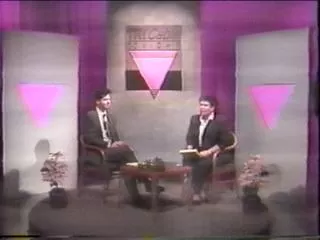 Tri-Cable Tonight set
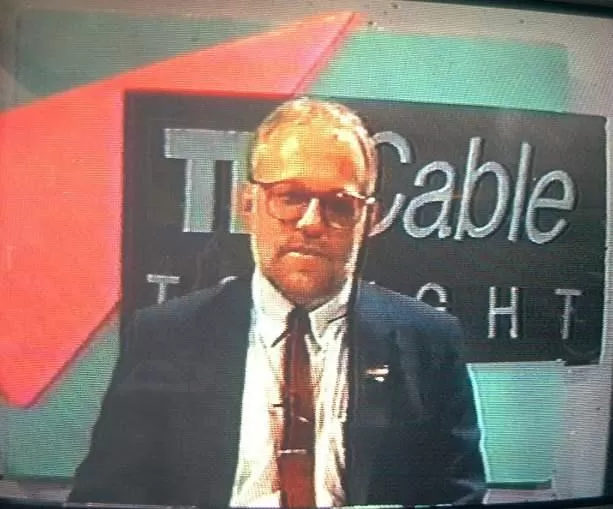 Moderator Michael Lisowski
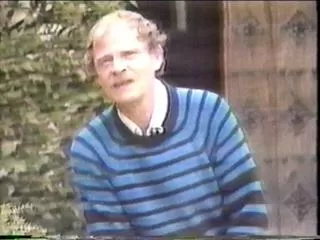 Dr. Terry Boughner
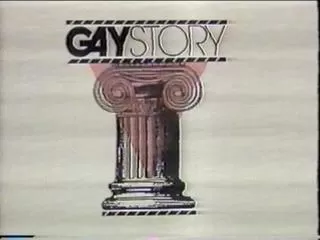 GayStory program logo
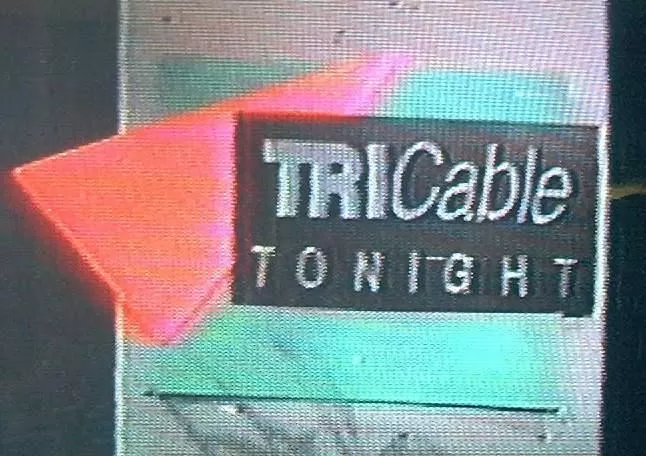 Tri-Cable Tonight logo
INPUT ALWAYS WELCOME!
We are always looking for photos of the exterior and interiors of Bars and other Places, as well as information about ownership, activities and opening and closing background info about Places. We welcome your input and photos!
join our email list
Get WI LGBTQ History Project updates in your inbox.


